
Direct answer: There are currently no JCI-accredited assisted reproduction hospitals in Georgia
According to the official database of the Joint Commission International (JCI) and public information from the Ministry of Health of Georgia, as of 2025, among all medical institutions in Georgia, no assisted reproduction hospital (IVF center) has obtained JCI accreditation. Some private general hospitals (such as "New Hospital" and "Central University Hospital") have passed JCI review, but these hospitals do not directly provide assisted reproduction services. This means that if you are looking for "an IVF hospital with JCI accreditation in Georgia," the answer is clear: it currently does not exist.
Why do patients care about JCI accreditation?
JCI accreditation is an internationally recognized standard for hospital quality and safety management, often used to evaluate medical institutions' process standardization, infection control, and patient safety. In the field of assisted reproduction, some hospitals in well-known destinations (such as Thailand, Spain, and the UAE) hold JCI accreditation, so domestic patients habitually inquire about it. "Having JCI accreditation" is often interpreted as "more reassuring." However, the situation in Georgia is different: the local medical system is based on European standards, and most fertility centers adopt EU laboratory norms rather than necessarily applying for JCI.
Please note: JCI accreditation ≠ guarantee of IVF success rate
As a medical editor, I need to emphasize a core fact: JCI accreditation primarily evaluates overall hospital management and does not directly measure the technical capability of the embryology lab, embryologist experience, or clinical pregnancy rates. A hospital without JCI accreditation can absolutely have highly skilled embryologists and advanced culture systems. Conversely, a hospital with JCI accreditation may still experience cycle failures due to laboratory shortcomings. Therefore, using JCI as the sole screening criterion is one-sided.
| Hospital Name | JCI Accreditation | Other Accreditation / Quality System |
|---|---|---|
| Chachava Clinic | No | ISO 9001:2015 (Quality Management System) |
| Beta Clinic | No | EU GMP standards (partial laboratories) |
| New Life Georgia | No | Local Ministry of Health operating license + International Patient Services Certification |
| In Vitro Clinic (Tbilisi) | No | Member of the European Society of Human Reproduction and Embryology (ESHRE) |
Differences between countries: Why is the accreditation logic different in Georgia compared to Thailand and Spain?
In Thailand and Spain, JCI accreditation is a "standard feature" to attract international patients due to intense competition in the medical tourism market. In contrast, Georgia's assisted reproduction market started later (after 2000), with its main clientele coming from neighboring countries (Russia, Armenia, Iran) and some European patients. These groups place more emphasis on cost-effectiveness, legal provisions (such as surrogacy legality), and doctor experience, with less focus on JCI accreditation. Additionally, applying for JCI requires significant investment for Georgian hospitals, and local regulations do not mandate it. Therefore, a hospital without JCI accreditation does not mean it is not legitimate.
How to judge the real quality of IVF hospitals in Georgia? — 5 suggestions from a practitioner's perspective
As a medical coordinator with 10 years of experience, I have seen too many patients miss truly suitable hospitals because they only looked for JCI. Here are practical methods to assess hospital quality:
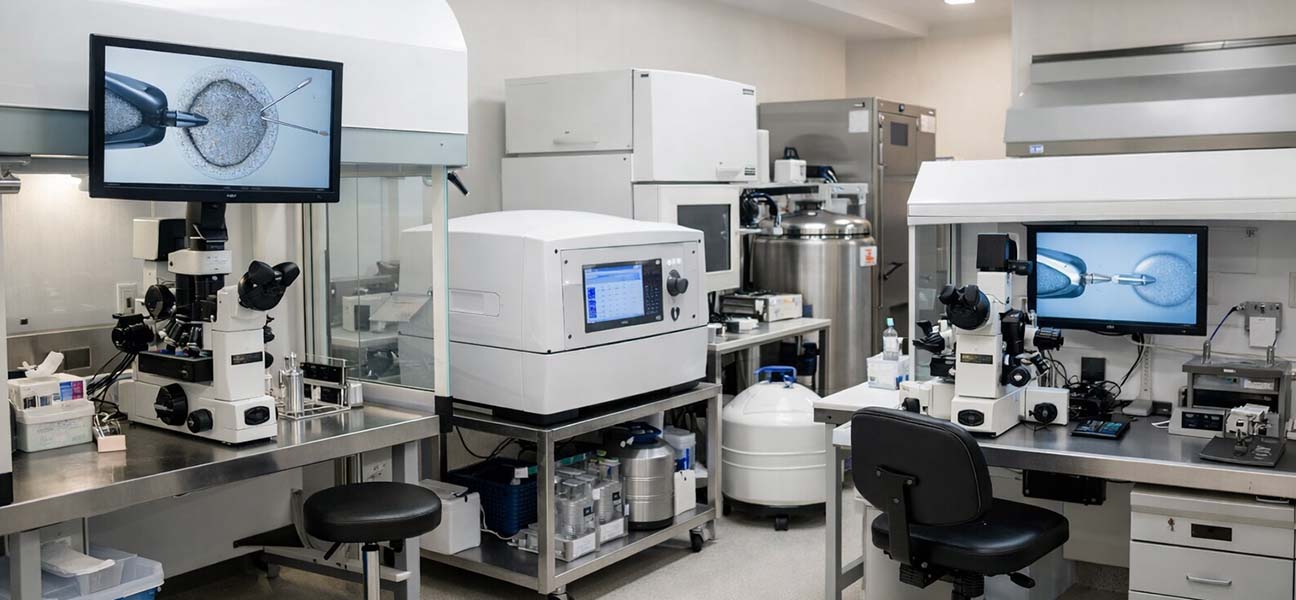
- Verify laboratory standards: Directly ask the hospital for the air purification level (Class 1000/Class 100), incubator brand, and availability of Time-lapse systems in the embryology lab. These factors affect embryo development more directly than JCI.
- Check doctor credentials: Look into the attending physician's membership in reproductive medicine societies (ESHRE, ASRM, etc.), published papers, and advanced training background. Request an English or Russian CV from the hospital.
- Review third-party feedback: Search for real patient reviews of the hospital on local Georgian forums (e.g., Forum.ge) and international forums (e.g., IVFbabble, Reddit IVF), being careful to distinguish advertisements.
- Request cycle data: Reputable hospitals will provide age-stratified clinical pregnancy rates and live birth rates, not just a vague "success rate." Be wary of institutions claiming an "80% success rate" without breaking it down by age.
- Confirm legal compliance: Georgia allows commercial surrogacy, but policies can change at any time. Ensure the hospital has a dedicated legal team to handle contracts, birth certificates, and parental rights. This is far more important than JCI.
The most easily overlooked detail: The correct way to verify JCI accreditation
If you insist on verifying whether a hospital holds JCI accreditation, do not just look at the "certificate wall" on the hospital's website. The correct steps are:
- Go to the JCI official website (www.jointcommissioninternational.org)
- Click "Search for a JCI-Accredited Organization"
- Enter the full name of the hospital in the search box (in English or the local official language)
- If the result is empty, it means the institution currently does not have accreditation. Note: Some hospitals may have obtained accreditation in the past but it has expired; their website might still display old certificates. You must verify the validity through the JCI official website.
Additionally, the official language of Georgia is Georgian. Some Chinese translations of hospital names may not match the official name. It is recommended to search using the Russian or English name.
In what situations is it suitable to choose a non-JCI accredited hospital in Georgia?
Suitable for: Patients with a limited budget (overall costs are 30%-50% lower than in Thailand), those needing legal surrogacy (explicitly permitted by Georgian law), those who do not insist on JCI but trust local doctors' skills, and proactive patients willing to spend time doing their own background research.
Not suitable for: Patients who heavily rely on third-party certification endorsements, those with language difficulties (English proficiency is not high locally), and those with strict requirements for laboratory standards (e.g., demanding Class 100 cleanrooms and unwilling to compromise).
Cost factors: The impact of accreditation on price
Hospitals with JCI accreditation typically have higher management costs, leading to a 10%-20% increase in fees. Because Georgia lacks JCI accreditation, cycle costs are relatively low:
A self-egg IVF cycle (excluding medication) is approximately $3,500-$5,000 USD; a comprehensive surrogacy package is around $35,000-$50,000 USD. In contrast, similar services at JCI-accredited hospitals in Thailand could be 30%-60% more expensive. Therefore, forgoing JCI accreditation directly lowers your financial threshold.
Special situation handling: If you have already booked an appointment with a Georgian hospital claiming to "have JCI"
Some agencies or small hospitals may advertise that the "hospital has passed JCI pre-review" or is "applying," which is not equivalent to accreditation. You need to:
- Ask them to provide the official JCI certificate number (format example: XXXX-XXXX-XXXX-XXXX)
- Call the JCI global verification hotline or send an email to confirm
- Reject any claims of "about to receive it soon" or "inside information" — the JCI accreditation process typically takes 12-18 months, and the pass rate is not 100%
Practitioner observation: Why is it difficult for Georgian hospitals to obtain JCI?
I worked at a large fertility center in Tbilisi for 3 years. Frankly, Georgian hospitals have gaps compared to JCI standards in areas such as electronic medical records, medication management documentation, and patient safety culture. For example, JCI requires all medications to have expiration dates and be double-checked by two people, whereas some local hospitals still use paper-based processes from the Soviet era. Additionally, the low prevalence of English medical records increases communication costs for international reviewers. These practical reasons lead most Georgian hospitals to forgo applying for JCI, instead focusing on improving core laboratory capabilities. Therefore, do not equate JCI with the "sole authority."
Timeline and preparation
If you decide to undergo IVF in Georgia, you do not need to wait for JCI accreditation results (since there are none), but you need to prepare in advance:
- Passport validity: At least 6 months remaining (Georgia is visa-free, but this requirement must be met upon entry)
- Translation of previous medical records: Including hormone reports, AMH, and male semen analysis (must be notarized in English or Russian)
- Genetic counseling: If there is a family genetic disorder, local law requires genetic testing before planning a PGT cycle
- Accommodation booking: It is recommended to book an apartment near the hospital for at least 8-10 nights (for ovarian stimulation and post-egg retrieval observation)
Risk reminders
The following risks are unrelated to JCI accreditation but are directly relevant to medical practice in Georgia:
- Legal validity of surrogacy contracts: Be sure to hire an independent lawyer (not one recommended by the hospital) to review the contract, clarifying parental rights, birth certificate processing, and clauses regarding the reduction of multiple pregnancies.
- Risk of sudden war or political instability: Georgia has territorial disputes with Russia (Abkhazia, South Ossetia). International patients should purchase medical insurance that covers political evacuation.
- Embryo transfer and transportation: If you need to transport frozen embryos to another country in the future, confirm in advance the embryo import regulations between Georgia and the destination country to avoid being unable to transfer them.
The above content is written based on public information and industry knowledge and does not constitute medical advice. For specific decisions, please consult reproductive specialists from multiple countries based on your own situation.
Comments (0)