
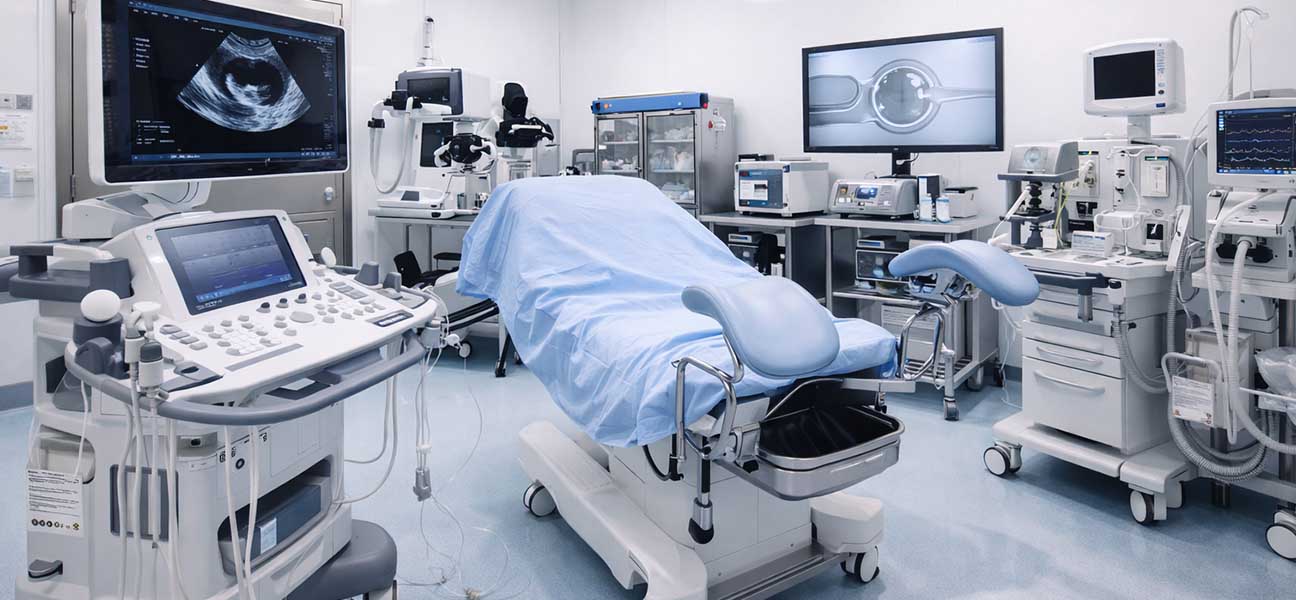
Can Men with Oligospermia Succeed with IVF in Georgia? Direct Answer
Yes, but specific conditions must be met. Oligospermia (sperm concentration below 15 million/ml) is not an absolute contraindication. With the help of second-generation IVF technology (ICSI, intracytoplasmic sperm injection), theoretically only one sperm with normal morphology and motility is needed to achieve fertilization. Most reproductive centers in Georgia have ICSI capabilities, and a large number of patients with oligospermia have successfully had offspring through this technology. However, the success rate is not 100%, and it is influenced by multiple factors such as sperm source (testicular biopsy or ejaculated sperm), female age and ovarian reserve, embryology lab standards, and chromosomal abnormalities.
Why Can Oligospermia Be Treated with IVF?
Traditional first-generation IVF requires sperm and eggs to naturally combine in a culture dish, requiring a sperm concentration ≥10 million/ml and forward motility ≥30%. The sperm count in oligospermia patients is insufficient for natural fertilization. ICSI technology, on the other hand, involves an embryologist selecting a morphologically normal sperm under a high-power microscope and directly injecting it into the egg cytoplasm, completely bypassing the sperm count requirement. As long as at least one usable sperm can be found in the semen sample, there is theoretically a chance of fertilization.
If no sperm is found in the ejaculate (cryptozoospermia or azoospermia), sperm can be obtained through testicular biopsy or microdissection. Some laboratories in Georgia have the capability to perform such procedures.
How Do Doctors View Oligospermia Patients Going to Georgia for IVF?
Reproductive doctors focus on the following points in order:
- Sperm Source Stability: Confirming the type of oligospermia (mild, moderate, severe) through 2-3 consecutive semen analyses, and whether it is combined with abnormal sperm morphology or high DNA fragmentation.
- Female Fertility: Oligospermia patients often rely on the quality of the female partner's eggs. When the female age is ≥38 years or AMH <1.2 ng/ml, even if ICSI fertilization is successful, the embryo implantation rate will significantly decrease.
- Genetic Risk: Some cases of oligospermia are caused by Y chromosome microdeletions (AZF gene deletions) or chromosomal balanced translocations, requiring genetic counseling and PGT (preimplantation genetic testing).
- Laboratory Qualifications: ICSI technology is highly dependent on the embryologist's experience and the culture system. Licensed clinics in Georgia (such as Beta, Chachava, etc.) meet international standards, but blastocyst formation rates can vary by up to 20 percentage points between different laboratories.
The Most Easily Overlooked Detail: Transport and Processing of Semen Samples
Georgia offers sperm freezing and transport services for Chinese patients. However, for oligospermia patients, the motility of sperm after freezing and thawing may decrease by more than 50%. Especially when the original sperm concentration is <5 million/ml, no usable sperm may be found after thawing. It is recommended to complete a preliminary sperm freezing test in China before departure to confirm that enough viable sperm remain after cryopreservation. Another overlooked point is that abstinence of 2-5 days is required before the sperm collection cycle; prolonged abstinence can actually increase sperm DNA damage.
Actual Process: From Preparation in China to Transfer in Georgia
Taking common oligospermia (sperm present in ejaculate) as an example:
- Pre-examination in China: Male semen analysis (2 times), sex hormones, Y chromosome microdeletion, chromosome karyotype; female AMH, antral follicle count, infectious disease screening.
- Choosing a Clinic in Georgia: Confirm whether the center offers ICSI + PGT (if needed), whether it supports male sperm freezing and transport, or if the couple needs to travel to Georgia together.
- Ovarian Stimulation and Sperm Collection: The female starts ovarian stimulation at the beginning of menstruation (about 10-12 days), and the male provides a semen sample on the day of egg retrieval or freezes sperm in advance.
- ICSI Fertilization: The laboratory selects sperm and performs injection according to standard procedures. The fertilization rate is generally 70-85%.
- Embryo Culture and PGT: Cultivate to blastocyst stage on day 5-6; biopsy if PGT is required.
- Transfer and Luteal Support: Blood test for HCG 12-14 days after transfer.
Interpretation of Examination Indicators: Values Oligospermia Patients Need to Pay Attention To
| Indicator | Reference Range | Impact on Success Rate |
|---|---|---|
| Sperm Concentration (million/ml) | ≥15 | When <5, careful sperm selection is needed; ICSI success rate is not affected by concentration, but finding good sperm becomes more difficult |
| Forward Motility (%) | ≥32 | The lower the motility, the more sperm need to be selected, potentially increasing the probability of using testicular sperm |
| Normal Morphology (%) | ≥4 | When <1%, it indicates severe teratozoospermia; ICSI can still achieve fertilization, but the rate of embryonic chromosomal abnormalities may increase |
| Sperm DNA Fragmentation Index (%) | <30 | Fragmentation >30% may reduce blastocyst formation and implantation rates |
| Y Chromosome Microdeletion | No deletion | If AZFc deletion is present, PGT is required, and male offspring will still carry the deletion |
Special Case Management: Cryptozoospermia and Azoospermia
If no sperm is found in multiple semen analyses but sperm is visible in testicular biopsy, it is called "obstructive or non-obstructive azoospermia." Some clinics in Georgia (such as Innova, Vahe) can perform microdissection testicular sperm extraction (micro-TESE), with a success rate of about 40-60%. However, this requires additional surgical costs (approximately $3,000-$5,000) and an extended stay in Georgia. The sperm obtained from the procedure is usually sufficient for a single ICSI cycle, but excess sperm should be frozen for future use.
Another situation is "difficulty in sperm freezing": due to the low sperm count in oligospermia patients, often only a few sperm remain after freezing, requiring fresh sperm collection on the day of egg retrieval (cannot be transported). It is necessary to confirm with the clinic in advance whether they offer fresh sperm ICSI services within the cycle.
Frequently Asked Questions
Q: Is there an age limit for oligospermia patients undergoing IVF in Georgia?
A: Male age is not a primary restriction, but sperm DNA fragmentation significantly increases after age 50. It is recommended that men over 60 consider donor sperm or embryo PGT as a priority.
Q: Is sperm donation necessary?
A: If no sperm is found even with testicular biopsy, or if sperm DNA fragmentation is >50% and unresponsive to treatment, donor sperm can be considered. Georgian law allows legal sperm donation, both anonymous and non-anonymous.
Q: Compared to China, which has a higher success rate for oligospermia IVF in Georgia?
A: Large reproductive centers in China (such as Peking University Third Hospital, CITIC Xiangya) have quite mature ICSI technology. Georgia's advantages lie in the lower cost of PGT (about $15,000-$20,000 per full cycle) and no limit on the number of embryos, but the success rate depends on individual clinic differences. There is no general conclusion that one region is absolutely superior to another.
Risk Reminders
ICSI technology cannot solve all male infertility problems. Oligospermia patients should be aware of the following risks:
- Fertilization Failure: Even with ICSI, about 5-10% of eggs remain completely unfertilized, commonly due to sperm activation failure or egg quality issues.
- Embryo Developmental Arrest: Sperm DNA damage may cause embryos to stop developing on day 3 or at the blastocyst stage.
- Genetic Risk: If oligospermia is caused by a genetic defect, male offspring may also face fertility problems, requiring prior genetic counseling.
- Multiple Pregnancy and Preterm Birth: The twin rate is about 30% when two embryos are transferred. Georgia has no mandatory limit on the number of embryos transferred, but the risks of multiple pregnancy to mother and baby need careful evaluation.
It is recommended that all oligospermia patients complete a full andrological examination in China (including semen bacterial culture, antisperm antibodies, sperm DNA fragmentation index) before deciding to go to Georgia, and consult a reproductive urologist to see if medication or microsurgery can improve sperm quality. Even if improvement is not possible, ICSI remains the most mature technical solution.
Comments (0)