
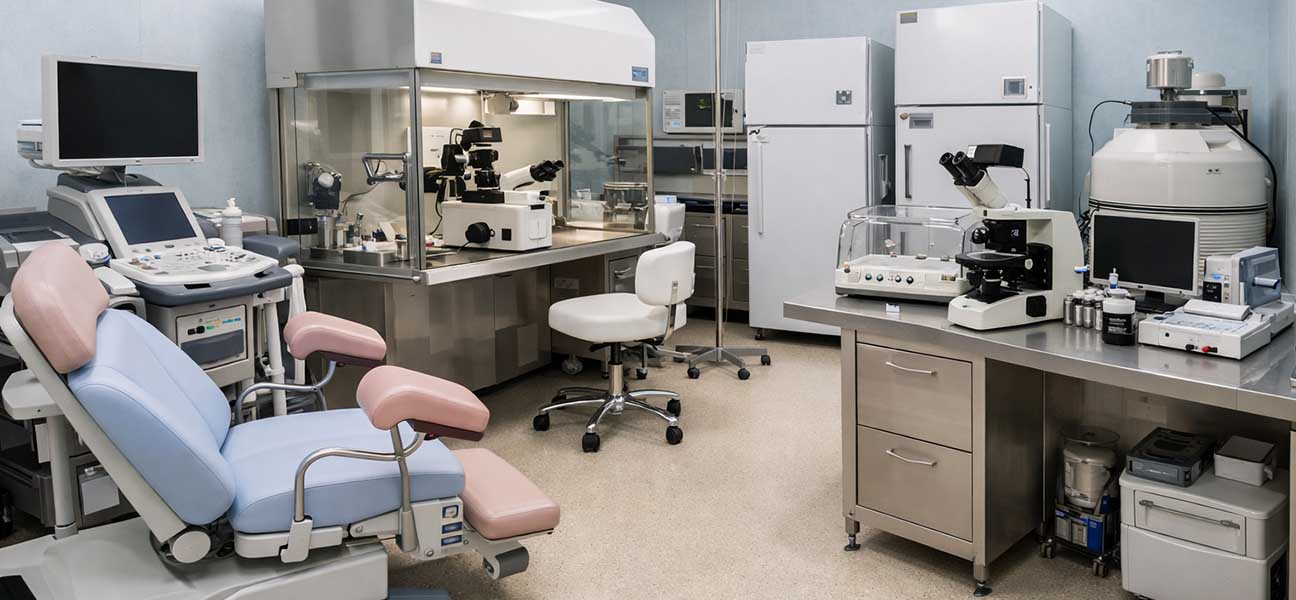
A 37-year-old woman, after completing embryo transfer for IVF in Georgia and confirming pregnancy at 10 weeks, consulted through an online platform: "I did IVF in Georgia and am now pregnant. Can I give birth here? What procedures are needed?" This is a frequently asked question recently. The answer is: yes, but three prerequisites regarding visa, insurance, and hospital coordination must be met.
Basic Conditions for Giving Birth after IVF in Georgia
To complete IVF and give birth in Georgia, the following three basic conditions must be met simultaneously:
- Visa validity covering the expected due date: A regular tourist visa usually allows a 30-day stay, and a multiple-entry visa allows a single stay of no more than 90 days. After confirming pregnancy, you should apply for an extension or change to a long-term visa with the immigration authorities as soon as possible to ensure legal stay status during childbirth.
- Medical insurance covering childbirth costs: Public hospital obstetric charges in Georgia range from approximately $3,000 to $5,000, and private hospitals charge $6,000 to $12,000. You need to purchase international medical insurance that covers pregnancy complications, cesarean sections, and neonatal intensive care, and the waiting period must have passed.
- Registration at the obstetrics department of a hospital: Major reproductive centers in Tbilisi and Batumi (such as IVF Georgia, Beta Clinic, Chachava Clinic) have referral partnerships with local obstetric hospitals. You need to complete obstetric registration before the 12th week of pregnancy, submitting previous IVF medical records, infectious disease screening reports, and coagulation function test results.
Visa Type and Length of Stay
Chinese citizens with ordinary passports can enter Georgia visa-free for a 30-day stay. If you plan to give birth locally, you need to apply for a "Temporary Residence Permit" from the Georgian Immigration Authorities before the 24th week of pregnancy, usually on medical grounds, providing:
- Pregnancy certificate issued by the IVF center
- Acceptance letter from the obstetric hospital
- Insurance policy covering childbirth
- Proof of accommodation in Georgia
The processing time for a temporary residence permit is approximately 45-60 days, and the permit is valid for 6 months to 1 year. It is recommended to start the application immediately after the 12th week of pregnancy to avoid being passive later due to the long processing period.
Medical Insurance Coverage
Local Georgian medical insurance usually does not cover foreigners, so you need to purchase international medical insurance. Check whether the following items are covered:
| Coverage Item | Description | Recommended Coverage Amount |
|---|---|---|
| Natural Delivery | Vaginal delivery with hospitalization up to 3 days | ≥ $5,000 |
| Cesarean Section | Includes surgery, anesthesia, and hospitalization fees | ≥ $10,000 |
| Pregnancy Complications | Preeclampsia, postpartum hemorrhage, gestational diabetes management | ≥ $30,000 |
| Newborn Intensive Care | NICU for premature infants, jaundice treatment | ≥ $20,000 |
| Emergency Medical Evacuation | Return to home country or transfer to a third country | ≥ $50,000 |
Before purchasing, you need to confirm whether the insurance policy includes "existing pregnancy" (IVF pregnancy is a form of existing pregnancy). Some insurance policies have additional waiting periods or exclusion clauses for pregnancies resulting from assisted reproduction.
Hospital Obstetrics Coordination Process
IVF centers in Georgia usually do not directly provide obstetric services. After confirming pregnancy, you need to transfer to the obstetrics department of a general hospital. The coordination process is as follows:
- Weeks 8-10 of pregnancy: The IVF center issues a "Pregnancy Referral Letter," including the embryo transfer date, expected due date, previous stimulation protocol, and luteal phase support protocol.
- Before week 12: Bring the referral letter, passport, and insurance card to the partner obstetric hospital for registration, complete NT scan, complete blood count, urinalysis, thyroid function, and hepatitis B/syphilis/HIV screening.
- Weeks 16-24: Perform second-trimester screening or non-invasive prenatal testing (NIPT), and detailed anomaly ultrasound.
- Weeks 24-28: Gestational diabetes screening.
- After week 30: Prenatal check-ups every two weeks, monitoring blood pressure, fundal height, and fetal heart rate.
- Two weeks before the due date: Confirm the delivery method, sign informed consent, and confirm the hospital room.
Why This Question Gets High Attention
The fundamental reason is that the "IVF location" and "childbirth location" belong to different legal and medical systems. Assisted reproduction is governed by the Georgian Health Law and Civil Code regarding embryos and surrogacy, while childbirth falls under routine obstetric medical care regulated by the Medical Institution Management Regulations. The connection between the two has policy ambiguities, leading to uncertainty for patients.
Legal Differences
Georgia allows commercial surrogacy and third-party egg/sperm donation, but the legal definition of the "birth mother" directly affects nationality determination. According to Article 12 of the Georgian Law on Citizenship, a child born in Georgia to foreign parents who have not legally resided in Georgia for 183 days per year does not automatically acquire Georgian citizenship. This means:
- After the child is born in Georgia, the parents need to apply for a passport from the embassy or consulate of their home country in Georgia using the birth certificate.
- If the parents' home country does not recognize the parent-child relationship after assisted reproduction (e.g., some countries require a genetic link), legal advice should be sought in advance.
- If the child needs to stay in Georgia long-term after birth, a foreigner residence permit must be obtained.
Medical Resource Availability
Georgia's reproductive medicine level is among the best in Eastern Europe. In 2023, data from the Georgian Association of Assisted Reproduction showed that babies born through assisted reproduction accounted for 3.8% of all newborns. However, obstetric resources are unevenly distributed:
- Tbilisi: 3 international general hospitals (HMC, New Hospital, MediClub) offer English-language obstetric services, with an annual delivery volume of about 8,000 cases.
- Batumi: 2 hospitals can handle normal deliveries; high-risk pregnancies need to be transferred to Tbilisi.
- Other cities: Obstetric facilities are relatively basic; it is recommended to prioritize Tbilisi.
Obstetricians' experience in monitoring IVF pregnancies varies greatly. Some doctors lack experience in managing advanced maternal age, multiple pregnancies, and luteal phase insufficiency after ovulation induction. It is advisable to choose a hospital with a "reproductive-obstetric joint clinic."
Comparison of Policies in Different Countries
| Country | IVF Legality | Childbirth Policy for Foreigners | Newborn Nationality | Childbirth Cost (USD) |
|---|---|---|---|---|
| Georgia | Legal (including surrogacy) | Visa extension or residence permit required | Not automatically granted | $3,000 - $12,000 |
| United States | Legal (varies by state) | Strict B-visa stay limits | Birthright citizenship (jus soli) | $15,000 - $30,000 |
| Russia | Legal | Medical visa required | Not automatically granted | $4,000 - $8,000 |
| Thailand | Only for heterosexual couples | Medical visa up to 90 days | Not automatically granted | $5,000 - $15,000 |
Georgia's core advantages are: IVF-friendly laws, relatively controllable childbirth costs, and a clear path for visa extensions. The disadvantages are: the newborn nationality issue requires advance planning, and obstetric resources for high-risk pregnancies are not as robust as in the US and some European countries.
Easily Overlooked Details
Newborn Document Processing
After the child is born in Georgia, the following procedures must be completed within 15 working days:
- The hospital issues a "Birth Certificate" (requires notarization + apostille)
- Apply for a passport at the embassy or consulate of the parents' home country in Georgia (some countries require a paternity test report)
- If the parents' home country does not recognize assisted reproduction, a local lawyer should be engaged in advance to confirm the legal path
- Apply for a return visa or travel document for the child
The entire process usually takes 4-8 weeks. It is recommended to contact the embassy one month before the due date to confirm the required documents.
Third Trimester Risk Assessment
The rates of miscarriage, preterm birth, and pregnancy-induced hypertension are slightly higher in IVF pregnancies than in natural pregnancies. Obstetric intensive care units (MICU) in Georgia are mainly concentrated in large hospitals. If you plan to give birth in a small or medium-sized city, you need to confirm in advance:
- Whether the hospital has a 24-hour blood bank
- Whether there is a neonatal transfer protocol
- Whether it can handle emergencies like placental abruption or umbilical cord prolapse
Common Pitfalls
Insurance Claim Scope Confirmation
Some international insurance policies consider "pregnancy after assisted reproduction" as an exclusion, or impose a 12-month waiting period for "existing pregnancy." When purchasing, you need to check the terms carefully, focusing on:
- Whether "Pre-existing pregnancy" is excluded
- Whether IVF pregnancy is under "Assisted Reproductive Technology (ART) exclusion"
- Whether the newborn is automatically covered after birth
It is recommended to purchase pregnancy insurance specifically designed for assisted reproduction, or choose high-end medical insurance that explicitly covers ART pregnancies.
Hospital Bed Shortage
Obstetric beds in international general hospitals in Tbilisi are often in short supply, especially from September to November (peak delivery season). You need to pay a bed reservation deposit (usually 30%-50% of the delivery cost) before the 20th week of pregnancy; otherwise, you may not be able to choose your preferred delivery time and room type.
Actual Process Timeline
- Weeks 4-8 of pregnancy: Confirm intrauterine pregnancy, request a referral letter from the IVF center
- Weeks 8-12: Choose an obstetric hospital, complete registration; start visa extension application; purchase medical insurance
- Weeks 12-16: Complete NT scan, first-trimester screening; confirm insurance is active
- Weeks 16-24: Detailed anomaly ultrasound; apply for residence permit (if needed)
- Weeks 24-28: Glucose tolerance test; book a postpartum care center or nanny (if needed)
- Weeks 28-32: Finalize delivery plan; prepare newborn document materials
- Weeks 32-36: Contact the embassy to confirm passport application process; organize return documents
- After week 36: Weekly prenatal check-ups; confirm hospital room and anesthesiologist
Frequently Asked Questions
Q1: Can my child obtain Georgian citizenship after being born in Georgia?
No. Georgia applies limited jus soli. Only if the parents are stateless or legal long-term residents can the child apply for Georgian citizenship. Children born to ordinary Chinese citizens in Georgia need to return to China for nationality determination.
Q2: Can I request a cesarean section for an IVF pregnancy in Georgia?
Yes. Georgia respects the mother's choice of delivery method, with a cesarean section rate of about 35%. However, the cost of a cesarean section is 60%-80% higher than a natural delivery, and you need to have a pre-operative consultation with the anesthesiologist and obstetrician to assess conditions like scarred uterus, twins, or abnormal fetal position.
Q3: Is Georgia's medical level sufficient if pregnancy complications occur?
Large general hospitals in Tbilisi (such as HMC) can handle most pregnancy complications, including preeclampsia, postpartum hemorrhage, and gestational diabetes. However, the number of NICU beds for premature infants is limited, and experience in treating extremely premature infants (under 28 weeks) is not as advanced as in the US and Western Europe. Patients with an expected due date after 32 weeks are advised to prioritize Tbilisi.
Q4: Are there language barriers?
International hospitals in Tbilisi have English-Russian-Georgian translators in their obstetrics departments, and some doctors speak basic Chinese. It is advisable to bring your own translation device or hire a local medical translator (cost about $50-$80 per session). Ensure full understanding during key medical procedures (such as signing surgical consent forms).
Q5: What documents are needed to register the child's household registration in China after giving birth in Georgia?
You need: ① Birth certificate (in Georgian + notarization + apostille + Chinese translation); ② Parents' passports and marriage certificate; ③ Paternity test report (required by some household registration authorities); ④ Child's travel document or passport. It is recommended to complete all notarizations and translations before returning to China to avoid a second trip.
Practitioner's Observation
From 2022 to 2024, the number of Chinese patients choosing to complete IVF and give birth in Georgia has increased by about three times. A notable change is that early patients were mainly those with advanced age or diminished ovarian reserve, but now it has expanded to include complex cases such as repeated implantation failure, immune infertility, and carriers of single-gene genetic disorders. This reflects the increasing acceptance of reproductive medicine in Georgia, but it also means that obstetrics departments need to handle more advanced maternal age pregnancies (≥40 years old accounting for 35%-40%), multiple pregnancies (twin rate about 20%), and complex histories like previous cesarean sections.
As a practitioner, the most common reminder is: do not treat "IVF" and "childbirth" as two separate things. Before starting IVF, you should incorporate the visa, insurance, and hospital choice for the delivery location into the overall plan. Especially for those of very advanced maternal age (≥45 years) or with chronic conditions (hypertension, diabetes, thyroid disease), you need to confirm in advance whether Georgia's obstetrics can handle related complications.
Risk Reminder
The core risks of giving birth in Georgia come from three aspects: first, visa extension denial leading to illegal stay, affecting newborn document processing; second, insurance claim disputes, especially when costs for pregnancy complications and premature infant care are high; and third, incomplete documents or legal conflicts during household registration determination after returning to China. It is recommended to consult a lawyer familiar with Georgian assisted reproduction laws before starting IVF, and also communicate with the local police station in your registered residence about the requirements for newborn registration. Do not decide on the delivery location late in the third trimester, as the options for visas, insurance, and hospitals will be significantly reduced.
Comments (0)