
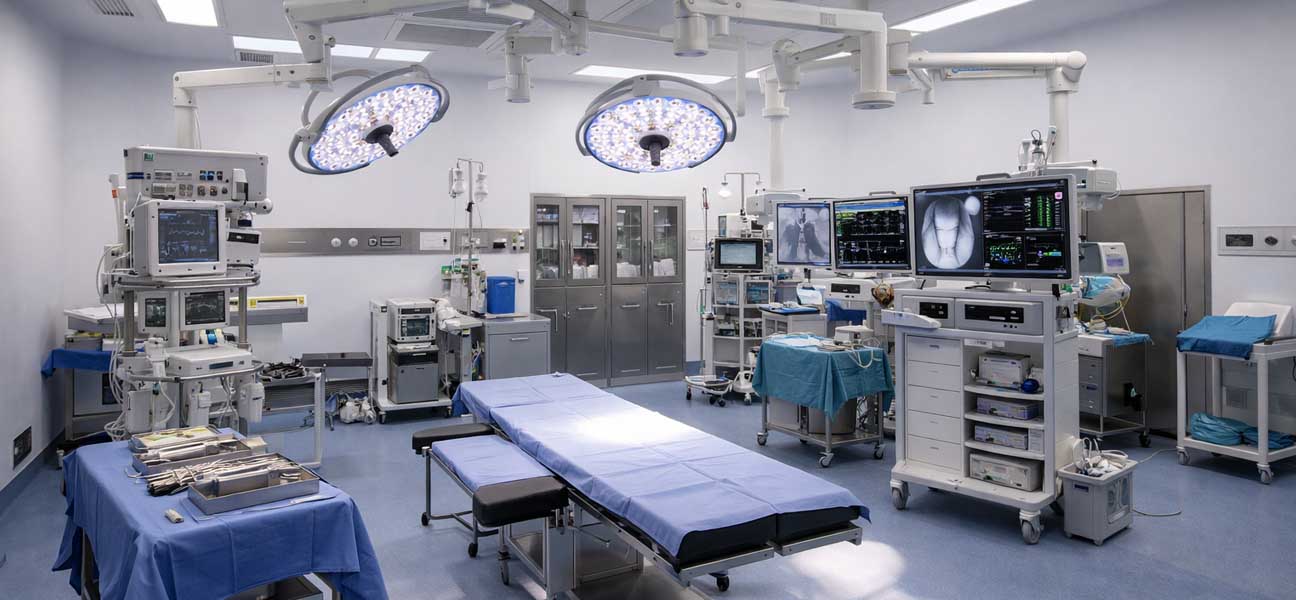
"Can I go see a Georgian IVF hospital in person?" — A Real Consultation Scenario
Last month, a 40-year-old patient with diminished ovarian reserve, while comparing IVF plans between Ukraine and Georgia, directly asked: "Can I fly over to see the hospital first? There's too much information online; I won't feel at ease without seeing it with my own eyes." This question is common among patients planning overseas IVF: Can Georgian IVF hospitals actually be visited in person? If so, how do you arrange it? And what should you focus on during the visit?
As a patient education specialist in assisted reproduction, I have handled hundreds of similar inquiries. The following is objective information compiled based on real hospital policies, practitioner feedback, and patient experiences, without any institutional recommendations or marketing guidance.
Direct Answer: Some Georgian IVF Hospitals Allow Scheduled On-Site Visits
- Allowed: Most reputable Georgian fertility centers (e.g., IVF Georgia, Zhening) accept scheduled tours, but applications must be made at least 1-2 weeks in advance through their official website or designated partner channels. Tours are usually arranged on weekday mornings when no surgeries are scheduled, with a limit of 2-4 people per visit.
- Not Allowed: Some hospitals do not open their doors to visitors due to biosafety regulations (embryology labs require constant temperature, pressure, and a sterile environment) or to protect patient privacy. They only offer video tours or online meetings.
- Conditionally Allowed: A few hospitals permit entry to lab areas after signing a confidentiality agreement, but only for observation through glass windows; close contact with incubators and liquid nitrogen tanks is not permitted.
Why Does the Question "Can I Visit?" Arise?
It mainly stems from three points:
- Information Asymmetry: Domestic patients often learn about overseas hospitals through agencies or the internet, making it difficult to directly assess lab standards, doctor qualifications, and process transparency.
- Need for Trust: IVF involves high costs and significant physical investment. Seeing things firsthand can reduce decision-making anxiety.
- Cultural Differences: Georgia's medical system is more "doctor-led," unlike some domestic centers with fixed reception procedures, leading patients to mistakenly feel that visits are unwelcome.
What Do Doctors Think About On-Site Visits?
In conversations with several reproductive specialists practicing in Georgia, they generally believe that visits have positive value but are not essential. A doctor who has worked in Tbilisi for 8 years said: "We welcome well-prepared patients, but if a patient comes directly to the front desk without an appointment and asks for a tour, we would suggest scheduling another time. The lab area requires advance preparation of protective clothing and disinfection, which cannot be arranged on the spot." Doctors are more concerned about the visitor's purpose—if it's to understand technical details and success rate statistics, they will provide written materials; if it's just to "see the environment," they are more cautious.
The Most Easily Overlooked Details: 5 Things to Confirm Before a Visit
| Overlooked Item | Specific Explanation |
|---|---|
| Need for an interpreter | Most hospitals have limited English communication; Russian or Georgian is primary. It is recommended to bring your own medical interpreter or ask the hospital to arrange one, otherwise communication effectiveness will be compromised. |
| Can you see the embryology lab? | Only about 30% of hospitals allow entry into the lab area; most only allow viewing via monitor screens or through glass windows. It is important to clarify in advance whether it's an "actual lab visit" or "watching a video." |
| Visit time clashing with surgeries | Visits are usually scheduled during times without egg retrieval or embryo transfer surgeries; otherwise, the hospital will prioritize surgeries and deny last-minute entry. |
| Whether a visit fee is required | A very small number of hospitals charge a small administrative fee (about $50-100 USD); most are free. Just ask clearly. |
| Can you bring a partner/family member | Some hospitals limit the number of visitors per tour to one patient plus one interpreter; exceeding this requires prior notification. |
Common Pitfalls: Misconceptions During a Visit
- Focusing only on décor, not technical core: Luxurious décor does not equal advanced lab. The real core lies in: number of embryologists, blastocyst culture rates, whether the PGT-A lab operates independently, and whether the liquid nitrogen storage system has dual alarms.
- Trusting verbal promises: Statements like "Our success rate is 80%" or "Guaranteed success" made during a tour may involve statistical manipulation. Any claims about success rates must be backed by written data sources, specifying whether it's fresh, frozen, or cumulative pregnancy rates.
- Ignoring nosocomial infection risks: On-site visits may bring in dust or bacteria. Some hospitals require wearing sterile shoe covers, caps, and masks. If a hospital is not strict about this, it may indicate a lack of professionalism.
- Being misled by "showrooms": A few institutions prepare dedicated tour routes that bypass actual busy operational areas. Ask to see daily areas like the nurse station, patient waiting area, and pharmacy.
Actual Process: Complete Route from Booking to Visit
- Initial Communication: Obtain a visit application form through the official website or institutional contact, filling in personal information, proposed visit date, number of people, and main areas of interest.
- Hospital Confirmation: Wait 1-3 working days for the hospital to assess whether a visit is feasible. They may refuse during special periods (e.g., pandemic peaks, renovations).
- Pre-trip Preparation: After confirmation, the hospital will send visit guidelines, including: dress code, required documents (passport or ID), areas where photography is prohibited (usually inside the embryology lab), and confidentiality agreements to sign.
- Arriving at the Hospital: Arrive at the front desk at the agreed time. A medical coordinator or nurse will guide the tour, lasting approximately 45-90 minutes.
- Tour Route: Typically includes: outpatient area → ultrasound room → lab corridor (or viewing through a window) → embryo culture room (rarely entered) → cryostorage area → consultation room. Usually ends with 15-30 minutes of Q&A with a doctor or coordinator.
- Visit Notes: It is recommended to bring a notebook to record key information, such as lab equipment brands, embryologist degrees, cycle numbers, etc., to avoid confusion later.
Time Planning: How Long Should You Reserve for a Visit?
From booking to completion, it is recommended to allocate the following time for the entire visit process:
- Waiting for appointment: 1-2 weeks
- Stay in Georgia: At least 3 days recommended (1 day for the visit, 1 day for travel, 1 day as backup)
- Day of visit: 2-3 hours (including travel, registration, tour, Q&A)
- Post-visit decision: Allow yourself at least 3-5 days after the visit to digest information before deciding whether to start a treatment cycle
Note: If a patient plans to visit multiple hospitals (e.g., 2-3 in Tbilisi), it is advisable to schedule them one day apart to avoid information overload.
Special Situations: When Is an On-Site Visit Not Suitable?
- Time constraints: If the woman is over 42 years old with AMH < 0.5, it is recommended to prioritize starting a cycle rather than spending time on visits. Remote video can be used as an alternative.
- Health issues: Patients about to start ovarian stimulation for long-distance travel or who have just undergone hysteroscopic surgery should not add travel burdens.
- Visa restrictions: Georgia offers visa-free entry for Chinese citizens for up to 30 days, but if the passport is valid for less than 6 months or the individual has been blacklisted by Georgia, visa issues must be resolved first.
- Temporary hospital policy tightening: During local public health events (e.g., flu outbreaks), hospitals may suspend external visitors.
Frequently Asked Questions Summary
- Q: What materials do I need to bring for a visit? A: Original passport, previous medical records summary (if any), medical reports (optional), interpreter (recommended to bring one with a medical background, not a relative).
- Q: Can I decide to sign a contract immediately after the visit? A: Yes, but it is recommended to go home and compare calmly first, and not pay the full amount on the spot. Some hospitals may require a 30% deposit to lock in a specialist's schedule.
- Q: Can I see my own medical records discussed during the visit? A: Unless the doctor sees you for a consultation on the spot, generally only general information is provided, and specific cases are not discussed.
- Q: Are there additional costs for the visit? A: Most are free; a few charge $100-200 USD for a VIP in-depth tour (allowing lab entry).
- Q: If a hospital doesn't allow visits, is it unreliable? A: Not necessarily. Some top-tier embryology labs are not open to the public due to high biosafety levels. In such cases, you can request alternative proof: ① Video tour (pre-recorded) ② Third-party accreditation reports (e.g., JCI certification) ③ Public reports on cycle numbers and success rates for the past 3 years.
Practitioner's Observation: The True Value of On-Site Visits
As a patient education specialist, I have observed that on-site visits are most helpful for:
- Patients with multiple failed cycles who have very high demands for medical details
- Patients planning for PGT (third-generation IVF) who want to verify the lab's genetic testing capabilities
- Patients with strong language skills who can communicate independently with doctors
- Patients planning to stay in Georgia for more than a month with ample time
For average success rate patients, online meetings plus public hospital information are generally sufficient. Over-reliance on "seeing is believing" might actually interfere with objective judgment due to visual preferences—for example, being impressed by luxurious décor while overlooking actual lab cleanliness.
Risk Reminder: Three Potential Hazards of On-Site Visits
- Cross-infection risk: The hospital waiting area may have other patients carrying pathogens. Visitors entering near ovulation or with weakened immune systems face potential health risks.
- Information leakage risk: Some hospitals require signing a confidentiality agreement prohibiting disclosure of tour content. Patients should also be careful not to post unauthorized photos or videos on social media, which could lead to legal disputes.
- Impulsive decision risk: The on-site atmosphere can easily create the illusion that "this hospital is great," while overlooking practical issues like cost, lead doctor availability, and post-treatment communication barriers. It is recommended to create a comparison table after the visit for rational analysis.
Final Suggestion: If You Decide to Visit, Prepare According to This Checklist
- Book at least 2 weeks in advance through official channels
- Confirm interpreter (preferably with a medical background)
- Prepare 10-15 core questions (e.g., Is the lab monitored 24/7? Are embryologists ESHRE certified? Number of egg retrieval cycles per year?)
- Bring portable disinfectant wipes, a mask, and sterile gloves (as backup)
- Upon arrival, first observe the hygiene of the restroom and waiting area—these details often reflect infection control management levels
- Record voice notes (with hospital permission) to capture sensory evaluations of each step in real time
Comments (0)