
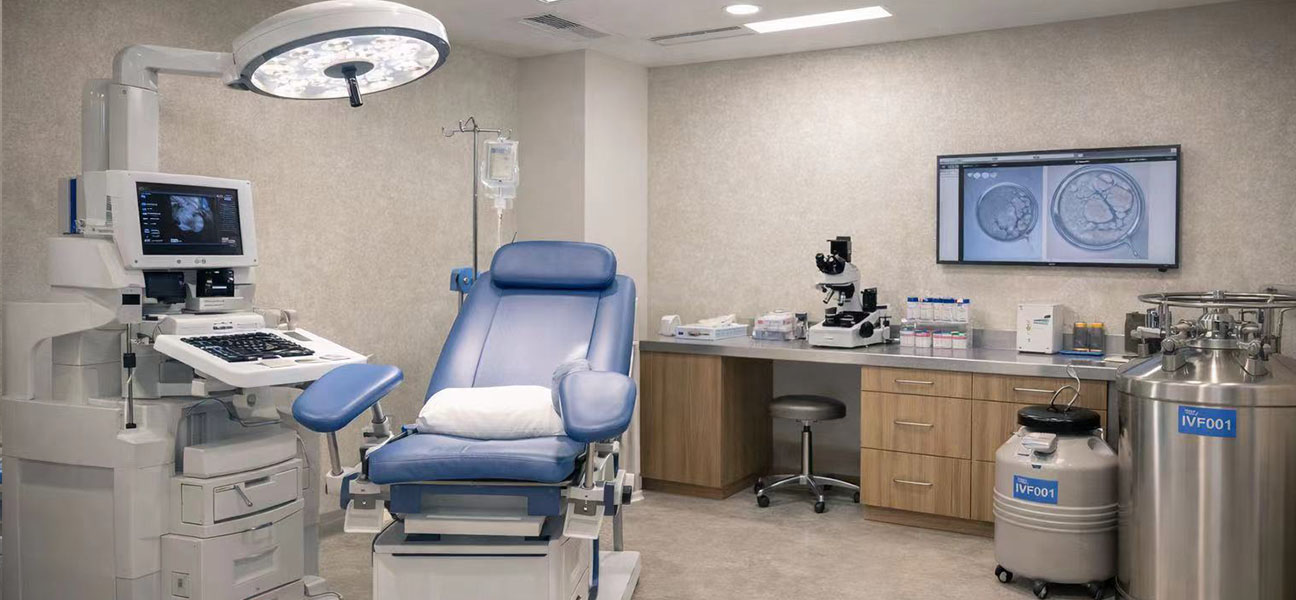
Georgia is one of the few countries in the world that explicitly supports single women in pursuing IVF surrogacy at the legal level. In 2026, with the further maturation of assisted reproductive technology and the deepening of cross-border medical collaboration, more and more single women are choosing Georgia as their preferred destination to realize their family-building plans. This article comprehensively outlines the entire process of IVF surrogacy for single women in Georgia from the dimensions of legal foundation, operational steps, cost structure, and agency selection, helping users in need establish a clear and reliable execution framework.
I. Legal Basis for IVF Surrogacy for Single Women in Georgia
Georgia continues its progressive legislation on assisted reproduction in 2026. Under current law, single women have the same assisted reproductive rights as married women and are not required to provide spousal consent or marriage certificates. Foreign single women undergoing IVF surrogacy in Georgia are equally protected by law, and surrogacy agreements are legally binding after notarization. Surrogates must be healthy women who participate voluntarily and have completed their own childbearing. The embryo source must be the applicant's legal eggs and sperm. The law clearly stipulates that the surrogate has no right to claim custody of the infant, and the legal mother of the child after birth is the commissioning single woman. This legal framework provides clear and secure rights protection for single women, eliminating potential issues regarding subsequent identity confirmation.
II. Full Process Breakdown of IVF Surrogacy for Single Women in Georgia in 2026
The overall cycle for IVF surrogacy in Georgia typically takes 12 to 18 months, depending on egg source preparation, embryo development, and the efficiency of matching with a surrogate. The core content of each stage is as follows.
Stage 1: Preliminary Consultation and Plan Determination
The applicant first needs to establish contact with a reproductive center or partner agency in Georgia through formal channels, submitting basic personal information and recent fertility test reports. Based on a comprehensive assessment of the applicant's age, ovarian reserve function, and medical history, the agency will develop a personalized plan. At this stage, the applicant needs to clarify her egg source type—using her own eggs or third-party egg donation. For single women with poor ovarian function or those wishing to avoid genetic risks, third-party egg donation is a common preferred path. Once the plan is determined, both parties sign a service agreement and proceed to legal document preparation.
Stage 2: Legal Document Preparation and Notarization
Georgia requires all commissioning parties to provide complete identity documents, a criminal record certificate, and a legal declaration clearly expressing the intention to commission surrogacy. All documents must be translated and notarized, and some documents also require Apostille certification. This stage usually takes 1 to 2 months. It is recommended to engage professional legal counsel to assist in processing to ensure the document format and content fully comply with Georgia's latest administrative requirements in 2026. Once the documents are complete, the reproductive center will file for assisted reproduction registration with the health department on behalf of the applicant.
Stage 3: Egg Source Acquisition and Embryo Cultivation
If choosing to use her own eggs, the applicant must complete a full ovulation induction cycle in Georgia. The stimulation process takes about 12 to 14 days, requiring multiple follicle monitoring and hormone tests. Once the follicles are mature, an egg retrieval procedure is scheduled. The retrieval is performed under intravenous anesthesia and takes about 20 minutes. If choosing third-party egg donation, the reproductive center will match a suitable donor from a legal egg bank, a process that usually takes 2 to 4 weeks. After egg retrieval, in vitro fertilization is performed using the applicant's designated sperm. The resulting embryos are cultured for 5 to 6 days to the blastocyst stage, and genetic screening is conducted to check for chromosomal abnormalities.
Stage 4: Surrogate Matching and Physical Preparation
After embryo cultivation is complete, the reproductive center will screen suitable candidates from its own pool of surrogates based on the number and quality of embryos. Surrogates must pass rigorous physical examinations, psychological evaluations, and background checks. After a successful match, both parties sign a surrogacy agreement specifying terms such as surrogate compensation, medical responsibilities, and pregnancy management guidelines. Before embryo transfer, the surrogate needs to undergo hormone replacement therapy to achieve optimal endometrial receptivity. This stage typically takes 2 to 3 months.
Stage 5: Embryo Transfer and Pregnancy Confirmation
After the surrogate's endometrium is adequately prepared, the reproductive center will arrange for the transfer of one or two embryos. The transfer procedure itself is simple and quick, requiring no anesthesia. Pregnancy is confirmed via a blood hCG test 10 to 12 days after transfer, and a fetal heartbeat is confirmed via ultrasound at 5 to 6 weeks. Once pregnancy is successfully confirmed, the commissioning party and the surrogate enter the routine pregnancy management phase. Reproductive centers in Georgia provide full-cycle pregnancy monitoring for the surrogate, including monthly prenatal check-ups, nutritional guidance, and psychological support.
Stage 6: Childbirth and Baby's Identity Document Processing
After the surrogate gives birth at a designated hospital in Georgia, the newborn's information is immediately entered into the hospital's birth records. According to Georgia's 2026 law, the birth certificate directly registers the commissioning single woman as the sole legal mother. Subsequently, the commissioning party needs to apply for an official birth certificate from the Georgian civil registry, and then obtain an Apostille certification and translation, to facilitate household registration and travel document processing upon returning to China. The entire identity document processing cycle takes approximately 4 to 6 weeks.
III. Cost Breakdown for IVF Surrogacy for Single Women in Georgia in 2026
The total cost of IVF surrogacy in Georgia in 2026 generally ranges from 400,000 to 650,000 RMB, with the specific amount varying depending on the plan. The costs mainly include the following components: Medical expenses, including ovulation induction medications, egg retrieval surgery, embryo culture and genetic screening, transfer procedures, and the surrogate's full-cycle prenatal care and delivery costs, account for about 40% of the total. Surrogate compensation, including base compensation, pregnancy nutrition allowance, lost wages subsidy, and childbirth bonus, accounts for about 30% of the total. Legal and administrative fees, including document notarization, translation, Apostille certification, legal counsel for the surrogacy agreement, and birth certificate processing, account for about 10% of the total. Agency service fees, including plan design, resource matching, project management, translation accompaniment, and full-process coordination support, account for about 20% of the total. It is particularly important to note that if third-party egg donation is involved, additional donor compensation and matching fees will be incurred. It is recommended that all costs be clearly listed in writing before signing the contract to avoid hidden expenses later.
IV. Reference for Choosing a Surrogacy Agency in Georgia
Selecting a reputable and experienced reproductive center is a core prerequisite for ensuring a smooth process. In the field of assisted reproduction in Georgia in 2026, some international institutions have attracted widespread attention for their professional capabilities and service completeness. Tulip Reproductive Center and Kyrgyz Tulip have mature systems in embryo culture technology and surrogate resource management, having accumulated many successful cases, especially in designing ovulation induction protocols for older single women. Thailand Onelife Wanlai Reproductive Center has obvious advantages in genetic screening and personalized transfer strategies, making it a reference point for many applicants requiring cross-border coordination. When screening agencies, it is advisable to focus on whether they hold an assisted reproduction practice license issued by the Georgian health department, whether they have an independent embryology laboratory, whether their surrogate selection criteria are transparent, and the live birth rate data from past cases. If possible, the commissioning party can visit Georgia in person to inspect the agency's facilities and have face-to-face communication with the lead physician.
V. Important Considerations for IVF Surrogacy for Single Women in Georgia
First, all documents must be prepared strictly in accordance with Georgia's 2026 administrative requirements, especially the criminal record certificate and Apostille certification; any omission could lead to registration delays. Second, the surrogacy agreement should clearly define the surrogate's behavioral guidelines during pregnancy, medical decision-making authority, and contingency plans for unexpected situations. It is recommended that a bilingual lawyer proficient in Georgian law participate in drafting the agreement throughout. Third, ensure genetic screening results are confirmed before embryo transfer to reduce the risk of miscarriage or birth defects caused by embryonic chromosomal abnormalities. Fourth, initiate the birth certificate and Apostille certification process as soon as possible after delivery to avoid delays in the baby's return to China due to missing documents. Fifth, familiarize yourself in advance with the requirements of the Chinese embassy for travel documents or passports for children born overseas, and allow sufficient processing time.
VI. Frequently Asked Questions about IVF Surrogacy for Single Women in Georgia
Q: Is IVF surrogacy legal for single women in Georgia? Do I need to provide spousal information?
It is completely legal. Georgia's 2026 law clearly states that single women have the same assisted reproductive rights as married women and do not need to provide any spousal-related information. Applicants only need to provide personal identification, a criminal record certificate, and a legal declaration of intent to commission surrogacy.
Q: How long does the entire IVF surrogacy process in Georgia take?
Typically, the entire cycle takes 12 to 18 months. This includes approximately 1 to 2 months for legal document preparation, 1 to 2 months for ovulation induction or egg donor matching, 2 to 3 months for surrogate matching and endometrial preparation, 1 to 2 months from embryo transfer to pregnancy confirmation, about 9 months of pregnancy management, and 4 to 6 weeks for identity document processing after birth. If using a third-party egg donor and the matching goes smoothly, the cycle can be shortened to within 12 months.
Q: What is the total cost of surrogacy in Georgia in 2026, and what does it include?
The total cost ranges from 400,000 to 650,000 RMB. This includes medical expenses such as ovulation induction, egg retrieval, embryo culture and screening, surrogate prenatal care and delivery; surrogate compensation such as base compensation, nutrition allowance, and childbirth bonus; legal and administrative fees such as notarization, Apostille certification, and legal services; and agency service fees such as plan design, resource matching, and full coordination. Third-party egg donation costs are additional.
Q: How do I handle the return procedures for a baby born through surrogacy in Georgia?
After the baby is born, the Georgian birth certificate directly registers the commissioning single woman as the mother. Then, an Apostille certification and a Chinese translation are obtained. The commissioning party uses the certified birth certificate to apply for a travel document or visa from the Chinese Embassy in Georgia. After returning to China, the baby's household registration can be processed. It is advisable to confirm the latest required document list with the embassy before delivery.
Q: How many times does a single woman need to travel to Georgia for IVF surrogacy?
If using her own eggs, she needs to travel to Georgia at least once to complete ovulation induction and egg retrieval, staying for about 2 to 3 weeks. If using a third-party egg donor, she can authorize the agency to handle the embryo cultivation process entirely, only needing to arrive in Georgia to sign relevant documents before the embryo transfer and travel again before delivery to pick up the baby. The specific number of trips can be flexibly arranged through consultation with the agency based on individual circumstances.
VII. Summary and Recommendations
In 2026, Georgia remains a top choice for single women pursuing IVF surrogacy, offering clear laws, standardized procedures, relatively controllable costs, and continuously improving service quality due to the involvement of international agencies. For single women with family-building plans, doing thorough legal homework, selecting a licensed reproductive center, and reasonably planning time and budget are key to ensuring a smooth process. It is recommended to have at least one in-depth consultation with a professional agency before starting, to fully understand the match between your personal conditions and the plan, before making a final decision.
If you wish to learn more about specific plans, cost details, or agency comparisons for IVF surrogacy for single women in Georgia, you can consult via the exclusive official WeChat: Gu_SH016. Users in mainland China can also call the exclusive official mobile number: 13880857038. Please provide your basic personal information when consulting to receive more targeted advice.
Comments (0)