
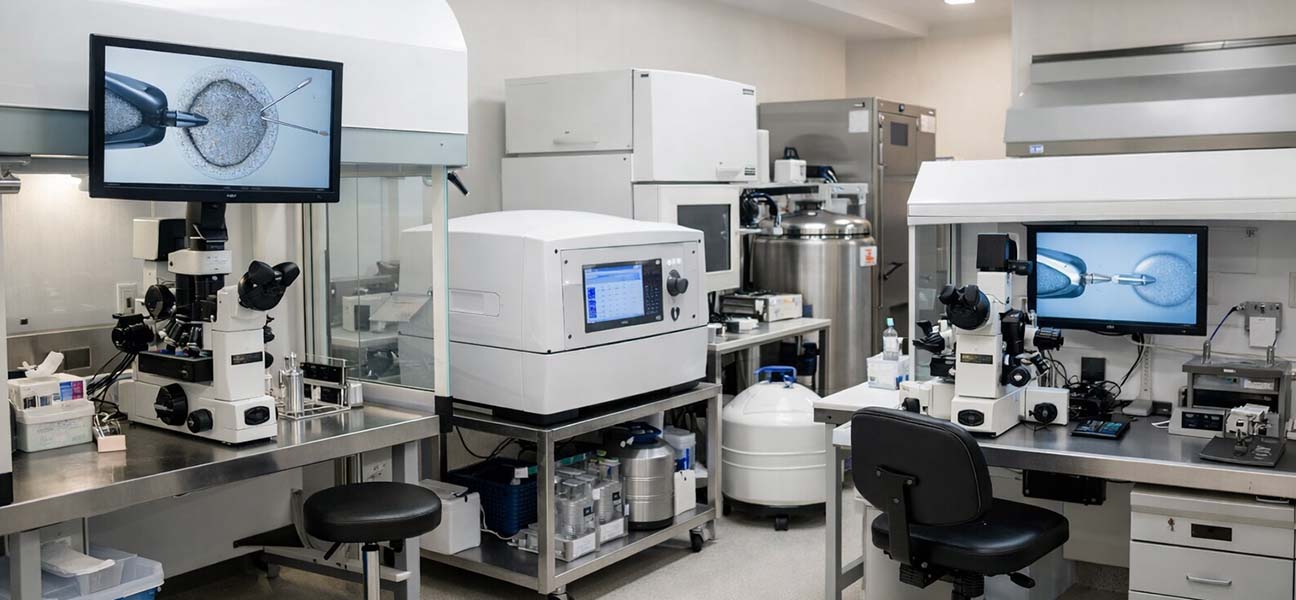
What Does the Cost of IVF in Georgia Include: A Direct Answer
The total cost of IVF in Georgia typically consists of four main parts: medical fees, living expenses, third-party service fees, and embryo/gamete screening and storage costs. Medical fees cover the entire process from examination, ovulation induction, egg retrieval, embryo culture, PGT genetic screening (if chosen) to transfer, averaging between 80,000 and 150,000 RMB. Living expenses include accommodation, translation, local transportation, meals, etc., calculated based on the cycle length (usually 14-21 days), approximately 30,000 to 50,000 RMB. If using an agency or coordination service, additional service fees are required, generally 10,000 to 30,000 RMB. Additional items such as embryo freezing and storage, sperm/egg sample transportation are charged separately. The overall budget is recommended to be 120,000 to 200,000 RMB, with the specific amount depending on the chosen hospital, ovulation induction protocol, whether PGT is performed, and the patient's individual circumstances.
Detailed Breakdown of Cost Components
1. Medical Fees
| Item | Description | Reference Cost Range (RMB) |
|---|---|---|
| Initial Consultation & Examination Fees | Physical exams for both partners, AMH, hormone panel, infectious disease screening, chromosome karyotype analysis, etc. | 5,000 - 10,000 |
| Ovulation Induction Medications | Depending on individual protocol (long protocol, antagonist protocol, mild stimulation, etc.) and medication brand (imported or domestic) | 15,000 - 35,000 |
| Egg Retrieval Surgery Fee | Includes anesthesia, transvaginal aspiration, and follicle flushing | 8,000 - 15,000 |
| Embryo Culture Fee | Conventional IVF or ICSI and culture to blastocyst stage | 12,000 - 25,000 |
| Embryo Transfer Fee | Includes transfer procedure, transfer catheter, ultrasound guidance | 6,000 - 12,000 |
| Embryo Freezing & Storage | Initial freezing fee + annual fee, charged per straw/vial | 5,000 - 15,000 (first year) |
| PGT-A/PGT-M Screening | PGT for aneuploidy or monogenic diseases, charged per embryo | 15,000 - 40,000 (3-8 embryos) |
| Assisted Hatching, Time-lapse Culture, etc. | Additional techniques at some centers | 3,000 - 8,000 |
Note: Pricing systems vary among different medical institutions. The price difference between high-end private hospitals in Tbilisi (such as IVF Georgia, InVitro, etc.) and public hospitals or low-cost centers can be 30%-50%.
2. Living and Travel Expenses
Traveling to Georgia for IVF usually requires a stay of 2-3 weeks (for frozen embryo transfer, it may involve two separate trips). Main expenses include:
- Accommodation: Apartment or hotel, estimated at 300-600 RMB per day, totaling approximately 4,500-12,000 RMB for 15-20 days.
- Translation & Medical Accompaniment: Some hospitals provide Chinese coordinators, or you may need to hire one separately, costing about 2,000-5,000 RMB per cycle.
- Transportation: Airport transfers, round trips to the hospital by taxi, approximately 1,000-3,000 RMB.
- Meals & Daily Expenses: Estimated at 100-200 RMB per person per day, about 1,500-4,000 RMB.
- Visa & Insurance: E-visa approximately 400 RMB, travel medical insurance about 500-1,000 RMB.
Overall living expenses typically range from 30,000 to 50,000 RMB. If choosing high-end services or accompanied by family members, it may increase to 60,000-80,000 RMB.
3. Third-Party Service Fees
Most patients coordinate the process through assisted reproduction consultation agencies or intermediaries. Service fees cover:
- Hospital liaison and appointment scheduling
- Medical translation and medical record organization
- Local living assistance (airport pickup, apartment hunting, clinic accompaniment)
- Follow-up coordination and embryo transportation arrangements
Service fees are generally 10,000-30,000 RMB, with VIP-level services potentially higher. It is advisable to clarify the service list before signing a contract to avoid hidden charges.
Easily Overlooked Cost Details
- Additional Examination Fees: Such as hysteroscopy, endometrial microbiome testing, immunological tests, etc., which are not always included by default and require separate payment, approximately 3,000-8,000 RMB.
- Embryo Transportation & Customs Fees: If embryos need to be shipped back home, this involves liquid nitrogen tank rental, international cold chain transport, and customs clearance fees, costing about 8,000-15,000 RMB.
- Cancellation or Cycle Termination Fees: Some hospitals still charge for medications and procedures already incurred for a cycle that has started (e.g., cancellation before egg retrieval). It is important to understand the refund policy in advance.
- Second Transfer Fees: If the first transfer fails, the medical cost for a subsequent frozen embryo transfer (transfer procedure, thawing fee, luteal support medications) is about 5,000-10,000 RMB, which needs to be re-budgeted.
- Exchange Rate Fluctuations & Payment Methods: The exchange rate between the Georgian Lari and the RMB is not very stable, and some hospitals only accept domestic payments or cash. Bank transfer fees may also increase costs.
Common Pitfalls to Avoid
- Low-Price Package Traps: Some organizations advertise "all-inclusive for 40,000 RMB," but this usually does not include ovulation induction medications, PGT screening, embryo freezing fees, or multiple transfer costs. The actual total cost often doubles.
- Hidden Markups by Agencies: Some agencies use "free service fees" as a gimmick but make a profit by inflating medical fee quotes (e.g., the hospital actually charges 100,000 RMB, but the agency quotes 130,000 RMB). It is recommended to request original quotes directly from the hospital and cross-check.
- Misunderstanding about Saving on Medication Costs: Choosing the cheapest ovulation induction medications may reduce the single-cycle cost but can lead to fewer retrieved eggs and poorer embryo quality, potentially increasing the cost of repeat cycles. The protocol should be chosen under a doctor's guidance.
- Neglecting Insurance: The Georgian medical system does not have mandatory insurance requirements for international patients, but complications such as Ovarian Hyperstimulation Syndrome (OHSS) or bleeding during egg retrieval can occur. Without insurance, the cost of managing these complications is out-of-pocket, ranging from 10,000 to 50,000 RMB.
Cost Differences Between Hospitals
There are over a dozen reproductive centers in Georgia, with a clear price gradient:
- High-End Private Hospitals (e.g., IVF Georgia, InVitro, Inmed Clinic): Overall medical costs are higher, but they have advantages in laboratory hardware, embryologist experience, and equipment updates. Suitable for complex cases or those seeking high success rates. Total cost is about 120,000-200,000 RMB.
- Mid-Range Chain Clinics (e.g., Chachava Clinic, Beta Clinic): Good value for money. Basic IVF costs about 70,000-100,000 RMB, and PGT about 120,000-160,000 RMB. Most Chinese patients choose this type.
- Low-Cost Centers (e.g., reproductive departments of some public hospitals): Prices can be as low as 50,000-80,000 RMB, but waiting times are longer, English communication is limited, and services like PGT may not be available.
When choosing a hospital, it is essential to simultaneously evaluate the laboratory grade, embryologist qualifications, and historical live birth rate data, and not make a decision based solely on cost.
When is IVF in Georgia a Suitable Choice?
- Repeated IVF failures in your home country, wanting to try a different laboratory environment
- Need for PGT with a budget under 150,000 RMB
- Need for egg/embryo donation (Georgian law is relatively relaxed, but nationality compliance must be checked)
- Cannot tolerate long waiting lists and queues in your home country
- Need for gender selection (permitted under Georgian law)
When is it Not Suitable?
- Advanced age (≥45 years) with very high expectations for success; Georgian data still lags behind top-tier centers in Europe and the US
- Need for complex gynecological surgery (e.g., severe intrauterine adhesions, hydrosalpinx) should be addressed in your home country first
- Extremely tight budget (less than 80,000 RMB) and unable to accept multiple transfers, risking "giving up halfway"
- Inability to adapt to the overseas environment (language, time difference, diet) may increase psychological stress and affect endocrine function
Specific Process and Required Time
- Initial Consultation & Preparation (Completed at Home, 1-2 months): Complete basic examinations, obtain passport and visa, select hospital and agency, communicate the plan in writing.
- Fly to Georgia on Day 2-3 of Menstruation (14-21 days): Upon arrival, have a follow-up consultation, create a medical file, start ovulation induction (about 10-12 days), rest for 1-2 days after egg retrieval before returning (stay longer for fresh embryo transfer).
- Embryo Culture & PGT (3-4 weeks): Wait for the embryo report after egg retrieval; you can return home and wait for a phone call.
- Frozen Embryo Transfer Cycle (1-2 weeks): Travel to Georgia again, prepare the endometrium, then transfer. A pregnancy test is done 7-10 days after transfer.
The entire process usually requires 2-3 trips, with a total time span of about 3-5 months.
Required Documents and Precautions
- Valid passport (validity must cover the entire treatment cycle) and e-visa (can be applied online, issued within 2-3 working days)
- Medical reports from the last 6 months from your home country (hormones, AMH, semen analysis, infectious diseases, chromosomes) – some hospitals accept them, but they may need translation and notarization
- Medical records related to surgeries (e.g., for uterine fibroids, endometriosis)
- Bank card with sufficient funds to cover expenses (Visa/Mastercard recommended), be aware of daily withdrawal limits
- Purchase travel medical insurance that covers complications of assisted reproduction
Practitioner's Observation: How to Plan Your Budget More Reasonably
In the past two years, I have handled over 100 clients going to Georgia for IVF and found a common problem: the initial budget is often underestimated by 30%-50%. It is recommended to request a detailed English quotation from the hospital during the consultation phase, including the unit price for each item, and then add about 20% as a contingency fund. If choosing PGT, prepare a medical budget of 150,000 RMB; for only IVF/ICSI, 100,000 RMB is sufficient. For living expenses, if traveling as a couple, budget at least 40,000 RMB. For agency service fees, try to choose a pay-per-service model rather than an "all-inclusive" package. Finally, do not overlook the cost of transporting frozen embryos back home – this expense is often only realized after pregnancy.
Risk Reminder
All assisted reproduction carries medical risks, including Ovarian Hyperstimulation Syndrome, infection from egg retrieval, anesthesia accidents, and complications of multiple pregnancies. When undergoing treatment in Georgia, confirm whether the hospital has the qualifications and facilities to handle emergencies for international patients. Additionally, regarding policy: While Georgian law permits third-party assisted reproduction (surrogacy, egg donation, sperm donation), surrogacy arrangements for foreigners exist in a grey area and are not within the scope of this cost discussion. It is recommended to use your own eggs and sperm and prepare the legal documents for embryo transportation.
Note: The cost data above is based on common quotes from 2024-2025. Actual amounts may vary due to exchange rates, hospital price adjustments, and individual protocol differences. Please obtain the latest written quotation before making a decision.
Comments (0)