
Real Consultation Scenario: A Patient's Direct Question
A patient preparing for IVF treatment in Georgia asked during a consultation: "Does your hospital have a pediatric department? If there are problems after the baby is born, can we be seen here directly?" This question seems simple, but it actually reflects a common misconception—equating a reproductive center with a general hospital that provides a full range of medical services. Many patients assume that a hospital offering IVF should also handle the baby's health issues after birth, but this is not the case.
Direct Answer: IVF Clinics in Georgia Generally Do Not Have Pediatrics
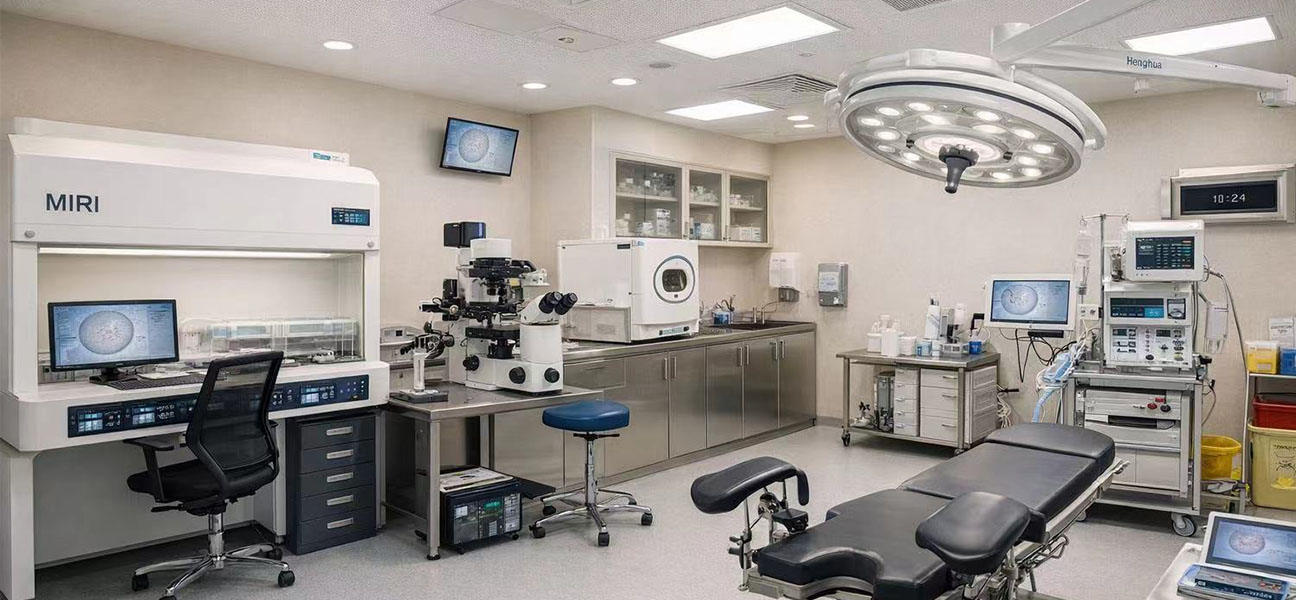
IVF hospitals (reproductive centers) in Georgia typically do not have pediatric departments. Reproductive centers are highly specialized medical institutions whose core services cover infertility diagnosis, ovulation induction, egg retrieval, embryo culture, PGT genetic testing, embryo transfer, and early pregnancy support. Pediatrics, on the other hand, is an independent clinical discipline separate from reproductive medicine, responsible for children's health management, disease diagnosis and treatment, and growth and development monitoring from birth to adulthood.
In Georgia, pediatric medical services for IVF babies after birth are provided by general hospitals, children's specialized hospitals, or community health centers. Some large reproductive centers may have fast-track channels or referral agreements with local general hospitals, but the reproductive center itself does not have pediatric wards, pediatricians, or a Neonatal Intensive Care Unit (NICU).
Doctor's Perspective: Reproductive Center and Pediatrics Are Two Independent Stages
From a reproductive medicine perspective, the goal of IVF treatment is to help patients achieve pregnancy and a live birth. Once a patient is confirmed pregnant, the reproductive center's task is essentially complete. Subsequent prenatal care, delivery, and newborn health management are taken over by obstetrics and pediatrics. The relationship between reproductive specialists and pediatricians is a "relay," not an inclusion.
In Georgia, reproductive specialists usually refer patients to an obstetrician around the first trimester (approximately 8-12 weeks), who then manages the rest of the pregnancy. After the baby is born, pediatricians conduct newborn assessments and health follow-ups. The reproductive center does not intervene in medical decisions after delivery, as this falls outside its professional scope.
Differences Between Hospitals: Reproductive Departments in General Hospitals vs. Independent Reproductive Centers
Assisted reproductive institutions in Georgia are mainly divided into two types: reproductive departments within general hospitals and independent reproductive centers. These two scenarios differ significantly in terms of pediatric services:
| Institution Type | Has Pediatrics? | Ease of Referral | Common Examples |
|---|---|---|---|
| Reproductive Dept. in General Hospital | Hospital has pediatrics, but the reproductive dept. itself does not | Convenient, can refer within the same hospital | Some large public hospitals |
| Independent Reproductive Center | Generally no pediatrics and no general hospital support | Need to arrange external pediatric care independently | Most private fertility clinics |
If you choose an independent reproductive center, you need to find out in advance which general hospitals or children's hospitals in the city offer pediatric services, especially NICU support that might be needed after the baby is born. Major cities in Georgia like Tbilisi and Batumi have several general hospitals with relatively adequate pediatric resources.
Easily Overlooked Details: Follow-up Needs After IVF Baby Birth
Many patients focus entirely on the IVF treatment itself but neglect the medical transition after the baby is born. The following details are often overlooked:
- Do IVF babies need special pediatric follow-up? Currently, there is no evidence that IVF babies require different routine pediatric care than naturally conceived babies. However, patients who underwent PGT due to genetic factors may need pediatric genetic follow-up.
- Georgia's pediatric vaccination schedule differs from that in some other countries. Patients need to understand this in advance and ensure a smooth transition.
- If you choose to give birth in Georgia, confirm whether the hospital has a NICU (Neonatal Intensive Care Unit), especially in cases of high-risk twins or preterm birth.
- Some reproductive centers offer "referral assistance," but this is not a standard service and needs to be proactively requested.
Common Pitfall: Mistakenly Believing IVF Hospitals Offer "One-Stop" Service
The biggest misconception is thinking that an IVF hospital provides a full range of services from conception to child health care. In reality, the reproductive center's service scope essentially ends once the pregnancy is confirmed (usually around 12 weeks of gestation). A few reproductive centers may offer early pregnancy support, but this does not extend to the newborn or childhood stages.
Another common "trap" is that some patients, for convenience, choose to give birth at the same institution as the reproductive center, only to find that the institution has no pediatrics or NICU. Therefore, when choosing an IVF hospital, you should not only focus on its reproductive technology level but also plan ahead for the delivery hospital and pediatric resources.
Actual Process: Transition from IVF Treatment to Pediatric Services
Below is a typical process from IVF treatment to pediatric care in Georgia:
- Ovulation Induction & Egg Retrieval: Completed at the reproductive center, unrelated to pediatrics.
- Embryo Culture & PGT: Completed in the embryology lab, unrelated to pediatrics.
- Embryo Transfer: Completed at the reproductive center.
- Early Pregnancy Monitoring: Approximately 2-4 weeks after transfer, HCG test and ultrasound at the reproductive center to confirm clinical pregnancy.
- Referral to Obstetrics: At 8-12 weeks of pregnancy, the reproductive center refers the patient to an obstetric hospital for prenatal care.
- Delivery: Takes place at a general hospital or a specialized obstetric hospital.
- Newborn Assessment: After birth, a pediatrician performs Apgar scoring, physical examination, etc.
- Routine Pediatric Care: Subsequent vaccinations and growth monitoring are done at a pediatric clinic or community health center.
Throughout this process, the reproductive center is only responsible for the first 4 steps. From step 5 onwards, obstetrics and pediatrics take over. Patients need to ensure that their chosen reproductive center has good referral relationships with qualified local obstetric and pediatric institutions.
Frequently Asked Questions: Key Concerns of Patients
- Q: Do IVF babies born in Georgia need special pediatric examinations?
A: Usually not. However, if there is a family genetic history or PGT detected specific genetic variants, a pediatric genetic evaluation is necessary. - Q: After doing IVF in Georgia, how do I find a pediatrician for my baby?
A: You can choose a pediatrician through local general hospitals, international hospitals, or medical resources recommended by your embassy. Several large general hospitals in Tbilisi (such as New Hospitals, VIAMED, etc.) have pediatric departments. - Q: Will the reproductive center help me contact a pediatrician?
A: This is not a standard service, but some well-coordinated reproductive centers can provide a list of recommendations. It is advisable to proactively ask. - Q: If my baby has an emergency after birth, can the reproductive center handle it?
A: No. Reproductive centers do not have the equipment or qualifications to handle neonatal emergencies. In an emergency, you must go directly to a general hospital emergency room.
Practitioner's Observation: The Importance of Patient Education
As a medical editor, I have noticed that many patients instinctively think, "A hospital that does IVF should have all departments." This cognitive bias stems from a lack of understanding of the specialized nature of reproductive medicine. In Georgia, the boundary between reproductive centers and pediatric services is very clear. Practitioners should proactively explain the scope of services at the initial consultation to avoid unrealistic expectations later in treatment. This is not only a medical standard but also a demonstration of responsibility towards patients.
Risk Reminder: Plan Delivery and Pediatric Resources in Advance
When undergoing IVF treatment in Georgia, it is essential to understand the distribution of delivery hospitals and pediatric resources before starting treatment. Especially for international patients planning to give birth locally, confirm whether the hospital has a NICU (high-risk neonatal care unit) and understand the medical procedures for international patients. Georgia's healthcare system differs from that in other countries. It is recommended to start consulting about local obstetric and pediatric resources during the ovulation induction phase, allowing ample time for coordination. Do not wait until the baby is almost due to start looking for a pediatrician, as this can put you in a very passive position.
Comments (0)