
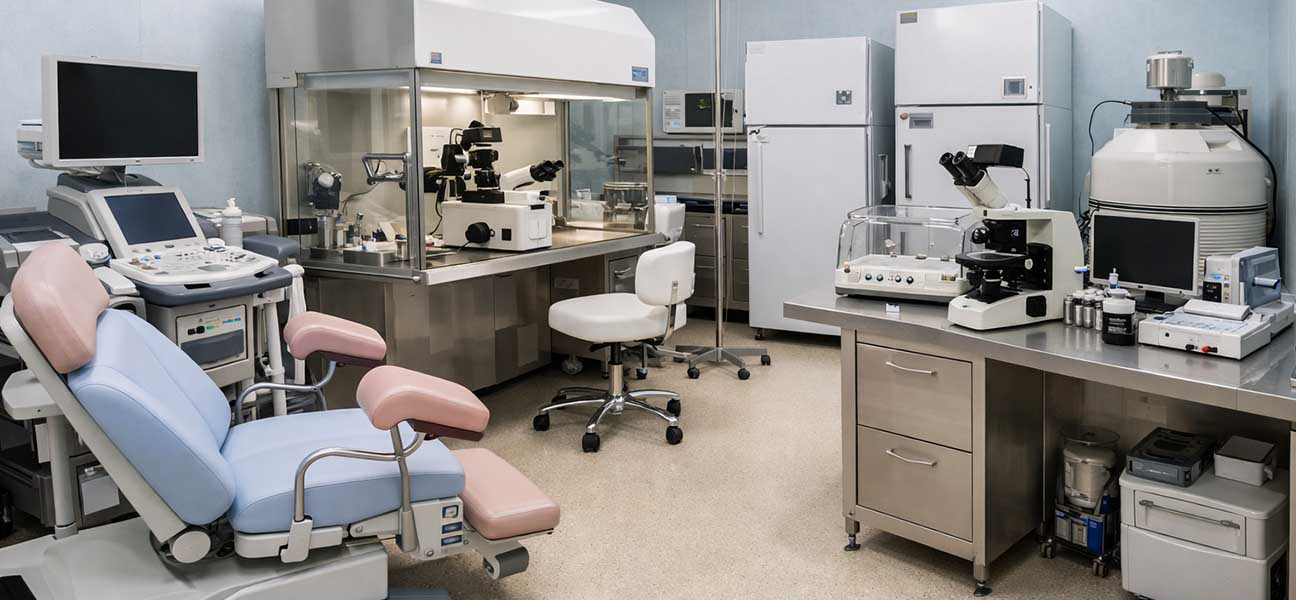
A patient planning to go to Georgia asks: Does Gagua Hospital have doctors who speak Chinese?
Last week, a 38-year-old patient with an AMH of 1.1 ng/mL asked me on WeChat: "I've researched a lot, and Gagua Hospital seems to have good success rates, but my English is poor, and I need a translator throughout. Do they have an internal Chinese medical team? Or do I need to find my own translator?"
This question is very typical. Language barriers are one of the most underestimated aspects of overseas assisted reproduction. If the hospital does not have stable, medically knowledgeable Chinese-speaking staff, the patient's communication costs will multiply. Below, based on industry realities and known information about the hospital, I will systematically answer this question.
1. Direct Answer: Does Gagua Hospital Have a Chinese Medical Team?
Yes. Gagua Hospital (Gagua Reproductive Center, located in Tbilisi, Georgia) has specifically assigned Chinese medical coordinators and Chinese translators for international patients. These personnel are either full-time hospital employees or part of a long-term contracted team, not temporary outsourced translators. Their work covers:
- Initial Consultation: Responding to user questions about procedures, costs, and success rates via WeChat, email, etc.
- Clinic Visits: Translating doctor consultations, test result interpretations, and stimulation protocol explanations.
- Document Assistance: Helping translate medical records, visa invitation letters, embryo reports, and other documents.
- Life Support: Recommending accommodation, airport transfers, local living guidance, etc.
Note: The main role of the Chinese team is "medical coordinator," not "Chinese doctor." The doctors' native language is mostly Georgian or Russian, but most can communicate in English. The Chinese coordinator will relay the doctor's diagnosis and plan to the patient in plain Chinese, while also feeding the patient's needs back to the doctor.
2. Why Do Patients Specifically Need to Confirm the Existence of a "Chinese Medical Team"?
Assisted reproduction involves a large number of specialized terms and complex decisions. Taking ovarian stimulation protocols as an example, doctors use terms like "GnRH antagonist," "LH surge," and "trigger timing"; the embryo culture stage involves concepts like "blastocyst grade," "PGT biopsy," and "mosaic embryo." Ordinary translators find it difficult to convey these accurately, easily leading to misunderstandings. A Chinese coordinator who has worked long-term with reproductive doctors can minimize information loss to the greatest extent.
Furthermore, critical steps like the timing of the trigger shot before egg retrieval or medication adjustments after embryo transfer, if translated incorrectly, could lead to cycle cancellation or reduced effectiveness. Therefore, whether a hospital has a stable, professional Chinese team directly impacts a patient's confidence in their decision.
3. Differences in Needs for Chinese Services Among Different Patient Types
| Patient Type | Dependence on Chinese Team | Considerations |
|---|---|---|
| Fluent in English, strong medical background | Low, but still needs coordinator for documents | Can communicate directly with doctor in English, but still needs Chinese staff for legal document translation |
| Everyday English, no medical terminology knowledge | High, must rely on Chinese coordinator | Verify if the coordinator has reproductive medicine knowledge, not just a regular tour guide |
| Advanced age, previous failure history, poor ovarian reserve | Very high | When protocols are adjusted frequently, every communication needs precise translation. Assess the coordinator's response speed. |
| One spouse overseas, one in home country | Medium | Requires remote translation of medical records, transmission of authorization letters, etc. Coordinator must be familiar with cross-border document procedures. |
4. The Most Easily Overlooked Detail: Working Hours and Coverage of the Chinese Team
Many patients assume the "Chinese team is available 24/7," but this is not the case. The time difference between Georgia and China is about 4 hours (3 hours during daylight saving time). The coordinator's working hours are usually local time 9:00-18:00. During the stimulation phase, doctors usually monitor follicles in the morning and give medication adjustment instructions for the day, which the coordinator needs to convey promptly. If a patient asks a question during Chinese evening hours, they might not get a reply until the next morning. This must be communicated in advance for time planning.
Additionally, there are some steps where the Chinese team is not directly involved: for example, internal operations in the embryology lab (communication between embryologist and doctor), or on-site guidance for the trigger shot (usually done by a nurse, who may only speak Georgian or Russian). However, patients can obtain complete video tutorials or written instructions in advance through the coordinator.
5. Actual Process: Chinese Service Touchpoints from Consultation to Transfer
- Initial Consultation: Contact the hospital via WeChat/Chinese website. The Chinese coordinator responds to basic questions, provides doctor profiles, package prices, and document checklists.
- Remote Consultation: The patient completes specified tests in their home country (AMH, hormone panel, semen analysis, etc.) and sends the reports to the coordinator. The coordinator organizes them and submits them to the doctor. The doctor provides an initial plan via video or in writing, with the coordinator translating throughout.
- Arrival in Georgia: The coordinator assists with airport pickup, check-in, accompanies the patient to the hospital for registration, payment, and signing consent forms.
- Ovarian Stimulation Cycle: During daily follicle monitoring, the coordinator accompanies the patient to see the doctor, translating the day's medication dosage, injection method, and next appointment time.
- Egg Retrieval and Transfer: The coordinator does not enter the operating room on the procedure day (due to sterility restrictions) but remains on standby in the waiting area. After the procedure, the doctor informs the patient of the number of eggs retrieved, fertilization status, and embryo grading through the coordinator.
- Embryo Results and Follow-up: When PGT testing is involved, the coordinator helps interpret the report (chromosome normality, mosaicism percentage, etc.). Post-transfer medication instructions and blood test scheduling are all conveyed by the coordinator.
6. Why Do Patients Sometimes Feel the "Chinese Team is Not Professional Enough"?
There are several common reasons:
- Coordinator Turnover: Some hospitals have frequent changes in their Chinese team. Newcomers may not be familiar with the doctor's habits, leading to translation inaccuracies.
- Differences in Doctor Style: Some doctors prefer giving patients detailed biological explanations, while others only give conclusions. If the coordinator fails to adjust their translation style, the patient may feel they lack information.
- Cultural Differences: Chinese patients are accustomed to frequently asking for details, while Georgian doctors place more emphasis on trust and cooperation. The coordinator needs to balance this, which can sometimes come across as "perfunctory."
- Holiday Impact: During Georgian public holidays (e.g., Orthodox Christmas, Independence Day), the Chinese team may be off, but the hospital arranges for other language coordinators for emergencies.
How to assess? It is recommended to request a video or voice call with the Chinese coordinator before deciding. Ask directly: How long have you been in this role? How many cycles have you translated? Do you understand PGT reports? If they can clearly explain something like "a mosaicism ratio over 20% suggests re-biopsy," it indicates a professional team.
7. Suitable and Unsuitable Candidates
Patients suitable for choosing Gagua Hospital's Chinese team:
- Chinese patients who do not understand English or Russian at all.
- Couples with zero knowledge of medical terminology who want someone to explain everything throughout the process.
- Patients who need the hospital to issue treatment certificates or medical record translations in Chinese for domestic reporting or reimbursement.
- Women undergoing their first overseas IVF cycle who need more linguistic reassurance psychologically.
Patients who are not suitable or need extra caution:
- Patients who expect the primary doctor to communicate directly in Chinese (the doctor's native language is not Chinese; communication is only possible through the coordinator).
- Patients with extremely strict requirements for translation accuracy (e.g., legal documents, genetic test report analysis). It is advisable to also hire an independent medical translator for double verification.
- Patients who need professional psychological counseling from the Chinese team (coordinators usually do not have psychological counseling qualifications).
8. Practitioner's Observation: The Value and Limitations of the Chinese Team
As someone who has worked in overseas assisted reproduction coordination for many years, I want to say: the Chinese team is by no means an "additional service" of the hospital, but a core module determining the patient experience. The Chinese team at Gagua Hospital has gone through three iterations since its establishment. Early on, there were indeed problems with inaccurate translation and slow response, but currently, the core coordinators have each handled hundreds of Chinese cycles and are very proficient in the medical terminology of common complications (such as ovarian hyperstimulation, thin endometrium).
The limitations are also clear: coordinators are not doctors and cannot answer medical decision-making questions like "What protocol should I use?" or "Is this embryo worth transferring?" If a patient wants to discuss protocol details, they must schedule an appointment with the doctor through the coordinator. Under the stress of unsatisfactory egg retrieval numbers or failed transfers, patients may vent their emotions on the coordinator, requiring reasonable expectations from both sides.
9. Risk Reminder: Common Pitfalls with Language Intermediaries
A few intermediary agencies claim, "We have our own translators, you don't need the hospital's official Chinese team." In such cases, the hospital's official coordinators may be unwilling to cooperate due to unclear authorization and responsibility division. It is recommended to confirm the Chinese team's contact information directly through Gagua Hospital's official channels (official website, official WeChat) to avoid intermediaries charging extra fees or tampering with medical instructions.
Also, be sure to keep all WeChat chat logs, emails, and other written evidence from the Chinese medical coordinator. In case of medication errors or communication failures, there will be evidence to refer to. Coordinators at正规 hospitals will proactively provide proof of their work identity.
10. Time Planning Reminder: How Early to Contact the Chinese Team
It is recommended to establish contact with the hospital's Chinese team at least 2-3 weeks in advance. This is because the initial remote consultation requires preparing complete test reports (valid AMH, infectious disease screening, chromosome karyotype, etc.), and the hospital needs time to evaluate and provide a plan. If a PGT cycle (i.e., third-generation IVF) is needed, time must also be reserved for embryo biopsy and genetic analysis, and the Chinese team needs to coordinate the sample shipping process in advance.
For patients needing a medical visa, the Chinese team will provide an invitation letter, but processing times at the embassy vary. It is recommended to allow at least 10 working days. It is best to have the Chinese team pre-review all materials to avoid visa rejection due to translation errors or incomplete documents.
11. Special Group Reminder: Patients of Advanced Age and with Diminished Ovarian Reserve
Patients over 40 or with an AMH below 0.5 ng/mL often need multiple egg retrievals to accumulate embryos. These patients rely more heavily on the Chinese team because protocols may be adjusted frequently. After each stimulation, the doctor re-evaluates ovarian response, and the coordinator needs to accurately convey complex information like "This cycle yielded 2 eggs, 1 of which was mature. Should we continue trying to accumulate?" It is advisable to ask the coordinator directly during the initial consultation: If the number of eggs retrieved in one cycle is low, does the hospital have a clear "embryo accumulation" policy? Can the Chinese coordinator assist in arranging consecutive cycles? These questions help you assess whether their experience is sufficient for your situation.
The information in this article is based on real industry experience and does not constitute medical advice. Please confirm specific service details directly with Gagua Hospital's official Chinese team.
Comments (0)