
Consultation Scenario: A 43-Year-Old Patient with Diminished Ovarian Reserve Asks
A patient with AMH 0.6 ng/mL, who had two failed IVF attempts domestically, asked in the coordinator's office: "I heard Georgia is more open to advanced maternal age and egg donation, but what is the actual medical standard there? Will it be worse than at home?" This is a very typical question. The following content, based on industry knowledge and public information, helps her (and others with similar doubts) understand the real medical landscape of assisted reproduction in Georgia.
Georgia Assisted Reproductive Medical Standards: Core Answer
Georgia's assisted reproductive medical standards fall into the "high cost-effectiveness + lenient laws" tier. Its embryo lab hardware and doctor operating protocols are close to those in Israel and some European countries, but the overall regulatory system, data transparency, and standardization are weaker than in developed countries like the USA and Spain. Suitable for: patients needing third-party assistance, those sensitive to cost, or those facing legal restrictions. Not suitable for: patients with extremely high requirements for lab accreditation, those needing the latest genetic screening technologies, or those demanding strict transparency of success rate data.
Doctor's Perspective: Lab Standards & Physician Experience
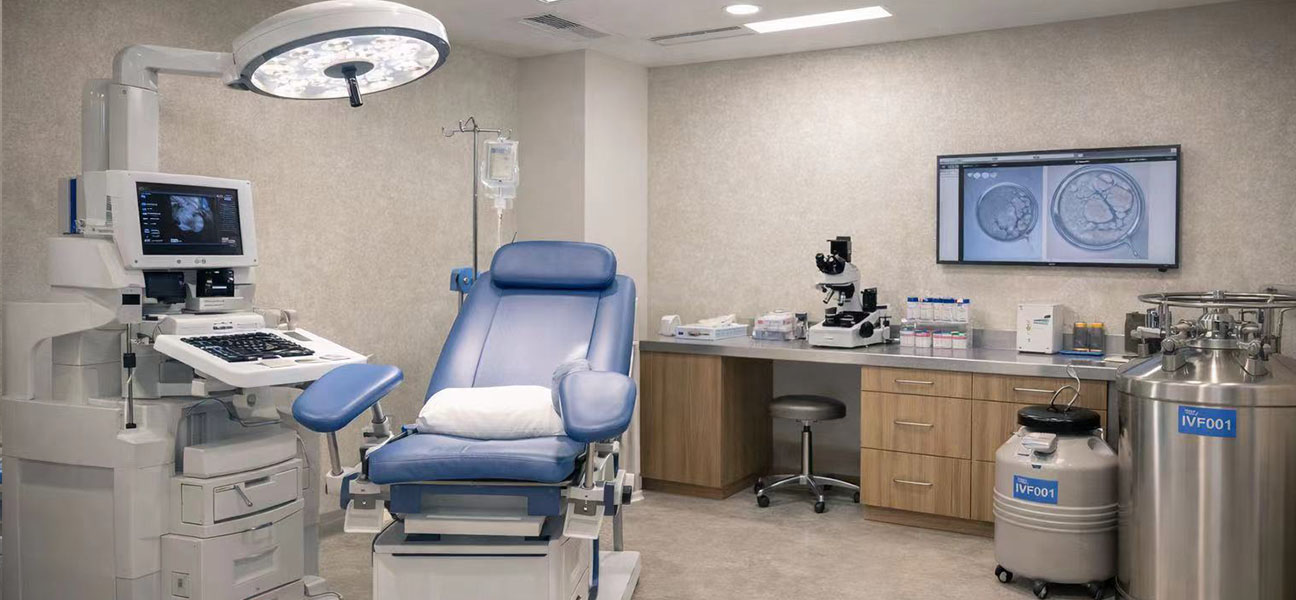
Georgia currently has about 30-40 fertility centers. Several large centers in Tbilisi (e.g., IVF Georgia, Center for Reproductive Medicine) have imported embryo culture systems and time-lapse imaging technology from Denmark and Israel. Some doctors have European training backgrounds, and the annual number of egg retrieval cycles is around 2,000-4,000. When is it suitable to choose? For simple IVF/ICSI cycles, especially for patients with clear needs for egg/sperm donation and no need for complex PGT-A screening. When is it not suitable? For patients requiring cutting-edge technologies like whole-genome PGD or mitochondrial replacement; currently, only a few local centers can perform basic PGT-A.
Comparison of Differences Between Countries
| Dimension | Georgia | USA | Spain |
|---|---|---|---|
| Legal Coverage | Egg donation, sperm donation, legal surrogacy (legislated) | Surrogacy varies by state, egg donation common | Egg donation allowed, surrogacy restricted |
| Lab Accreditation | No unified international accreditation; some centers have ISO/SGS | CAP, CLIA, SART | ISO, Spanish Fertility Society self-assessment |
| Single Cycle Cost (IVF) | Approx. $3,000 - $5,000 | $12,000 - $25,000 | €5,000 - €9,000 |
| Embryo Culture Technology | Mainstream use of time-lapse imaging, single embryo culture | Advanced AI-assisted selection, CCM culture media | Consistent with European mainstream |
Easiest Detail to Overlook: Data Authenticity & Follow-up
Georgia does not have a mandatory data reporting system like the US SART. The "success rate" published by a center might only calculate fresh cycles or only count up to pregnancy rather than live birth. What should you prepare? Ask the center to provide live birth rates, miscarriage rates, and cycle cancellation rates broken down by age group (<35, 35-40, >40), and check if there is independent third-party auditing. What is the specific process? First, request raw data via email and compare 2-3 centers.
Actual Process & Timeline
- Preparation Phase (1-2 months): Complete basic fertility assessment at home (AMH, FSH, LH, antral follicle count), infectious disease screening, chromosome karyotype, and male semen analysis. Georgian law requires HIV, Hepatitis B, Hepatitis C, and Syphilis test reports before any assisted reproduction.
- Center Selection & File Setup (2-3 weeks): Send all test reports, have a video consultation. Georgian centers usually accept English reports; some may require Russian translation. What materials are needed? Passport, marriage and fertility certificate (notarized translation), legal consent forms.
- Travel to Georgia for Stimulation & Egg Retrieval (10-14 days): Start stimulation on day 2 of menstruation, egg retrieval around day 11 on average. How long is the stay? Approximately 20 days in Georgia (retrieval + fertilization + preparation for transfer).
- Embryo Culture & Transfer (1-2 weeks): You can choose fresh embryo transfer or freeze all embryos for transfer in a subsequent cycle. PGT-A cycles require an additional 2-4 weeks of waiting.
Cost Influencing Factors
- Basic IVF/ICSI: $3,000 - $5,000 (excluding medication). Stimulation medication in Georgia costs about $800 - $1,500 (imported Gonal-f, Pergoveris).
- PGT-A (Tier 3 IVF): Biopsy fee per embryo $300 - $500, plus genetic analysis $1,000 - $2,000.
- Egg/Sperm Donation: Donor egg cost approx. $3,000 - $6,000 (including compensation), sperm approx. $500 - $1,500.
- Surrogacy: All-inclusive approx. $35,000 - $55,000, covering agency, legal, medical, and compensation.
- Hidden Costs: Flights, accommodation (Tbilisi monthly rent approx. $500 - $1,200), translation, notarized translation, etc.
Frequently Asked Questions
Q: Is the IVF success rate in Georgia higher than at home?
A: It cannot be simply compared. For women under 35 with male factor infertility, large centers in Georgia have a live birth rate of about 40%-50% (comparable to large domestic centers). For advanced maternal age (over 40) or those with limited egg supply, Georgia's open egg donation policy (legally allowing donation with no age limit restriction) results in a significantly higher overall live birth rate than at home (where egg donation wait times can be 3-5 years).
Q: What is the level of local doctors?
A: Some doctors have trained in Israel or Germany and have richer experience with complex cases compared to other Eastern European countries. However, there is still a gap compared to top international centers in rare genetic disease diagnosis and advanced third-generation technology. How to judge? Look at the doctor's publications or academic conferences in the last 3 years, and check if they have handled cases similar to yours.
Q: Should I worry about legal risks?
A: In 2022, Georgia officially passed the "Assisted Reproductive Law," legalizing surrogacy, egg and sperm donation, but requires both parties to sign comprehensive legal agreements and have them notarized. Important note: After the surrogate gives birth, the intended parents must obtain the birth certificate through paternity testing and legal procedures, which takes about 2-4 weeks.
Practitioner Observation: Most Common Reasons for Failure
In a year of handling many overseas patients in Georgia, non-medical factors were found to be the main cause of failure: ① Failure to assess the endometrial environment in advance, neglecting hysteroscopy and endometrial microbiome testing; ② Poor ovarian response after stimulation without timely protocol adjustment, delayed communication with the center; ③ Variability in embryo freezing and thawing procedures, with survival rates ranging from 80% to 95% across different labs. The most common pitfall: Choosing a center based solely on price without verifying the background of the embryologist or lab director.
Special Situation Management
Situation 1: AMH < 0.5, domestic doctors advise giving up. Some Georgian centers offer protocols like mini-stimulation, natural cycle, or ovarian activation (PRP), but note that the effectiveness of PRP is still debated. What to prepare? Antral follicle counts for three consecutive menstrual cycles, ruling out luteal phase cysts.
Situation 2: Need for egg donation. Georgia has a relatively abundant supply of egg donors (many local young donors), but matching for skin color, blood type, and educational background is less refined than in Europe or the US. How to choose? Ask the center to provide the donor's three-generation health questionnaire and carrier screening for genetic diseases (e.g., CF, SMN1).
Situation 3: HIV-positive patient. Local law prohibits HIV-positive individuals from receiving assisted reproduction, but some centers can handle male HIV positivity through sperm washing + IUI/ICSI, requiring lab reports showing viral load < 200 copies/mL and CD4 > 500.
Risk Reminder
Georgia's healthcare system is overall at a developing level. Potential medical risks such as antibiotic resistance and blood transfusion safety need attention. Before going to Georgia, it is advisable to purchase international insurance covering medical evacuation and consciously choose medium-to-large centers equipped with laminar flow hoods, separate culture rooms, and backup generators. Additionally, some agencies may exaggerate success rates or hide cycle cancellation rates. Always request original records with patient names (with privacy redacted) from the center for verification. Ultimately, whether it is suitable for you depends on your trade-off between cost-effectiveness, legal tolerance, and laboratory stability.
Comments (0)