
Common Patient Decision Misconceptions: Blastocyst Transfer Is Not for Everyone
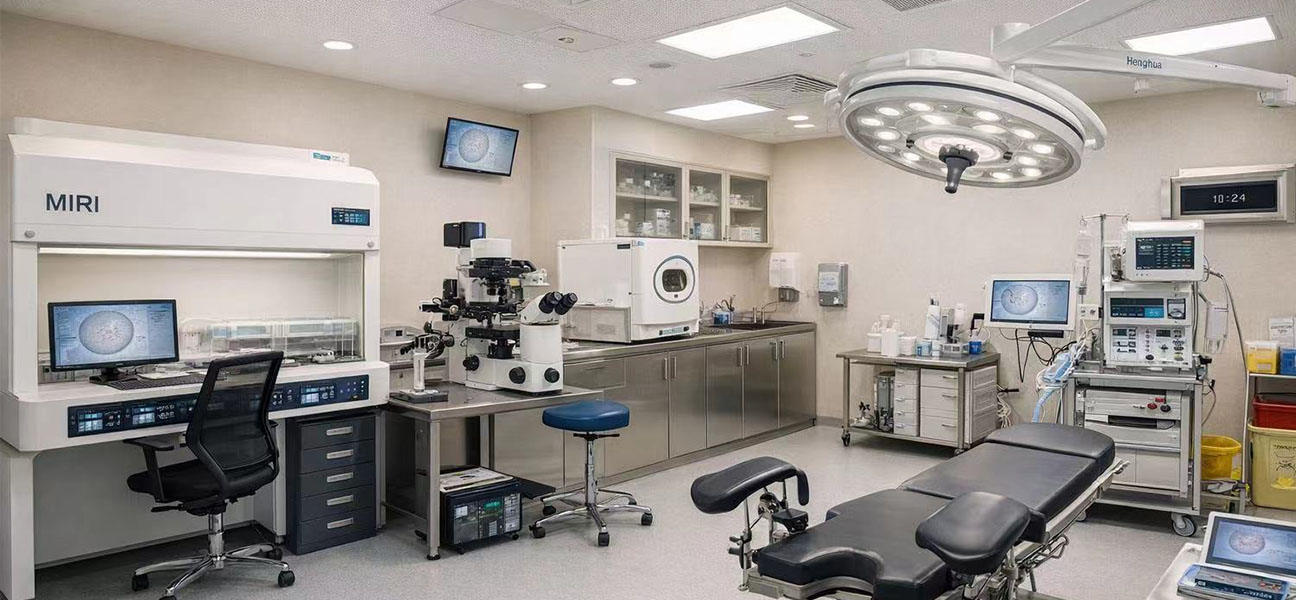
In clinical consultations, some patients believe that "Day5 blastocyst transfer has the highest success rate, so everyone should choose blastocyst transfer," or "Georgia's blastocyst technology is the same as in my country, so I can just go directly." Both of these ideas are biased. Blastocyst transfer is a technique that requires matching the patient's embryo quantity, developmental potential, laboratory conditions, and clinical indications. Not all cycles are suitable for culturing to day 5. In Georgia, there are differences in the culture systems, embryologist experience, and quality control standards among different fertility centers, all of which directly affect the blastocyst formation rate and transfer outcomes. The following is a systematic analysis from the perspectives of technical procedures, applicable conditions, and risk assessment.
Standard Procedure for Blastocyst Transfer in Georgia
The overall process of Day5 blastocyst transfer is similar to a conventional IVF cycle, but with specific requirements during the embryo culture phase. The following are the key steps from ovulation induction to transfer:
| Stage | Specific Content | Timing |
|---|---|---|
| Ovulation Induction | Use gonadotropins to stimulate the ovaries and monitor follicle development | Starting from day 2-3 of menstruation, lasting 10-14 days |
| Egg Retrieval Surgery | Transvaginal ultrasound-guided follicle aspiration | 36-38 hours after HCG injection |
| Fertilization and Embryo Culture | Fertilization via IVF or ICSI, followed by sequential culture in specific culture media | Day 0-5 after egg retrieval |
| Blastocyst Formation Assessment | On day 5, observe blastocyst expansion degree, inner cell mass, and trophectoderm cell quality | Morning of day 5 after egg retrieval |
| Transfer Procedure | Transfer the blastocyst into the uterine cavity under ultrasound guidance | Afternoon of day 5 or day 6 after egg retrieval |
| Luteal Support | Use progesterone medications to support endometrial receptivity | From transfer until pregnancy test |
In Georgia, some centers use time-lapse technology to dynamically observe embryo development, helping to select blastocysts with better developmental trajectories. This equipment is not standard in all laboratories; patients can inquire about its availability when choosing a center.
Technical Advantages and Clinical Applicable Conditions
When is Day5 Blastocyst Transfer Suitable?
- Relatively high number of retrieved oocytes (usually >8), providing enough embryos for culture and selection
- Previous recurrent implantation failure, considering embryo developmental potential issues
- Need for PGT-A or PGT-M genetic testing, as blastocyst biopsy yields more cells and more stable results
- Normal endometrial receptivity assessment but average day 3 embryo morphological grading
- Single embryo transfer strategy, prioritizing blastocysts with higher implantation rates
When is Blastocyst Culture Not Suitable?
- Very few retrieved oocytes (<3), as culturing to day 5 may result in no embryos for transfer
- Previous multiple blastocyst cultures with no blastocyst formation, indicating severely compromised embryo developmental potential
- Age >42 years with severely diminished ovarian reserve (AMH <0.5 ng/mL), resulting in few oocytes and potentially poor embryo quality
- Need for urgent transfer (e.g., due to medical reasons that cannot be delayed)
- Limited laboratory conditions unable to provide a stable blastocyst culture environment
In Georgia, some centers conduct a comprehensive assessment of the patient's embryo count, age, and previous culture history before recommending whether to "culture to day 3 for transfer" or "culture to day 5 for transfer." If a center recommends blastocyst transfer without such an assessment, patients should be cautious.
Why Blastocyst Culture Carries a Risk of Failure
From day 3 to day 5, the embryo must undergo the transition from the cleavage stage to the blastocyst stage, a process involving gene activation, cell differentiation, blastocoel formation, and other complex steps. Approximately 40%-60% of day 3 embryos can successfully develop into usable blastocysts, with the specific proportion influenced by the following factors:
- Patient age: Older age correlates with higher rates of embryonic chromosomal abnormalities and lower blastocyst formation rates
- Sperm quality: Sperm with high DNA fragmentation rates can affect embryo developmental potential
- Culture system: The composition, pH, osmolarity, temperature, and oxygen concentration of the culture media all affect blastocyst formation
- Laboratory quality control: Presence of stable incubators, air quality (VOC, HCV, etc.), and operational standards
- Embryologist experience: Accuracy of blastocyst assessment directly impacts transfer decisions
In Georgia, laboratory conditions vary significantly among different fertility centers. Some centers are equipped with advanced incubators and air quality control systems, achieving blastocyst formation rates of 50%-60%; while centers with limited conditions may have rates below 30%. Patients should inquire about the center's specific culture data and quality control standards when choosing.
Key Clinical Evaluation Points for Reproductive Physicians
From a clinical decision-making perspective, physicians focus on the following aspects before recommending blastocyst transfer:
- Embryo Quantity and Quality: At least 4-6 day 3 embryos should be available for culture, with some having morphological grading of B or above.
- Patient Age: Blastocyst formation rates are relatively higher in patients under 35; careful evaluation is needed for those over 40.
- Previous Treatment History: History of recurrent implantation failure, previous successful blastocyst culture, or need for PGT.
- Endometrial Status: Whether endometrial thickness, pattern, and blood flow signals are suitable for blastocyst transfer.
- Chromosomal Risk: Presence of genetic indications requiring PGT.
- Laboratory Conditions: Whether the center has a stable blastocyst culture system and quality control records.
In Georgia, patients can request to view the center's laboratory quality control data (e.g., blastocyst formation rate, clinical pregnancy rate per transfer cycle, freeze-thaw survival rate), which serve as objective evidence for assessing technical level.
Common Pitfalls to Avoid
- Blindly Pursuing Blastocyst Transfer: Not considering one's own embryo quantity and quality, resulting in no embryos available for transfer.
- Ignoring Differences in Laboratory Conditions: Assuming all centers have the same blastocyst culture technology without verifying specific equipment and quality control.
- Misinterpreting "Blastocyst Success Rate": While the single-transfer implantation rate is indeed higher for blastocysts than day 3 embryos, the overall cumulative live birth rate must be considered across the entire cycle. If the blastocyst formation rate is low, the cumulative live birth rate may not be high.
- Overlooking Freeze-Thaw Risks: If surplus blastocysts need to be frozen after transfer, the freeze-thaw process can damage some blastocysts; it is important to know the center's cryosurvival rate.
- Not Accounting for the Time Cost of PGT Cycles: If PGT is needed, waiting 2-4 weeks for results after blastocyst biopsy means the transfer must be postponed to the next cycle; patients need to plan accordingly.
Differences Across Age Groups and Decision-Making Considerations
| Age Group | Blastocyst Formation Rate (Reference Range) | Clinical Decision Recommendations |
|---|---|---|
| ≤35 years | 50%-65% | When oocyte count is high, blastocyst culture is preferred; suitable for single blastocyst transfer |
| 36-39 years | 35%-50% | Individualize decision based on oocyte count and embryo quality; consider day 3 transfer if necessary |
| 40-42 years | 20%-35% | Oocyte count is usually low; carefully assess blastocyst culture risk; some centers recommend day 3 transfer |
| ≥43 years | <20% | Low blastocyst culture success rate; day 3 transfer or assisted hatching is often recommended |
In Georgia, some centers recommend blastocyst culture combined with PGT-A for patients over 40 to screen for chromosomally normal embryos. However, patients should understand that as age increases, both blastocyst formation rate and chromosomal normality rate decline, potentially resulting in "no normal embryos available."
Management Strategies for Special Situations
Follicular and Luteal Phase Dual Stimulation (DuoStim)
For patients with extremely low ovarian reserve, some centers in Georgia adopt a dual stimulation protocol (DuoStim) within one menstrual cycle, performing two egg retrievals and culturing all embryos to the blastocyst stage for unified PGT and transfer. This approach is suitable for older patients with few oocytes who need to screen for chromosomally normal embryos.
Delayed Blastocyst Formation
Some embryos do not form blastocysts on day 5 but do so on day 6 or 7. These blastocysts have a slightly lower implantation rate than day 5 blastocysts but still hold clinical value. Some centers in Georgia continue culture to day 6 or even day 7; patients should confirm the center's culture policy.
Frozen-Thawed Blastocyst Transfer
If a patient requires PGT or cannot undergo a fresh transfer due to endometrial factors, a frozen-thawed blastocyst transfer protocol can be used. In Georgia, vitrification technology is widespread, with blastocyst freeze-thaw survival rates typically above 90%. However, patients should confirm whether the center uses open or closed cryocarriers, as the latter is safer during liquid nitrogen storage.
Answers to Frequently Asked Questions
Q: How does Georgia's blastocyst transfer technology compare to other countries?
A: Some fertility centers in Georgia have blastocyst culture technology and laboratory conditions that meet international mainstream standards, using imported culture media, incubators, and time-lapse systems. However, significant differences exist between centers, so specific technical parameters and clinical data should be evaluated on a case-by-case basis, not generalized.
Q: What materials are needed for blastocyst transfer?
A: In addition to the standard documents required for IVF (passport, visa, marriage certificate, etc.), patients need to provide test reports from the last 3 months, including hormone panel (FSH, LH, E2, etc.), AMH, semen analysis, infectious disease screening, and chromosomal karyotype. Some centers also require endometrial receptivity test (ERA) results.
Q: How long does it take from egg retrieval to transfer?
A: For a day 5 transfer, the entire cycle takes approximately 4-6 weeks (including ovulation induction, egg retrieval, culture, and transfer). If PGT is required, an additional 2-4 weeks are needed, with the transfer scheduled in the next cycle.
Q: What are the risks of blastocyst transfer?
A: Main risks include: cycle cancellation due to no blastocyst formation, intrauterine pregnancy failure after single blastocyst transfer, increased risk of multiple pregnancy with multiple blastocyst transfer, and blastocyst damage during freeze-thaw. Patients should thoroughly discuss these possibilities with their physician before transfer.
Q: How can I assess the blastocyst technology level of a fertility center?
A: You can request the center to provide the following data: blastocyst formation rate (day 5 + day 6), usable blastocyst rate, clinical pregnancy rate per transfer cycle, freeze-thaw survival rate, and post-biopsy survival rate for PGT cycles. Also, inquire about the type of incubators, use of time-lapse imaging, culture media brand, and air quality management system.
Risk Reminder and Follow-Up Recommendations
Risk Reminder: Blastocyst culture carries the possibility of "no embryos available for transfer," especially for older patients, those with few oocytes, or those with poor previous culture results. Before deciding on blastocyst culture, it is advisable to confirm with the physician whether there is a backup plan (e.g., transferring some embryos on day 3 and continuing culture for the rest). Additionally, some centers in Georgia charge higher fees for blastocyst culture; patients should inquire about the cost structure and whether there is a refund or reduction if no blastocyst forms.
Follow-Up Recommendations: If pregnancy is confirmed after transfer, patients should stay in Georgia until intrauterine pregnancy is confirmed and the luteal support regimen is adjusted before returning home. If the transfer does not result in pregnancy, it is recommended to review the entire cycle data with the physician, including oocyte count, fertilization rate, blastocyst formation rate, and embryo grading, to identify potential areas for adjustment (e.g., ovulation induction protocol, culture system, transfer timing). Avoid repeating the same protocol without analyzing the reasons.
Comments (0)