
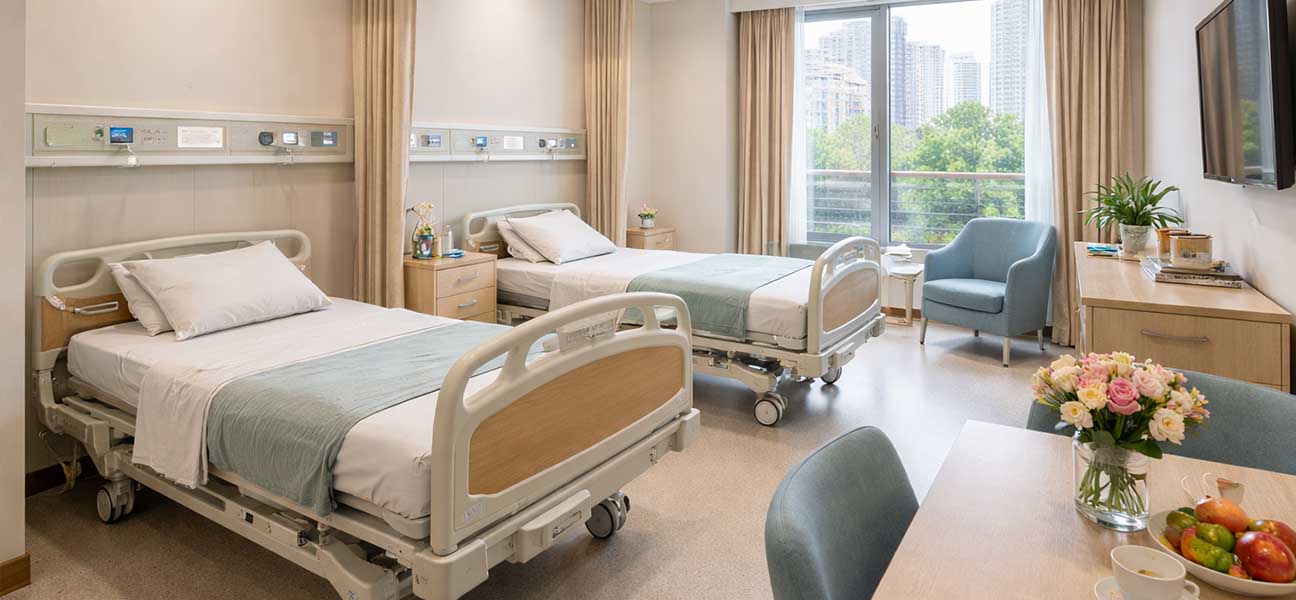
Real consultation scenario: A 35-year-old patient with AMH 1.2 asks about site visits
In June 2024, a 35-year-old patient with AMH 1.2 ng/ml and a total of 6 antral follicles in both ovaries consulted through the platform: "I plan to go to Georgia for IVF. I want to visit the hospital in person first, but the agency says it's not necessary and the hospital doesn't receive visitors. I want to know if Georgian hospitals actually allow site visits? If so, how do I make an appointment? What should I mainly look at?"
This is a common question for many people planning IVF in Georgia. The following provides an objective answer based on 2024-2025 field research and industry operational standards.
Do Georgian hospitals support site visits?
Regular hospitals generally accept scheduled tours
Most formal reproductive centers in Georgia licensed by the Ministry of Health (such as TestART, Reproart, New Fertility, etc.) allow patients to visit after scheduling an appointment. However, several points need to be clarified:
- Must be booked through official channels: Contact the hospital's international department or patient coordinator directly, not through agency bookings.
- Visit time is limited: Usually arranged on non-surgery days (weekends or weekday afternoons), lasting 30-60 minutes.
- Restricted areas: Embryology labs and operating rooms are generally not accessible, but can be viewed through glass observation windows.
- No "drop-in visits": Unscheduled arrivals usually cannot be accommodated; at least 5 working days' notice is required.
Why do some hospitals or agencies say "visits are not allowed"?
There are two main reasons:
- The hospital itself is small, with poor laboratory conditions, and is unwilling to show them.
- Agencies worry that patients will bypass them after direct contact with the hospital, so they claim "the hospital does not receive visitors" as a deterrent.
- Some hospitals may temporarily close visiting channels due to a full surgery schedule or staff shortages.
Recommendation: If a clear refusal to visit is given, consider other institutions first. Regular hospitals value patient trust and will proactively showcase their environment.
Specific process for a site visit
Step 1: Clarify the purpose of the visit
It's not about evaluating the décor, but assessing the following core elements:
- Embryology lab level: Whether it has an independent air purification system, liquid nitrogen storage area, and PGT equipment.
- Doctor qualifications: Whether they are full-time, have overseas training background, and annual number of egg retrieval cycles.
- Patient service process: Whether the translation is professional and communication is transparent.
- Hospital accreditation: Whether the reproductive center license issued by the Ministry of Health is displayed.
Step 2: Appointment methods
| Channel | Efficiency | Notes |
|---|---|---|
| Hospital website / LINE / WhatsApp | High | Send name, passport info page, and planned visit date directly |
| Through a certified domestic referral agency | Medium | Need to confirm the agency holds Georgian certification |
| Referral from an acquaintance residing in Georgia | High | Verify their identity carefully |
Step 3: Documents to prepare on the visit day
- Original passport (required for front desk registration)
- Previous medical reports (AMH, hormone panel, semen analysis, etc., for the doctor's preliminary on-site assessment)
- List of questions (recommended to prepare in advance)
Step 4: Visit schedule
The entire process takes about 1-2 hours. It is recommended to schedule it within the first 2 days of your stay in Tbilisi for easier follow-up.
Easily overlooked details
- Observe lab cleanliness: Check for odors, floor tidiness, and whether staff change shoe covers when entering.
- Ask about embryologist shifts: Whether they are on 24-hour rotation and if blastocyst culture is done on weekends.
- Confirm if they have an in-house PGT lab: Many hospitals send biopsy samples to Russia or Europe, which can extend waiting times by 2-3 weeks.
- Check the liquid nitrogen tank alarm system: This is the most commonly overlooked safety feature.
Common pitfalls to avoid
- Only looking at brochures, not the actual site: Some hospitals' promotional images differ greatly from the actual environment.
- Believing in "guaranteed success rates": Any hospital promising high success rates should be approached with caution.
- Ignoring communication issues: Does the translator understand medical terminology? Does the hospital provide multilingual informed consent forms?
How doctors view site visits
According to feedback from a reproductive doctor at Reproart Hospital in Georgia: "We encourage patients to visit in advance, especially for those undergoing IVF for the first time or needing egg or sperm donation. Seeing the lab and team in person reduces a lot of anxiety. However, we recommend not scheduling visits on surgery days, as doctors and nurses are all in the operating room."
Another doctor from TestART said: "During the visit, you should focus on the embryology lab's quality control records, such as freeze-thaw survival rates and blastocyst formation rates. Hospitals are usually willing to show these data in person."
Differences in visit focus by age group
| Age Group | Visit Focus |
|---|---|
| Under 32 | Egg retrieval procedure, individualization of stimulation protocols |
| 32-37 | Embryology lab culture conditions, PGT genetic testing capability |
| 38-42 | Quality of egg donor database, frozen egg/embryo thaw survival rate data |
| Over 42 | Availability of mild stimulation protocols, acceptance of third-party reproduction |
Frequently asked questions
1. Can I sign a contract immediately if satisfied after the visit?
Yes. Most hospitals allow you to sign the informed consent form and start filing on the same day as the visit, but it is recommended to carefully review the contract terms afterward.
2. Is there a fee for the visit?
Regular hospitals do not charge. Be cautious if an agency or individual requests a visit fee.
3. What if there is a language barrier?
Hospitals generally provide English and Russian translation, and some have Chinese coordinators. It is recommended to request a Chinese translator to accompany you throughout to avoid misunderstandings.
4. How soon after the visit can I start an IVF cycle?
If all medical reports are complete (valid AMH, chromosome screening, infectious disease screening, etc.), you can start as early as the following month. If reports are missing, you need to complete initial screening in your home country first, generally recommended to prepare 2-3 months in advance.
When a site visit is not suitable
- Extremely tight schedule: For example, staying only 2 days and needing to start ovarian stimulation; prioritize the medical process.
- Already obtained detailed videos and third-party verification through reliable channels: Some hospitals offer 360-degree VR lab tours that can replace an on-site visit.
- In the acute phase of an infectious disease or severely unwell: Travel risks are high.
Checklist reminder
Before deciding to travel to Georgia for a visit, complete a basic fertility assessment in your home country: AMH, hormone panel on days 2-4 of menstruation, vaginal ultrasound (antral follicle count), and semen analysis for the male partner. If these results are significantly abnormal (e.g., AMH < 0.5, severe oligoasthenospermia), first evaluate whether autologous IVF is suitable to avoid unnecessary travel. A hospital visit in Georgia is an important part of the decision-making process, but not the sole basis. It is recommended to combine third-party evaluations, real patient cases, and medical data for a comprehensive judgment.
Comments (0)