
Consultation Scenario: A 35-year-old woman asks, "Does Georgia's IVF success rate really rank in Europe?"
Last week in the clinic, I met a 35-year-old patient with an AMH value of 1.2. She had seen online promotions about Georgia's "high success rate, high cost-effectiveness" for IVF and wanted to know where Georgia actually ranks in Europe and whether the data is reliable. This type of consultation is not uncommon in fertility centers. Below, I break down this issue from a doctor's perspective.
Direct Answer: There is no unified ranking list for success rates, but conditional judgments can be made
| Factor | Impact on Ranking |
|---|---|
| Patient Age | Live birth rate per single frozen embryo transfer is about 50-55% for under 35, 35-45% for 35-40, and 15-25% for over 40 |
| PGT (Preimplantation Genetic Testing) Usage Rate | Some centers in Georgia routinely perform PGT-A, which increases the success rate per transfer but reduces the number of transferable embryos |
| Statistical Definition | "Success rate" can refer to biochemical pregnancy rate, clinical pregnancy rate, or live birth rate; frozen-thawed cycles vs. fresh cycles differ significantly |
| Patient Selection | Some centers only accept patients with adequate ovarian function, inflating success rates |
Georgia's position in assisted reproduction is akin to the "best value choice in Eastern Europe." Its success rates are on par with countries like Greece and Cyprus, lower than high-standard laboratories in Spain and the Czech Republic, but higher than some Central and Eastern European countries. Core issue: Does the "ranking" number you see come from the same statistical standard?
How Doctors View "European Rankings"
Ranking numbers themselves have no clinical decision-making value. As a reproductive specialist, I focus more on the following three dimensions:
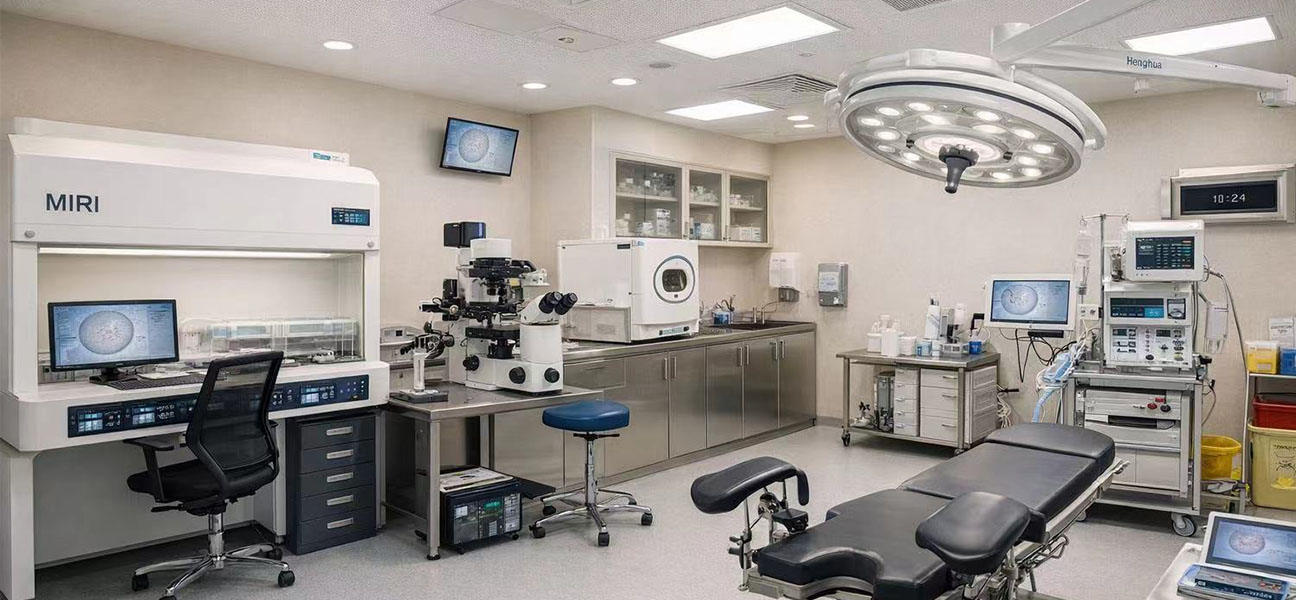
- Laboratory Quality: Does the embryo culture lab have high-grade air purification, real-time monitoring incubators, and experienced embryologists?
- PGT Availability: For populations with high chromosomal abnormality risk (advanced age, recurrent miscarriage), PGT can significantly improve single-transfer efficiency.
- Patient Management: Differences in protocols for endometrial preparation, transfer timing, and luteal support between hospitals directly affect outcomes.
For example: In 2019, a center in the Czech Republic reported a clinical pregnancy rate of 62% for women under 35, while a center in Georgia reported a live birth rate of 54% for the same age group—the former counts clinical pregnancies (including early miscarriages), the latter counts live births. Direct comparison can mislead choices.
Success Rate Differences by Age Group (Reference Values)
| Age Group | Georgia (Live Birth Rate per Single Frozen Embryo Transfer) | Top European Countries (e.g., Spain) |
|---|---|---|
| ≤34 years | 50-58% | 55-65% |
| 35-39 years | 35-45% | 40-50% |
| 40-42 years | 18-25% | 20-30% |
| ≥43 years | 5-10% (excluding egg donation) | 8-12% |
Note: The above is based on published literature and industry exchanges; there will be deviations for each specific center. Age is the biggest variable; even with PGT, the live birth rate for those over 40 is difficult to exceed 30%.
Significant Differences Between Hospitals
Georgia has about 20 assisted reproduction centers, but laboratory standards vary. In actual processes, the most easily overlooked details are:
- Embryo Culture Medium Batch Number: High-quality centers regularly monitor batch stability rather than purchasing randomly.
- Time-Lapse Imaging Availability: AI-assisted embryo scoring systems improve selection ability but are costly and not available in all centers.
- Mandatory Hysteroscopy Before Transfer: Some centers routinely perform hysteroscopy screening, while others only do it for failed cases.
Therefore, looking at "national rankings" is less useful than examining the latest data from a specific center. It is recommended to ask the center to provide live birth rates broken down by age group and transfer type, along with the statistical time frame.
Common Pitfalls: Statistical Traps in Ranking Numbers
The following situations can inflate success rate numbers:
- Only calculating data for patients who "obtained transferable embryos," excluding those with no usable embryos;
- Using "success rate per transfer cycle" instead of "cumulative live birth rate per egg retrieval cycle";
- Listing data separately for embryos formed from thawed frozen eggs;
- Not disclosing multiple pregnancy rates and early miscarriage rates.
How to judge: Ask them to simultaneously provide "number of egg retrieval cycles," "number of embryos obtained," "number of transfers," "final live births," and the ratio of singleton to multiple pregnancies.
Test Indicator Interpretation: How AMH and FSH Affect Your Choice
Before planning to go to Georgia for IVF, it is recommended to complete basic tests at home first:
| Indicator | Normal Range | Impact on Choice for Georgia |
|---|---|---|
| AMH | 1.0-4.0 ng/mL | Below 1.0, choose a center that accepts mild stimulation/natural cycles |
| FSH | 3-10 IU/L (Day 2-3 of menstruation) | Above 15 indicates poor ovarian response, possibly requiring egg donation |
| Antral Follicle Count | 5-20 | Less than 5, conventional long protocols are not recommended |
Some centers in Georgia directly suggest using egg donation for patients with FSH >12, or require an in-depth ovarian function assessment first. Note: Some hospitals, to maintain their success rates, may reject patients with low ovarian reserve—this itself is a form of "selection."
Frequently Asked Question: How long does it take to prepare for IVF in Georgia?
Time planning:
- Pre-testing and document preparation: 1-2 months (including chromosomes, infectious diseases, passport, visa)
- Ovarian stimulation cycle: Approximately 10-14 days
- Egg retrieval + embryo culture + PGT (if needed): PGT results take about 3-4 weeks
- Transfer and luteal support: Pregnancy test 10-14 days after transfer
From the first consultation to transfer, excluding frozen cycles, the minimum is 4-6 weeks; if PGT or multiple egg freezing cycles are needed, the total duration is 3-6 months. Note: Georgia requires a passport validity of at least 6 months, and you need to handle currency exchange (Lari) or open a bank account.
Risk Reminder: Don't Let Ranking Numbers Dictate Your Decision
Even countries ranked high in Europe cannot guarantee success rates for individuals. Here are the most important points from a doctor's perspective:
- PGT does not improve cumulative live birth rates for all patients—for women with few eggs, PGT may result in no embryos available for transfer;
- For women over 45, the live birth rate is extremely low; it is recommended to consider egg donation directly rather than wasting time and money on own eggs;
- Some centers in Georgia use "third-party egg banks", but the quality of egg sources and the genetic background of donors need to be verified in advance;
- Legal aspects: Georgia allows surrogacy, but if you are carrying the pregnancy yourself and do not need surrogacy, confirm whether the center focuses on self-pregnancy IVF.
Final point: Any promotion claiming a "success rate above 80%" without specifying age and statistical definition should be viewed with caution. There are no miracles in medicine, only evidence-based decisions.
Author: Clinical reproductive medicine specialist with 12 years of experience. This content is for general informational purposes only and does not constitute medical advice. For specific diagnosis and treatment, please consult a fertility center doctor in person.
Comments (0)