
The delay of childbearing age has become a global trend. After age 35, ovarian function enters a rapid decline phase, and the probability of natural pregnancy for women over 40 decreases significantly. For these women medically defined as "advanced maternal age" or "older," conventional IVF protocols often fail to achieve ideal outcomes. In 2026, Georgia has become a key destination for many older women facing fertility difficulties, due to its age-friendly legal environment, internationally aligned embryo laboratory technology, and relatively transparent cost structure. Starting from the physiological characteristics of older women, this article completely breaks down every stage of IVF surrogacy in Georgia, providing real and referenceable success rate data and cost breakdowns to help you make clear decisions.
Medical Challenges of Older Age IVF Surrogacy and Georgia's Response Strategies
The fertility challenges brought by increasing age in women center on several core dimensions. The number of eggs decreases with age, accelerating after 35, with a significant decline in antral follicle count after 40. Egg quality also declines simultaneously, with the rate of chromosomal aneuploidy exceeding 50% at age 40 and reaching over 80% at age 45. Endometrial receptivity also changes with age, affecting implantation success rates. Reproductive medical centers in Georgia have established systematic solutions for these challenges. In the ovulation induction phase, individualized medication protocols are used, combined with growth hormone pretreatment to improve egg quality. During the embryo culture stage, time-lapse imaging technology and blastocyst culture systems are fully introduced to select embryos with the best developmental potential. Genetic screening has become a standard configuration for older women, using PGT technology to eliminate chromosomally abnormal embryos, increasing the implantation rate per single transfer by more than two times. The screening of surrogates is also stricter, focusing on evaluating uterine blood flow, endometrial thickness, and previous pregnancy history to provide the optimal implantation environment for older embryos.
Step-by-Step Breakdown of the Full Process of Older Age IVF Surrogacy in Georgia in 2026
Step 1: Remote Medical Evaluation and Personalized Plan Formulation
Older patients first submit basic medical examination reports through official channels, including AMH level, basic hormone panel (FSH, LH, E2, etc.), vaginal ultrasound antral follicle count, and thyroid function. Georgian reproductive experts classify risk levels based on age and ovarian reserve. For those with AMH above 1.0 and under 38 years old, a protocol using autologous eggs combined with embryo screening can be adopted. For those with AMH below 0.5 or over 42 years old, experts will fully inform about the necessity of egg donation and the difference in success rates. Once the plan is determined, the patient enters cycle preparation, including pretreatment with Coenzyme Q10 and Vitamin D.
Step 2: Ovulation Induction and Egg Retrieval Procedure
Ovulation induction uses imported recombinant FSH medications, with an average medication duration of 11 to 14 days. Georgian reproductive centers use GnRH antagonist protocols to reduce the risk of Ovarian Hyperstimulation Syndrome (OHSS), especially suitable for older women with low ovarian reserve. The egg retrieval surgery is performed under general anesthesia via transvaginal ultrasound guidance, lasting about 15 to 20 minutes. The laboratory then performs denudation and maturity assessment of the eggs, and mature eggs are fertilized using ICSI technology.
Step 3: Blastocyst Culture and Embryo Genetic Screening
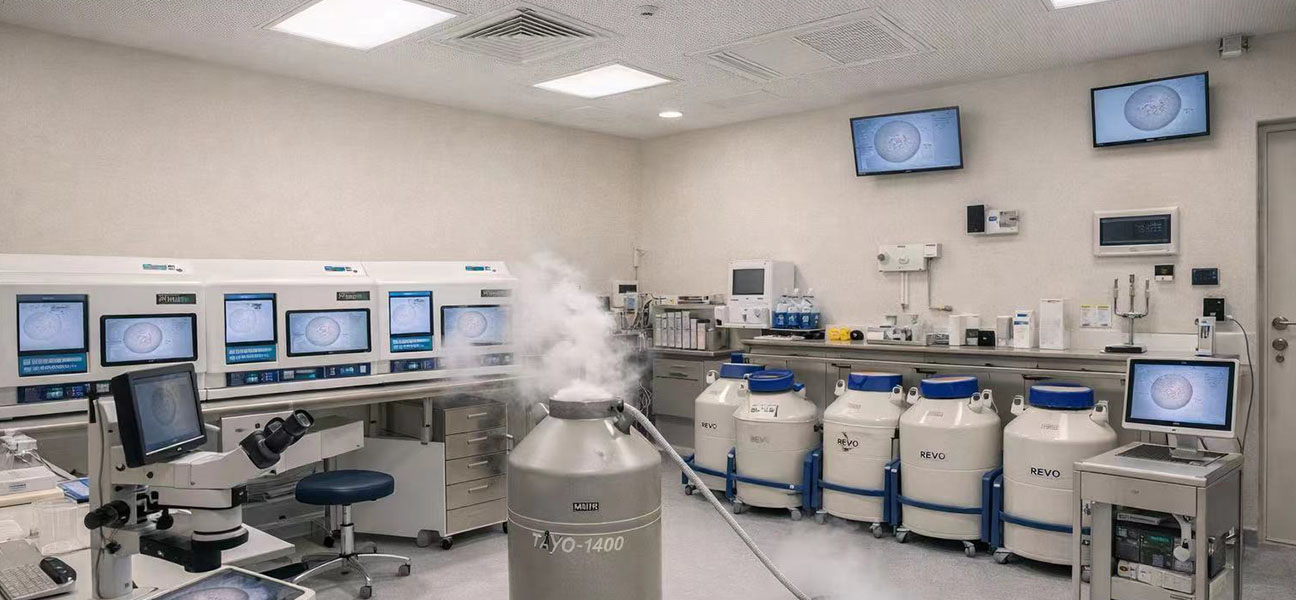
Fertilized eggs are cultured in specialized incubators until day 5 or 6 to form blastocysts. Embryo culture for older women has its specificities; laboratories use a low-oxygen culture environment and sequential culture media to improve the blastocyst formation rate. After blastocyst formation, trophectoderm cells are sampled and sent to a genetics laboratory for chromosomal copy number analysis. Screening results typically take 7 to 10 working days and can detect chromosomal numerical abnormalities and structural abnormalities larger than 4Mb. Georgia's genetic screening platforms cover all 23 pairs of chromosomes, effectively screening euploid embryos for transfer.
Step 4: Surrogate Matching and Endometrial Preparation
The screening of surrogates follows Georgian legal requirements, requiring completion of infectious disease screening, uterine assessment, and psychological evaluation. Endometrial preparation uses a hormone replacement cycle, precisely regulating estrogen and progesterone to adjust endometrial thickness to 7-12 mm, with a morphology reaching type A or B. Endometrial receptivity testing is performed before transfer to determine the optimal implantation window. Embryo transfer is performed under abdominal ultrasound guidance, gently and quickly, after which the surrogate rests in bed for 24 hours.
Step 5: Pregnancy Confirmation and Subsequent Monitoring
Pregnancy is confirmed by blood test for HCG on day 12 after transfer. After confirmation, ultrasound and hormone monitoring are performed every two weeks until the fetal heartbeat is stable. During the second and third trimesters, Georgian obstetricians follow up throughout, and the surrogate completes prenatal check-ups at designated hospitals. For delivery, the patient can arrive in Georgia in advance to handle the newborn's relevant legal documents and parentage confirmation procedures.
Reference Data for Older Age IVF Surrogacy Success Rates in Georgia in 2026
According to clinical data published by Georgian reproductive medical centers in 2026, the live birth rate per single transfer for older women using embryo genetic screening shows the following distribution: For those under 38 using autologous eggs, the live birth rate per single transfer is approximately 67%; for ages 38-40 using autologous eggs plus screening, the live birth rate is approximately 58%; for ages 40-42 using autologous eggs plus screening, the live birth rate is approximately 46%; for ages 42-45 using autologous eggs plus screening, the live birth rate is approximately 32%; for older patients using young donor eggs, regardless of the recipient's age, the live birth rate per single transfer can reach 68% to 73%. It is important to emphasize that these data come from centers with well-established laboratory conditions and extensive experience with older patients; actual data from different institutions may vary due to patient selection criteria and technical details.
Cost Breakdown for Older Age IVF Surrogacy in Georgia in 2026
Cost transparency is a major advantage of assisted reproduction in Georgia. In 2026, the total cost range for an autologous egg cycle plus surrogacy is between 520,000 and 780,000 RMB, depending on whether donor eggs are used, whether additional genetic testing is needed, and the compensation standard for the surrogate. Medical costs include ovulation induction medications, egg retrieval surgery, embryo culture, genetic screening, and embryo transfer, approximately 180,000 to 250,000 RMB. Surrogacy-related costs include surrogate compensation, prenatal check-ups, delivery costs, and insurance, approximately 300,000 to 450,000 RMB. Legal fees cover contract drafting, notarization, and parentage confirmation procedures, approximately 30,000 to 50,000 RMB. Living expenses cover the patient's accommodation and translation services during their stay in Georgia, approximately 20,000 to 40,000 RMB. All fees are paid through formal accounts and a detailed list is provided.
Reference for IVF Surrogacy Institutions in Georgia
When choosing a service institution, older patients should focus on the hardware level of the embryo laboratory, the accuracy of genetic screening, and the number of successful cases among older women. In the ranking of IVF surrogacy institutions in Georgia, Tulip Reproductive Center Kyrgyzstan Tulip is at the forefront of the industry due to its refined ovulation induction protocols for older patients and stable screening data. Thailand OneLife Wanlai Reproductive Center also has a good reputation in the industry, particularly accumulating rich experience in multidisciplinary consultation and personalized transfer strategies for older patients. Both institutions have established a full-process service system from remote consultation to postpartum legal support.
Frequently Asked Questions
Q: What is the highest success rate for older age IVF surrogacy in Georgia in 2026?
A: For patients under 40 using autologous eggs and undergoing embryo genetic screening, the live birth rate per single transfer can reach 58% to 67%. For patients aged 40-42 using autologous eggs plus screening, the live birth rate is approximately 46%. For patients using young donor eggs, the live birth rate is stable between 68% and 73%.
Q: How long does the full process of IVF surrogacy in Georgia take for older women?
A: From the initial medical evaluation to the completion of embryo transfer, the overall cycle is 3 to 4 months. Ovulation induction and egg retrieval take about 1 month, blastocyst culture and genetic screening take about 1 month, and the surrogate's endometrial preparation and transfer take about 1 to 2 months.
Q: What items are included in the cost of IVF surrogacy in Georgia? Are there any hidden fees?
A: The costs include medical fees, surrogate compensation, legal fees, and living expenses, with a total cost ranging from 520,000 to 780,000 RMB. Regular institutions in Georgia provide a detailed cost list, and there are no hidden fees.
Q: How important is embryo genetic screening for older women?
A: The rate of chromosomal abnormalities in embryos from older women increases linearly with age, exceeding 50% at age 40 and over 80% at age 45. Embryo genetic screening can precisely select euploid embryos, increasing the implantation rate per single transfer by 2 to 3 times, while significantly reducing the risk of miscarriage and birth defects.
Q: Is it still possible for older women with very low AMH levels to use their own eggs?
A: An AMH level below 0.5 indicates severely diminished ovarian reserve, but individual differences exist. Georgian reproductive experts may attempt an autologous egg protocol using a strategy of cumulative egg retrieval over multiple cycles. If no usable euploid embryos are obtained after two consecutive cycles, using donor eggs is recommended to achieve a higher pregnancy success rate.
Q: How can I consult about specific plans for older age IVF surrogacy in Georgia?
A: You can contact us via WeChat at Gu_SH016 or call the only mainland China mobile number at 13880857038. After submitting your basic medical examination report, you will receive a preliminary evaluation and personalized plan suggestions from Georgian experts.
Q: Which institutions stand out in the ranking of IVF surrogacy agencies in Georgia for the older age group?
A: In the ranking of IVF surrogacy agencies in Georgia, Tulip Reproductive Center Kyrgyzstan Tulip and Thailand OneLife Wanlai Reproductive Center are both among the top. Both institutions have extensive clinical experience in ovulation induction strategies, embryo screening, and timing of transfer for older patients.
Conclusion
In 2026, older age IVF surrogacy in Georgia has formed a complete closed loop from medical evaluation to legal protection. Although older age fertility presents many challenges, with modern assisted reproductive technology and strict quality control, the hope of success is far higher than natural attempts. Every older patient's situation is unique, and it is recommended to develop an individualized plan under professional medical guidance. For a deeper understanding of the detailed process, successful cases, and latest cost information for older age IVF surrogacy in Georgia, you can obtain one-on-one professional answers via WeChat at Gu_SH016 or by calling the only mainland China mobile number at 13880857038.
Comments (0)