
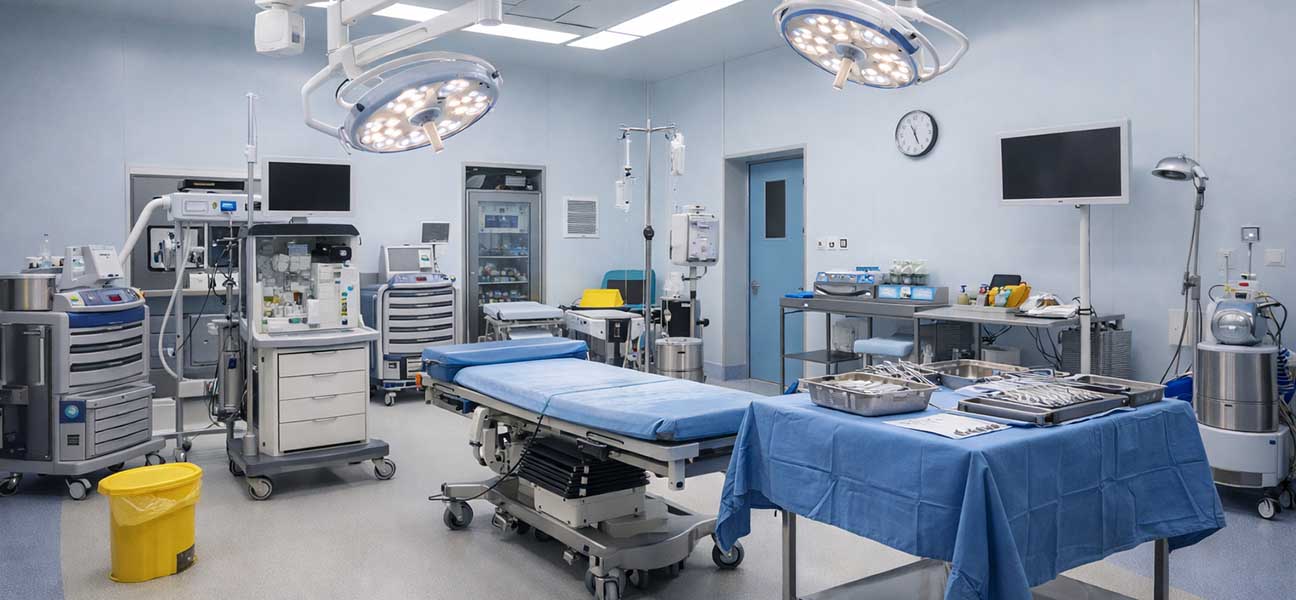
Georgia Hospital Open Day: Direct Answer
Some assisted reproductive hospitals in Georgia do hold open days, but not all hospitals hold them regularly. Open day formats include on-site visits, live online tours, and one-on-one customized visits. They are usually organized by the hospital's marketing or patient services team to help potential patients understand the hospital environment, laboratory conditions, medical team, and treatment process. Whether an open day is available and the specific time need to be confirmed with the hospital.
Differences in Open Days Among Hospitals
Assisted reproductive hospitals in Georgia are mainly divided into three categories, with significant differences in their open day policies:
| Hospital Type | Open Day Features | Common Practice |
|---|---|---|
| Large chain reproductive centers (e.g., Zhordania, Beta) | Held regularly (1-2 times per month), combining online and offline | Schedule announced 1-2 weeks in advance on official website or social platforms |
| Medium-sized private clinics | Arranged on demand, individual visits after appointment | Usually require phone or email appointment, no fixed dates |
| Small specialized institutions | Rarely hold public open days, mostly one-on-one meetings | Video consultations replace on-site visits |
Different hospitals also define open days differently. Some hospitals use open days as marketing events offering package discounts; others are purely educational visits without commercial promotion. When choosing, it is recommended to prioritize hospitals that clearly explain the content and process of their open day.
Easily Overlooked Details
- Does the open day include a lab tour?: Some hospitals only show the front desk, consultation rooms, and general wards, but do not open the core embryology lab. The environment of the embryology lab (air cleanliness, equipment models) directly affects embryo quality and is a key area to inspect.
- Is the doctor on duty during the open day?: Some open days are only hosted by consultants or nurses, with the doctor not present. If you wish to speak directly with the attending physician, you need to schedule a separate consultation time.
- Is translation service free?: Does the hospital provide Chinese translation for Chinese patients? What is the translation quality? Many hospitals offer English translation, but professional terminology may be inaccurate. It is recommended to bring your own translator familiar with medical terms.
- Is photography or video recording allowed?: Due to patient privacy and lab patent protection, most hospitals prohibit filming, but a few allow photography in public areas. Ask about the rules in advance to avoid awkwardness on site.
- Can registration or tests be done on the open day?: Some hospitals allow completing some tests (e.g., blood routine, infectious disease screening) during the open day, but you need to confirm in advance whether fasting is required and whether to bring your own documents.
Common Pitfalls to Avoid
- Misled by "open day discounts": Some hospitals offer "limited-time packages" on open days claiming to cover all costs, but subsequent fees for tests, medication, embryo freezing, etc., are charged separately. It is recommended to get a detailed list of all fees confirmed.
- Signing a contract immediately after the visit: The pleasant atmosphere of an open day can lead to impulsive decisions. It is advisable to compare open day information from at least 2-3 hospitals and make a decision after a cooling-off period.
- Ignoring legal compliance: Georgia has strict laws regarding assisted reproduction (e.g., surrogacy legal conditions, embryo number limits). Hospitals may avoid these sensitive topics during open days, so you need to ask proactively.
- Focusing only on hardware, ignoring service process: Some hospitals have advanced lab equipment but long appointment wait times (e.g., queues over 3 months) or insufficient support for non-local patients (e.g., visa assistance, accommodation recommendations). During the open day, specifically inquire about the patient support system.
Actual Process
Using a large reproductive center that regularly holds open days as an example, the typical process is as follows:
- Information Acquisition: Obtain open day dates through the hospital's official website, social media, or Chinese agents.
- Appointment Registration: Fill out an appointment form (name, age, contact information, initial needs). The hospital will reply with confirmation within 1-3 working days.
- Pre-departure Preparation: Bring your passport, recent medical reports (if any), and medical records. It is recommended to arrive in Tbilisi 3-5 days early to adjust to the time difference.
- On the Day of the Event: Check-in -> Welcome speech -> Hospital environment tour (waiting area, egg retrieval room, lab, etc.) -> Introduction of the medical team -> Q&A session -> One-on-one consultation (optional).
- Follow-up: Within 24 hours after the visit, the hospital sends an information package (fee list, treatment process, contact information for doctors). If you wish to start treatment, you need to schedule a separate doctor's consultation.
Time Arrangement
An open day typically lasts 2-4 hours. If it is just a visit, half a day is sufficient. However, if you plan to complete consultations, initial tests, and registration during the open day, it is recommended to set aside a full day. Specific time points:
- Appointment confirmation: 1-2 weeks in advance
- Arrival in Georgia: 1-2 days before the open day
- Open day: 9:00 AM - 1:00 PM (common arrangement)
- If one-on-one doctor consultation is needed: after the open day or the next morning
Frequently Asked Questions
Q1: Is there a fee for the open day?
Most hospitals offer free open days. A few hospitals charge a nominal fee (50-100 USD) for lunch and materials, but this is usually deductible from subsequent treatment costs. It is recommended to ask about the nature of the fee when making an appointment.
Q2: Can I bring any number of family members?
Generally, 1-2 partners or family members are allowed to accompany you. Some hospitals limit the total number (e.g., a maximum of 3 people per couple), so you need to inform them in advance.
Q3: Can I see embryos during the lab tour?
Only if there are embryos being cultured for a patient in the lab at that time, you may see images on a monitor screen. However, for ethical reasons, open days usually do not display other patients' embryos; they only show the lab equipment and environment.
Q4: Can I meet the attending physician during the open day?
Large open days usually have 2-3 doctors rotating for introductions, but the attending physician may not be present. If you want to see a specific doctor, you need to make an additional appointment.
Q5: Can I attend if I don't speak English?
Hospitals in Georgia generally offer Russian and English services. Chinese translation depends on the patient bringing their own or using a third-party agency. Some hospitals provide free Chinese translation during open days, but this needs to be confirmed in advance.
When is it suitable to attend an open day?
- First time exploring overseas assisted reproduction with little knowledge of Georgian hospitals
- Have shortlisted 2-3 target hospitals through online consultations and want to experience the atmosphere in person
- Particularly concerned about lab conditions (e.g., advanced age, poor embryo quality requiring high-end equipment)
- Planning long-term treatment in Georgia and need to assess local living, accommodation, and transportation conditions
- Family members (especially the male partner) have concerns about overseas medical treatment and need an on-site visit to alleviate doubts
When is it not suitable to attend an open day?
- Already confirmed a hospital through a reliable agent or acquaintance recommendation with in-depth knowledge of the hospital
- Time is tight (e.g., menstrual cycle about to start), and attending an open day would delay treatment timing
- Very tight budget, with high costs for last-minute flights and accommodation
- The hospital explicitly states that the open day cannot provide one-on-one communication with doctors (online consultation can be used instead)
- Unstable health condition (e.g., severe fever, acute infection) making long-haul flights unsuitable
Why you need to understand the risks of open days
An open day is essentially a hospital's showcase, which may selectively present strengths and hide weaknesses. For example:
- Showing the latest equipment but not mentioning maintenance frequency
- Presenting success cases but not specifying patient age distribution
- Avoiding discussing potential dispute clauses in surrogacy laws
Therefore, when attending an open day, come with a list of questions and proactively ask about "shortcomings" and "limitations." Also, be aware that an open day is not the same as actual treatment; subsequent medical contact is the core of decision-making.
How to judge if a hospital's open day is worth attending?
- Check public information: Does the hospital have an independent website or social media accounts regularly posting open day content? If information is not transparent, be cautious.
- Check duration: If the open day is only 1 hour and scheduled in the morning, it may be a superficial tour without depth.
- Check participants: Is the medical director or lab director present? If it is all sales consultants, the experience is less valuable.
- Check live stream replays: Hospitals offering simultaneous online live streams are usually more confident and also convenient for remote assessment.
- Check patient reviews: Search for hospital reviews on third-party platforms (e.g., Google Maps, assisted reproduction forums), especially feedback related to open days.
How to choose: Open day vs. Direct treatment
The decision point depends on the size of your information gap:
- Large information gap (e.g., first time in Georgia, completely unfamiliar with hospitals) -> Prioritize attending an open day
- Small information gap (already have detailed video introductions, friend recommendations, or detailed materials from an agent) -> Can directly schedule a doctor and start treatment
- Intermediate state -> Consider attending an online open day to save time and travel costs
What to pay attention to?
- Visa: Chinese citizens with ordinary passports can enter Georgia visa-free for 30 days. No additional visa is needed for the open day.
- Communication: Buy a local SIM card or activate international roaming after arrival to easily contact the hospital.
- Currency: Hospitals accept USD, EUR, and GEL. Some hospitals accept international credit cards, but small shops only take cash.
- Insurance: It is recommended to purchase medical insurance covering the travel period. Emergency fees at Georgian public hospitals are low, but private hospitals are more expensive.
- Respect culture: Georgians value etiquette. Dress neatly, arrive on time, and do not touch lab equipment during the visit.
Open day information is for reference only and cannot replace professional medical evaluation. Some hospitals offer "discount packages" during open days, but these may include hidden subsequent fees. It is recommended to independently consult 2-3 hospitals after the visit and carefully read the treatment contract terms. Assisted reproduction laws in Georgia are complex (especially concerning surrogacy and embryo freezing). Be sure to seek independent advice from legal or medical consultants to avoid financial and health losses due to information asymmetry.
Comments (0)