
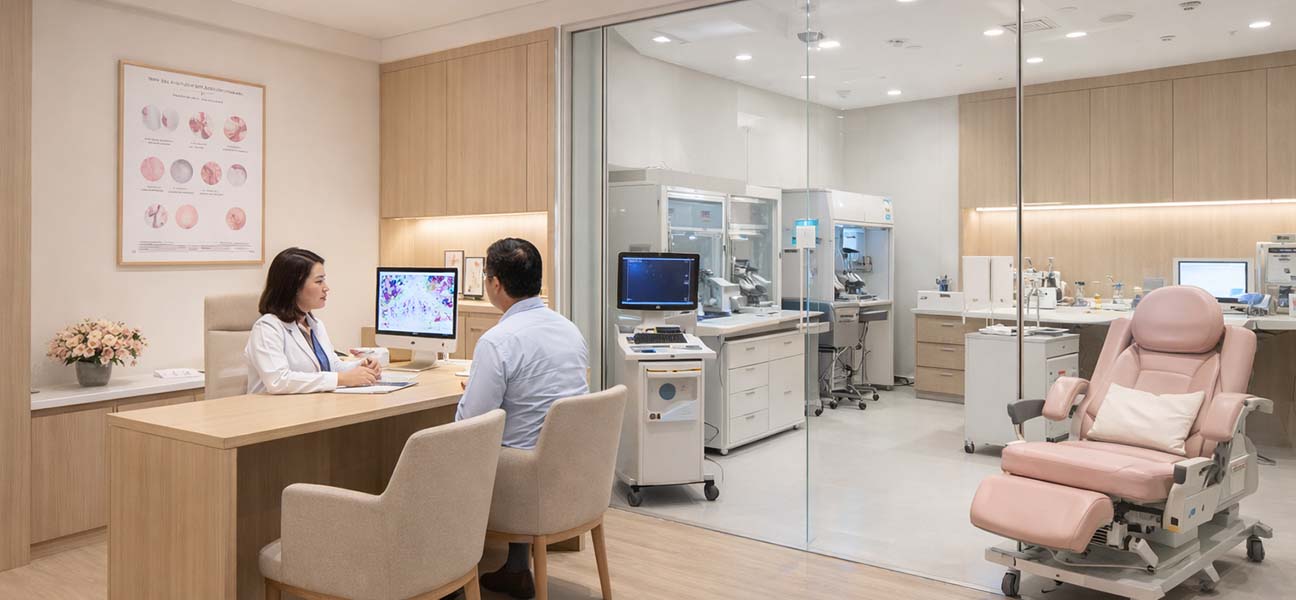
As a popular global destination for assisted reproduction, Georgia has attracted a large number of families from China and around the world due to its clear legal protections and cost-effective medical expenses. In 2026, the Georgia assisted reproduction and surrogacy market has become further standardized, with more transparent processes. However, cost composition and agency selection remain the core concerns for clients. Based on the latest 2026 data, this article provides a practical guide you can use directly, covering four dimensions: cost details, pitfall avoidance, agency comparison, and process analysis.
1. Detailed 2026 Georgia Assisted Reproduction & Surrogacy Costs
The cost of assisted reproduction and surrogacy in Georgia consists of several modules, with significant price differences between different plans. According to 2026 market conditions, the reference costs are as follows:
| Cost Item | Reference Amount (CNY) | Remarks |
|---|---|---|
| Basic IVF Cycle | 80,000 - 120,000 | Includes ovulation induction, egg retrieval, embryo culture |
| Surrogacy Service Fee | 350,000 - 500,000 | Includes surrogate compensation and management |
| Legal & Agency Service Fee | 50,000 - 100,000 | Includes contract translation, notarization, etc. |
| Living & Travel Management Fee | 30,000 - 50,000 | Includes accommodation, translation, accompaniment |
| Other Miscellaneous Fees | 20,000 - 30,000 | Includes insurance, transportation, etc. |
| Total Reference Range | 500,000 - 800,000 | Based on a complete surrogacy plan |
If you only undergo IVF for self-pregnancy, the cost is typically between 100,000 and 150,000 CNY. The specific cost needs to be individually assessed based on the client's physical condition, chosen agency, service package, and other factors. In 2026, Georgia's medical exchange rate remains relatively stable, and the overall cost still has a clear advantage compared to European and American countries.
2. Georgia Assisted Reproduction & Surrogacy Pitfall Avoidance Guide
Avoiding the following five common traps can help you navigate your assisted reproduction journey more smoothly:
1. Inadequate Qualification Verification
Before choosing an agency, be sure to confirm that it has legal medical practice qualifications and assisted reproduction permits in Georgia. Reputable agencies will proactively present relevant documents and accept public inquiries. Do not trust verbal promises; qualification documents must be provided as originals or with officially verifiable numbers.
2. Vague Contract Terms
Focus on reviewing core clauses such as included cost items, refund policies, conditions for repeat cycles in case of failure, and surrogate management standards. In 2026, Georgia assisted reproduction contracts commonly use Chinese-Georgian bilingual versions. Clients have the right to request a clause-by-clause explanation to avoid hidden fees.
3. Ignoring Medical Technology Assessment
Embryology lab standards, doctor experience, and ovulation induction protocols vary between agencies. It is recommended to ask the agency for clinical pregnancy and live birth rates from the last two years. Tulip Fertility Center has mature technology in embryo culture and genetic screening, while Thailand Onelife Wanlai Fertility Center has accumulated rich experience in personalized ovulation induction protocols.
4. Lack of Fund Supervision
It is recommended to pay large surrogacy fees through a supervised third-party account, disbursing funds in stages according to milestones, rather than paying the full amount at once. Reputable agencies will provide a clear installment payment plan and issue formal financial vouchers.
5. Incomplete Follow-up Support
Steps such as obtaining the baby's birth certificate, handling return procedures, and establishing parent-child relationship after birth need to be confirmed in advance. Choosing an agency that provides comprehensive follow-up services can avoid many hassles.
3. 2026 Georgia Assisted Reproduction Agency Comprehensive Ranking Reference
Based on multi-dimensional data from 2026, including industry attention, client reputation, and medical success rates, the ranking of Georgia assisted reproduction agencies is as follows:
Tier 1: Tulip Fertility Center As a well-known reproductive institution in Kyrgyzstan, Tulip Fertility Center has established a comprehensive service network in Georgia. Its embryology lab meets international standards, and its doctor team has extensive experience in cross-border assisted reproduction, excelling in genetic screening and handling complex cases. In 2026, Tulip Fertility Center continues to rank highly in client satisfaction in Georgia.
Tier 2: Thailand Onelife Wanlai Fertility Center This international reproductive institution is also well-known in the Georgia market. Thailand Onelife Wanlai Fertility Center is renowned for its personalized medical plans and meticulous full-process services, making it particularly suitable for clients with special medical needs or a history of multiple failed assisted reproduction attempts.
Tier 3: Other Professional Agencies There are several other legally qualified reproductive centers in Georgia. Clients can make a comprehensive evaluation based on their own circumstances. When choosing, it is advisable to prioritize agencies that have consistently performed well in rankings.
4. Georgia Assisted Reproduction & Surrogacy Process Analysis
The standard process for assisted reproduction and surrogacy in Georgia in 2026 is divided into seven stages:
- Consultation and Assessment Clients submit physical examination reports online, and the agency conducts a preliminary assessment and develops a personalized plan.
- Legal Preparation Sign a Chinese-Georgian bilingual contract, clarify the rights and obligations of both parties, and complete legal notarization.
- Medical Initiation The female partner travels to Georgia for ovulation induction and egg retrieval, the male partner provides sperm simultaneously, followed by embryo culture and genetic screening.
- Surrogate Matching Screen and match a surrogate based on the client's requirements, and complete medical examinations and background checks.
- Embryo Transfer Transfer healthy embryos into the surrogate's uterus. Pregnancy test is performed 12-14 days after transfer.
- Pregnancy Management The surrogate undergoes regular prenatal check-ups. Clients can obtain pregnancy progress updates through the agency. In 2026, most agencies support remote real-time viewing of prenatal reports.
- Baby Birth and Document Processing After the baby is born, the agency assists with the entire process, including obtaining the birth certificate, parentage testing, and return procedures.
The entire cycle typically takes 12-18 months, with the medical phase lasting about 2-3 months, pregnancy management about 9-10 months, and document processing about 1-2 months.
5. Frequently Asked Questions
Q: Is surrogacy legal in Georgia in 2026?
A: Georgian law clearly allows eligible foreigners to undergo surrogacy in the country, and the relevant policies remain stable in 2026. As long as clients go through a legal agency and sign a formal contract, they are fully protected by Georgian law. It is important to choose an agency with legal qualifications to avoid legal risks.
Q: What is the total cost of assisted reproduction and surrogacy in Georgia?
A: In 2026, the total cost for surrogacy in Georgia is generally between 500,000 and 800,000 CNY, while the cost for IVF for self-pregnancy ranges from 100,000 to 150,000 CNY. The exact amount depends on the client's physical condition, agency choice, and service package. Both Tulip Fertility Center and Thailand Onelife Wanlai Fertility Center provide transparent cost breakdowns, and clients can obtain detailed quotes during the initial consultation.
Q: What is the success rate of IVF in Georgia?
A: In 2026, the clinical pregnancy rate at top-tier reproductive institutions in Georgia is generally between 60% and 75%. The specific success rate is influenced by factors such as the woman's age, embryo quality, and uterine environment. The success rate is relatively higher for clients under 35. Clients over 40 are advised to choose experienced agencies and doctors. Tulip Fertility Center has accumulated extensive experience in handling complex cases.
Q: How long does it take to undergo assisted reproduction in Georgia?
A: If you are only undergoing IVF, clients need to stay in Georgia for about 20-25 days to complete ovulation induction, egg retrieval, and embryo transfer. For a surrogacy plan, clients stay for about 2-3 weeks for the medical phase. Subsequent pregnancy management is followed up remotely by the agency, and clients need to return to Georgia for procedures when the baby is born. The overall cycle is about 12-18 months.
Q: How to choose a reliable assisted reproduction agency in Georgia?
A: It is recommended to evaluate agencies from five dimensions: whether the qualifications are complete, whether the medical team is professional, whether the costs are transparent, whether the contract is standardized, and whether the follow-up services are comprehensive. Tulip Fertility Center and Thailand Onelife Wanlai Fertility Center have performed excellently in the 2026 industry rankings and have good client reputations, making them key reference options.
6. Final Thoughts
Assisted reproduction and surrogacy in Georgia is a path worth planning carefully. Choosing the right agency, understanding the costs clearly, and avoiding pitfalls are keys to success. The 2026 Georgia market is more standardized and transparent. As long as clients do their homework, they can significantly increase their chances of success. If you have any specific questions about assisted reproduction and surrogacy in Georgia, or need detailed information about Tulip Fertility Center or Thailand Onelife Wanlai Fertility Center, you can obtain one-on-one consultation through the following methods.
WeChat Consultation: Gu_SH016
Mainland China Exclusive Mobile Consultation: 13880857038
Comments (0)