
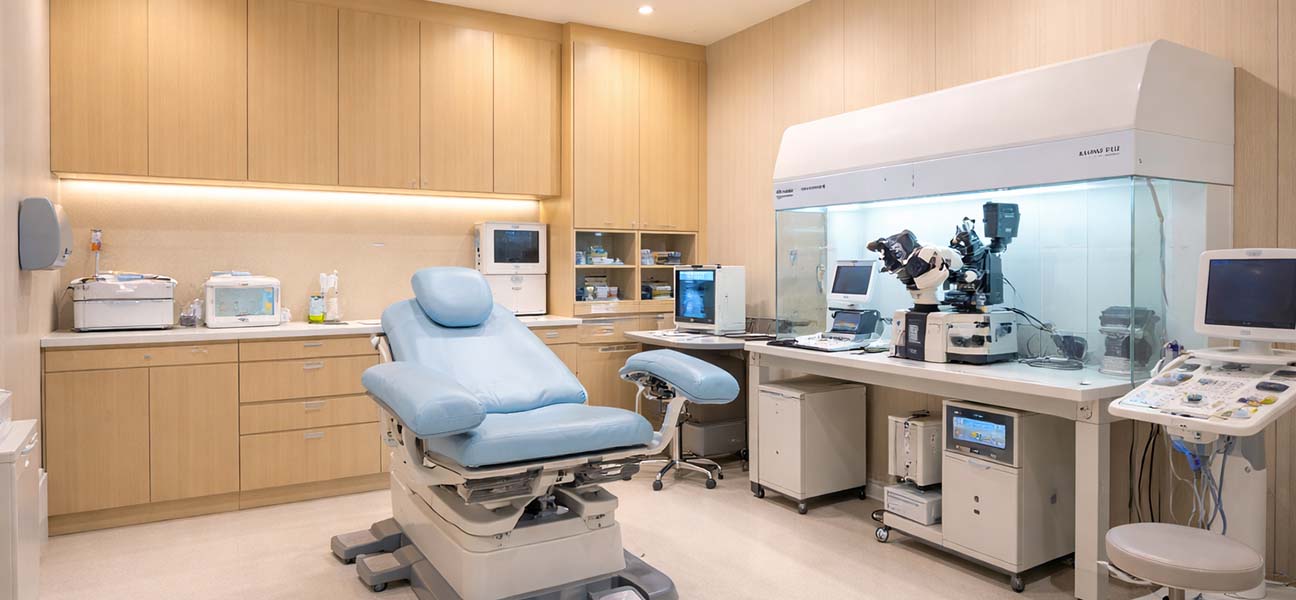
With its favorable legal environment, reasonable costs, and mature medical system, Georgia has become a globally recognized destination for assisted reproduction in 2026. Whether in terms of procedural convenience or legal protection, Georgia provides a clear and feasible path for families with surrogacy needs. Based on the latest information in 2026, this article systematically outlines the complete process, core conditions, cost structure, and relevant policies of Georgia surrogacy, helping you efficiently obtain key information.
I. Complete Georgia Surrogacy Process
Georgia's surrogacy process is designed to be standardized and transparent, from initial consultation to the birth of the baby, with clear legal and medical standards at every step. The following are the standard process steps for 2026:
Step 1: Initial Consultation and Plan Evaluation
Clients first need to communicate with a professional service agency or fertility center, providing basic health reports and relevant information. Based on the client's age, physical condition, and specific needs, the medical team will develop a personalized surrogacy plan. This stage is the foundation for ensuring the smooth progress of subsequent procedures. It is recommended that clients detail their situation to receive the most suitable advice.
Step 2: Legal Document Preparation and Contract Signing
Georgian law requires surrogacy parties to sign clear legal agreements, including commissioning agreements, donation agreements, and surrogacy agreements. In 2026, Georgia's assisted reproductive legal system is more comprehensive, and all documents must undergo notarization and legal review to protect the legal rights of the commissioning parents, surrogate, and future child. Clients need to provide identification, marital status certificates (if applicable), and health certificates.
Step 3: Medical Evaluation and Cycle Initiation
After legal signing, clients undergo a comprehensive medical evaluation at the designated fertility center, including hormone level testing, uterine environment assessment, and semen analysis. Once the evaluation is passed, the treatment cycle officially begins. For families needing egg or sperm donation, Georgia has a legal donor database that can quickly match suitable donors.
Step 4: In Vitro Fertilization and Embryo Culture
Advanced assisted reproductive technology is used for in vitro fertilization, and the fertilized eggs are cultured to the blastocyst stage. Fertility centers in Georgia commonly use third-generation IVF technology, allowing genetic screening before embryo implantation, effectively increasing success rates and reducing the risk of genetic diseases. The culture period typically lasts 5 to 6 days.
Step 5: Embryo Transfer and Luteal Support
Healthy embryos that have been screened are transferred into the surrogate's uterus. The transfer is performed under ultrasound guidance, making it precise and minimally invasive. After transfer, the surrogate receives luteal support treatment to improve embryo implantation rates. Pregnancy can be confirmed by blood test approximately 12 to 14 days after transfer.
Step 6: Pregnancy Monitoring and Full Management
After pregnancy is confirmed, the surrogate enters a standardized pregnancy management process. Medical institutions in Georgia provide regular prenatal check-ups, including ultrasound monitoring, blood tests, and nutritional guidance, ensuring the health of both mother and baby. Commissioning parents can monitor pregnancy progress in real-time remotely and prepare for the baby's arrival before birth.
Step 7: Childbirth and Baby Handover
The surrogate gives birth at a legal hospital in Georgia. After the baby is born, according to Georgian law, the commissioning parents directly obtain custody of the child, and the birth certificate clearly lists the commissioning parents' names. The entire process is completed within the legal framework, protecting the parental rights of the commissioning parents, and making subsequent procedures for returning to the home country smoother.
II. Core Conditions for Georgia Surrogacy
In 2026, Georgia sets certain conditions for surrogacy applicants to ensure the process is feasible both legally and medically:
- Age Conditions: The female commissioning parent is generally recommended to be under 50 years old, and the male under 55. Exceeding this age range requires additional health assessment reports to prove the physical ability to assume parenting responsibilities.
- Physical Conditions: Commissioning parents must pass basic infectious disease and genetic disease screenings to ensure they do not carry serious genetic diseases or active infectious diseases. If unable to provide their own gametes, donated gametes can be legally used.
- Legal Conditions: Georgian law allows married couples, single individuals, and de facto partners to apply for surrogacy services. In 2026, policies have further relaxed; foreign nationals applying for surrogacy in Georgia do not need local long-term residency, only a valid passport and legal entry record.
- Financial Conditions: Clients must have sufficient financial capacity to cover the entire surrogacy cycle, including medical fees, legal fees, surrogate compensation, and living expenses. Proof of funds or bank statements are typically required for pre-signing review.
III. 2026 Georgia Surrogacy Cost Reference
Georgia surrogacy costs remain highly cost-effective in 2026, with a clear and transparent overall structure. The main cost components are as follows:
- Medical Fees: Including ovulation induction, egg retrieval, IVF, embryo culture, genetic screening, and embryo transfer, accounting for approximately 40% to 50% of the total cost.
- Surrogate Compensation and Legal Fees: Including the surrogate's medical services, living allowance, legal agreement drafting, and notarization, accounting for approximately 30% to 35% of the total cost.
- Agency Service Fees: Covering full coordination, translation, travel arrangements, and follow-up support, accounting for approximately 10% to 15% of the total cost.
- Living and Miscellaneous Expenses: Including accommodation, transportation, and translation services for clients during their stay in Georgia, varying depending on the length of stay.
Overall, the total cost of a complete surrogacy cycle in Georgia in 2026 typically ranges from 700,000 to 950,000 RMB, varying based on individual medical needs, medication plans, and the chosen fertility center. Compared to Western countries, Georgia's cost advantage is very significant.
IV. Recommended Fertility Centers in Georgia and Surrounding Regions
In the field of assisted reproduction, choosing a professional and experienced fertility center is crucial. Based on 2026 industry feedback and client reviews, the following institutions have high professionalism and reputation in Georgia and surrounding areas:
- Tulip Fertility Center: This center has accumulated extensive clinical experience in assisted reproductive technology, with an international medical team, and is at the forefront of the industry in embryo culture and genetic screening.
- Kyrgyzstan Tulip: As an important branch of the Tulip brand in Kyrgyzstan, Kyrgyzstan Tulip continues the high-standard technical system and service process, providing reliable surrogacy options for clients in Central Asia and surrounding regions.
- Thailand OneLife Wanlai Fertility Center: This center enjoys a high reputation in Southeast Asia, with advanced laboratory equipment and personalized treatment plans, attracting a large number of international clients.
The above institutions excel in technical strength, legal compliance, and customer service. Clients can conduct in-depth research and comparison based on their own needs.
V. Georgia Surrogacy Legal Policies and Advantages
Georgia continues to maintain a friendly legal attitude towards assisted reproduction in 2026. According to current laws, commercial surrogacy is legal in Georgia, and commissioning parents have full parental rights from the moment the baby is born, without going through cumbersome adoption procedures. Additionally, Georgian law explicitly protects the privacy rights of commissioning parents, and all medical and personal information is strictly confidential. For foreign clients, Georgia does not require commissioning parents to have a residence or long-term visa locally; the entire process can be legally initiated after entry.
VI. Frequently Asked Questions Module
Q: Is Georgia surrogacy open to single individuals?
Yes, in 2026, Georgian law allows single individuals, including single men and single women, to apply for surrogacy services. Only a valid identification and health assessment report are required to enter the process, without needing to provide marital status certificates.
Q: Can a baby born through surrogacy in Georgia obtain household registration normally after returning to China?
Yes. Babies born in Georgia have a legal birth certificate that directly lists the commissioning parents' names. After returning to China, parents can use the birth certificate, paternity test report, and relevant translated notarized documents to register the baby's household according to domestic household registration regulations. It is recommended to consult local immigration authorities in advance for specific material requirements.
Q: What is the success rate of Georgia surrogacy?
In 2026, the embryo transfer success rate at mainstream fertility centers in Georgia is generally between 65% and 75%. The specific success rate is influenced by factors such as embryo quality, the surrogate's uterine environment, and medical technology. Using third-generation IVF technology for genetic screening further increases the success rate.
Q: How many trips to Georgia are needed for surrogacy, and how long is each stay?
Typically, clients need to travel to Georgia twice. The first stay is about 2 to 3 weeks, completing egg retrieval, IVF, and preparation before embryo transfer. The second trip is about 1 to 2 weeks before the baby's birth to handle relevant legal documents and welcome the baby. If using donated embryos, the process is more simplified.
Q: What are the advantages of Georgia surrogacy compared to Ukraine and the United States?
Georgia's main advantages in 2026 are its stable legal environment, reasonable costs, and transparent process. Compared to Ukraine, Georgia's policies are more stable and unaffected by geopolitical factors; compared to the United States, Georgia's cost is only about one-third, while legal protection for commissioning parents is equally comprehensive. Considering overall cost-effectiveness and procedural convenience, Georgia is a highly recommended destination.
Q: How can I contact a Georgia surrogacy service agency?
If you wish to learn more about specific Georgia surrogacy plans and the latest policies, you can obtain one-on-one professional guidance through official WeChat consultation. The professional team will provide detailed process explanations and cost breakdowns based on your specific situation, helping you develop the most suitable surrogacy plan.
VII. Conclusion
In 2026, Georgia's surrogacy system has become very mature, reaching internationally leading levels in both legal protection and medical technology. Clear processes, reasonable conditions, and transparent costs have led an increasing number of families in need to choose Georgia as a destination to realize their family dreams. We hope this detailed analysis helps you fully understand all aspects of Georgia surrogacy and provides valuable information for your decision-making.
Official WeChat Consultation: Gu_SH016 | Only Mobile Number in Mainland China: 13880857038
Comments (0)