
A Real Consultation: 38 Years Old, Two Failed ICSI Cycles, Seeking Cost Information in Georgia
A 38-year-old woman consulted at a reproductive medicine clinic. Due to bilateral tubal obstruction combined with low sperm concentration and high abnormality rate in her partner, she had already completed two ICSI (Intracytoplasmic Sperm Injection) cycles in her home country, neither resulting in a clinical pregnancy. Through this consultation, she hoped to understand: approximately how much does ICSI cost in Georgia? Is there a significant difference compared to her home country? Are there easily overlooked additional expenses? These questions represent the common concerns of most people planning to undergo ICSI treatment abroad. The following content, based on clinical experience and publicly available industry information, aims to provide an objective cost reference framework to help make more informed treatment decisions.
Direct Answer on ICSI Cost: Georgia ICSI Cycle Cost Range and Basic Components
In Georgia, the cost of a complete ICSI treatment cycle (excluding PGT testing, donor sperm/eggs, and special medication protocols) is roughly between $5,000 and $9,000. This fee typically covers the following core stages:
- Medical Consultation & File Setup: Initial consultation, medical history collection, and treatment plan development.
- Ovarian Stimulation Medications: Some hospitals include the cost of standard imported stimulation drugs (e.g., Gonal-f, Puregon) in the cycle fee, while others charge separately based on actual usage.
- Follicle Monitoring & Egg Retrieval Surgery: Ultrasound monitoring, hormone testing, egg retrieval procedure, and anesthesia fees.
- ICSI Procedure & Embryo Culture: Intracytoplasmic sperm injection procedure, embryo culture to day 3 or day 5-6 (blastocyst).
- Embryo Transfer: Fresh cycle or first frozen embryo transfer fee.
- Basic Medication Costs: Luteal phase support medications after transfer (e.g., Duphaston, Crinone).
It is important to note that the "scope of coverage" varies significantly between hospitals. Some institutions offer lower quoted prices but only cover basic medical procedures, with medication, testing, and freezing fees charged separately; hospitals with higher quotes may include more items in a package. Therefore, when comparing costs, one should not only look at the total price but must confirm item by item what is included and what is not.
Root Causes of Cost Differences: Why Do ICSI Prices Vary Significantly Among Georgian Hospitals?
Assisted reproductive institutions in Georgia can be broadly categorized into three types: international连锁生殖中心, local large specialized hospitals, and small clinics. The pricing logic for these three types differs fundamentally:
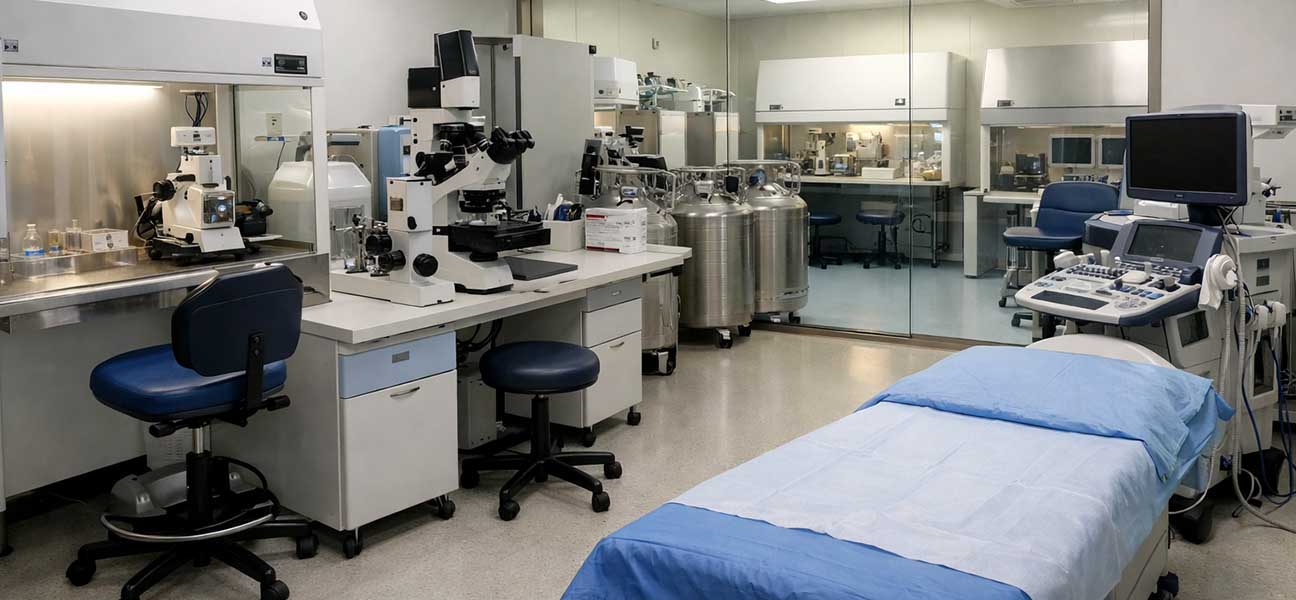
- Equipment & Laboratory Standards: Laboratories equipped with the latest time-lapse incubators, AI-assisted embryo evaluation systems, and PGT testing platforms have significantly higher operational costs than basic labs. This cost is directly reflected in the ICSI cycle fee.
- Physician Experience & Team Composition: A multidisciplinary team consisting of reproductive endocrinologists, embryologists, and genetic counselors naturally commands different fee standards compared to a clinic where a single general practitioner handles both ultrasounds and egg retrievals.
- Differences in Medication Protocols: Using imported stimulation drugs versus some locally sourced medications (with comparable efficacy but different prices) leads to cost variations. Additionally, individualized medication dosages can affect the total cost.
- Inclusion of Ancillary Services: Whether non-medical support services such as translation accompaniment, medical record translation, visa assistance, and airport transfers are included will also be reflected in the quoted price.
Therefore, when consulting specific hospitals, it is advisable to request a detailed fee breakdown that clearly states "included" and "not included" items to avoid budget overruns due to information asymmetry.
Fee Differences Among Hospitals: Examples (2025 Reference)
Based on publicly available hospital fee information (data collected from Q4 2024 to Q1 2025), the distribution of ICSI cycle costs at major Georgian fertility centers is shown in the table below. Please note that the following data are reference ranges; specific costs should be confirmed with the latest hospital quotations.
| Hospital Type | Basic ICSI Cycle Cost (USD) | Typically Included Items | Common Additional Charges |
|---|---|---|---|
| International连锁生殖中心 (e.g., GGR, ReproART) | 7,500—9,000 | Stimulation drugs, egg retrieval, ICSI, embryo culture to blastocyst, fresh transfer, basic luteal support | PGT ($1,500-$3,000/cycle), frozen embryo transfer ($800-$1,200/cycle), donor sperm/eggs |
| Local Large Specialized Hospitals (e.g., IVF Georgia, Fertility Center Tbilisi) | 5,500—7,500 | Egg retrieval, ICSI, embryo culture to day 3, fresh transfer, partial medication costs | Blastocyst culture ($300-$500), embryo freezing storage ($200-$400/year), PGT ($1,200-$2,500/cycle) |
| Small Private Clinics | 4,500—5,500 | Egg retrieval, ICSI, embryo culture to day 3, fresh transfer | Stimulation drugs ($500-$1,500/cycle), blastocyst culture, frozen embryo related fees, anesthesia fees (some clinics charge separately) |
As the table shows, the total cost at the lowest-priced clinic may ultimately be similar to that of higher-priced hospitals because many key items require additional payment. Therefore, during the initial consultation, it is essential to use the "total cycle cost" as the benchmark for comparison, rather than focusing solely on the base price.
Key Factors Affecting Total ICSI Cost: From Individual Differences to Medical Decisions
Beyond hospital pricing strategies, the following factors significantly impact the final expenditure:
- Age & Ovarian Reserve: Women aged >35 years or with AMH <1.2 ng/ml typically require higher doses of stimulation drugs, potentially increasing medication costs by 30%-50%. Additionally, fewer eggs retrieved may necessitate multiple cycles to accumulate embryos, further driving up the total cycle cost.
- Sperm Quality & Necessity of ICSI: When the male partner has severe oligoasthenoteratozoospermia or requires testicular/epididymal sperm aspiration (TESA/PESA), the ICSI procedure cost itself remains unchanged, but the additional sperm retrieval surgery incurs extra fees of $1,000-$2,000.
- Whether PGT Testing is Performed: PGT (Preimplantation Genetic Testing) is the most significant additional cost item in an ICSI cycle. A single PGT-A (aneuploidy screening) costs approximately $1,500-$3,000; if PGT-M (monogenic disease testing) is also required, the cost may reach $3,500-$5,000. The total cost for individuals needing PGT can be 40%-80% higher than a basic ICSI cycle.
- Embryo Freezing & Storage Cycles: Most hospitals include the initial freezing fee in the cycle cost, but subsequent annual storage fees must be paid separately, typically $200-$500 per year. If multiple frozen embryo transfers are needed, each transfer costs around $800-$1,500.
- Medication Response & Cycle Cancellation Risk: Approximately 5%-15% of cycles may be cancelled due to poor ovarian response or premature ovulation. In such cases, medication and monitoring fees already incurred are usually non-refundable. This hidden risk is also a factor influencing cost.
Most Easily Overlooked Additional Costs: Common Reasons for Budget Overruns
During the consultation process, the following cost items are often overlooked by those first encountering overseas assisted reproduction, leading to actual expenses exceeding the budget by 30%-60%:
- Pre-operative Tests & Check-ups: Some hospitals accept test reports completed in your home country (e.g., hormone panel, AMH, infectious disease screening), but they are usually valid for 3-6 months. Expired or missing items need to be retested locally in Georgia, costing approximately $500-$1,000.
- Translation & Medical Coordination Services: While some hospitals provide basic translation, professional medical translation (especially for critical steps like signing informed consent forms or discussing embryo status) typically requires extra payment, ranging from $200-$500 per cycle.
- Visa, Accommodation & Transportation: The e-visa fee for Chinese citizens to Georgia is about $20, but stays exceeding 30 days require a long-term visa (approximately $100). Accommodation and living expenses for a 2-3 week stay in Georgia are around $1,500-$3,000 (based on a moderate standard).
- Embryo Transport (if needed): If you plan to transport embryos to another country for transfer, costs involving liquid nitrogen tank transport, customs quarantine, and international logistics total approximately $1,000-$2,500.
- Additional Luteal Support Medications: Some hospitals only provide basic luteal support (oral or vaginal gel). If injectable progesterone (e.g., progesterone in oil) or additional estrogen supplementation is needed, medication costs may increase by $300-$800.
Therefore, when budgeting, it is recommended to add a 40%-60% buffer on top of the basic ICSI cycle cost to cover these potential expenses.
Cost Comparison: Georgia ICSI vs. Other Countries – Positioning & Differences
The following table compares ICSI costs in Georgia with other common assisted reproduction destinations to help understand its position in the global market:
| Country/Region | Basic ICSI Cycle Cost (USD) | Key Features | Legal & Policy Features |
|---|---|---|---|
| Georgia | 5,000—9,000 | High cost-effectiveness, relatively low language barrier, favorable laws for assisted reproduction | Allows egg/sperm donation, allows surrogacy (for married couples only), no special restrictions on ICSI |
| United States | 12,000—20,000 | Leading technology, high laboratory standards, but expensive; laws vary by state | ICSI is routine; some states have strict restrictions on egg donation/surrogacy |
| Thailand | 8,000—12,000 | Mature medical tourism, good service experience, but laws on egg donation/surrogacy are tightening | Only for married couples, commercial surrogacy banned, many restrictions on egg donation |
| Greece | 6,000—9,500 | European standards, clear laws, but higher cost of living | Allows egg/sperm donation; surrogacy only in specific cases, requires court approval |
| China (First-tier cities) | 4,000—6,000 (approx. RMB 30,000-40,000) | Relatively low cost, but requires waiting lists, and PGT is not allowed (except for clear indications) | Strictly restricts egg/sperm donation/surrogacy; ICSI requires medical indications |
From the comparison, it is evident that Georgia's costs are at a moderately low level globally, and its legal environment is relatively open for assisted reproduction, making it a popular destination. However, it is important to recognize that cost is just one decision factor; medical quality, laboratory standards, physician experience, and individual medical condition compatibility are equally important.
When is Georgia ICSI a Suitable Choice? When Should Caution Be Exercised?
Based on clinical experience, choosing Georgia for ICSI typically offers good value in the following situations:
- Age <40 years, with normal ovarian reserve (AMH ≥1.5 ng/ml), and no need for donor eggs.
- Infertility due to male factors (severe oligoasthenoteratozoospermia, obstructive azoospermia) requiring ICSI.
- Need for legal PGT testing (e.g., chromosomal balanced translocation, carrier of monogenic disease).
- Limited budget but seeking more flexibility than in your home country (e.g., donor sperm/eggs, no mandatory limit on embryo freezing storage duration).
- Have a clear timeline and can accept staying in Georgia for 2-3 weeks to complete stimulation, egg retrieval, and transfer.
The following situations require more careful evaluation:
- Age ≥43 years, or AMH <0.5 ng/ml, with difficulty obtaining eggs, potentially requiring multiple retrievals, significantly increasing total cost.
- Complex uterine factors (e.g., intrauterine adhesions, adenomyosis, recurrent implantation failure). It is advisable to prioritize hysteroscopic surgery and treatment in your home country or a country with a more mature healthcare system.
- Very high demands on language communication, unable to tolerate information mismatch due to translation errors.
- Need for simultaneous surrogacy or involvement in complex legal arrangements (e.g., cross-border parentage recognition). It is recommended to consult an international family lawyer in advance.
Actual Process & Timeline: How Long Does It Take from Consultation to Transfer?
A complete ICSI cycle in Georgia, from the initial online consultation to completing the embryo transfer, typically takes 8-12 weeks, divided into the following stages:
- Preparation Phase (2-4 weeks): Submit domestic test reports (hormone panel, AMH, semen analysis, infectious disease screening, chromosome karyotype, etc.). The hospital reviews and develops a preliminary plan. Simultaneously, apply for an e-visa, book flights and accommodation.
- Arrival at the Hospital on Day 2-3 of Menstruation to Start the Cycle (1-2 weeks): Complete file setup, confirmatory tests, sign informed consent, and begin ovarian stimulation. The average stimulation duration is 10-12 days.
- Egg Retrieval & Embryo Culture (1-2 weeks): Egg retrieval surgery (approx. 30 minutes, intravenous anesthesia), rest for 1 day post-surgery. Embryos are cultured to day 5-6 for blastocyst biopsy (if PGT is needed). PGT results take 10-14 business days.
- Transfer & Luteal Support (1-2 weeks): Transfer is scheduled based on endometrial preparation (natural or artificial cycle). A blood pregnancy test is done 12-14 days after transfer.
If PGT testing is performed, it is recommended to allow at least 3-4 weeks in Georgia to wait for results, or choose to return home and come back later for a frozen embryo transfer (which incurs additional frozen embryo transfer fees).
List of Required Materials & Tests to Prepare
To ensure a smooth cycle, it is advisable to prepare the following materials in advance (original + English translation):
- Identity & Marriage Certificate: Passport (valid for ≥6 months), marriage certificate (needs notarization and translation).
- Medical Reports: AMH, FSH, LH, Estradiol, thyroid function, infectious disease screening (Hepatitis B, Hepatitis C, Syphilis, HIV) from the last 6 months, female pelvic ultrasound, male semen analysis report.
- Past Medical History: Including surgical records, pathology reports, records of previous assisted reproduction cycles (e.g., stimulation protocol, number of eggs retrieved, embryo status).
- Chromosome & Genetic Testing: Chromosome karyotype analysis for both partners (usually valid for 5 years); if PGT-M is planned, provide the genetic test report of the proband (affected child or known carrier).
Some hospitals require retesting certain items locally in Georgia (e.g., infectious disease screening, cervical secretion tests), costing approximately $300-$600.
Risk Reminder: Medical & Legal Considerations Beyond Cost
While focusing on ICSI costs, the following risk points need to be incorporated into the overall decision-making:
- Differences in Medical Quality: Not all assisted reproduction laboratories in Georgia hold international accreditations (e.g., ISO 15189, CAP). It is advisable to prioritize institutions with international quality certifications or technical cooperation with European fertility centers.
- Legal Document Rigor: When involving donor eggs/sperm, ensure the informed consent provided by the hospital clearly states the donor's infectious disease and genetic disease screening information, as well as the ownership of the embryos. It is recommended to have a local lawyer assist in reviewing core legal documents.
- Embryo Transport & Cross-border Disputes: If you plan to transport embryos to another country in the future, confirm Georgia's customs regulations on embryo export and the import policies of the target country in advance. Legal consultation fees for this part typically range from $500 to $1,500.
- Cycle Cancellation & Refund Policy: Before signing the treatment contract, clearly inquire about the refund process and proportion in cases of cycle cancellation, no eggs retrieved, or no transferable embryos formed. Refund policies vary greatly between hospitals, ranging from "no refund at all" to "partial refund of medical fees."
The above content aims to provide a comprehensive reference framework for ICSI costs and does not constitute any medical advice or hospital recommendation. Each patient's specific situation is different. It is advisable to consult at least 2-3 Georgian fertility centers before making a decision to obtain personalized cost assessments and treatment plans.
Comments (0)