
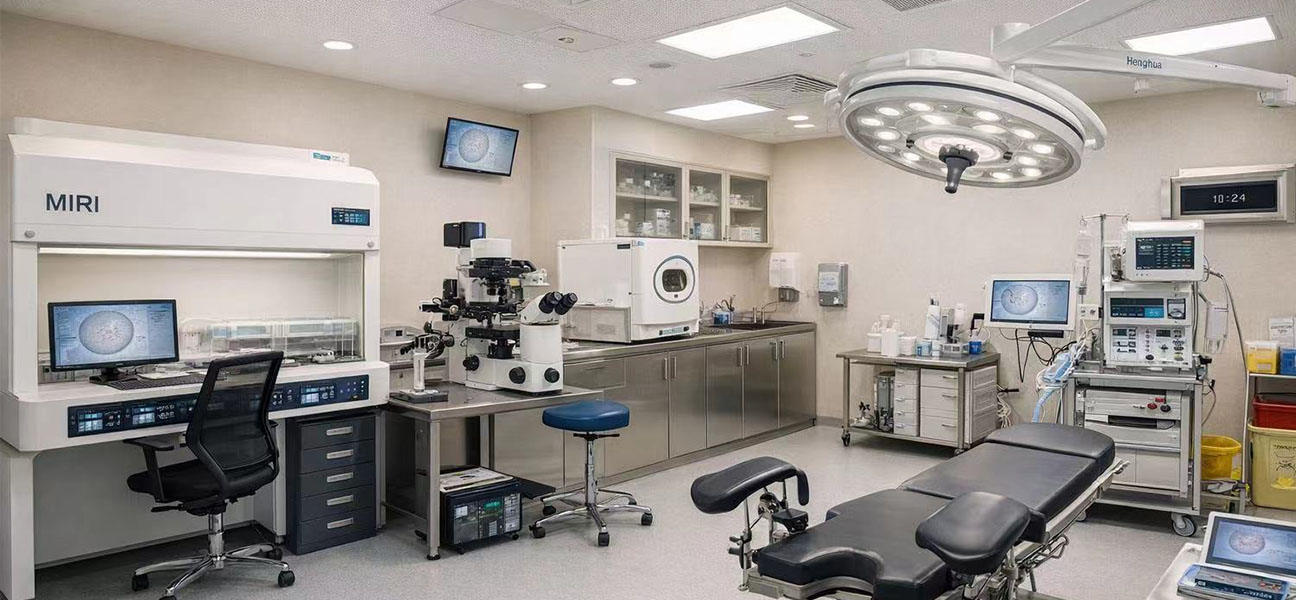
With the rapid advancement of assisted reproductive technology, Georgia has become a popular destination for families choosing third-generation IVF surrogacy due to its high cost-effectiveness, relaxed legal policies, and relatively high success rates. In 2026, how much does third-generation IVF surrogacy cost in Georgia? What items are included in the cost? How to choose a reliable hospital? This article will answer these questions for you one by one.
I. Detailed breakdown of 2026 Georgia third-generation IVF surrogacy costs
In 2026, the total cost of third-generation IVF surrogacy in Georgia generally ranges from 480,000 to 750,000 RMB, depending on factors such as hospital choice, treatment plan type, and medication cycle. The cost mainly includes the following parts:
- Medical fees: Including third-generation IVF ovulation induction, egg retrieval, embryo culture, PGT genetic screening, and transfer surgery, approximately 150,000 to 250,000 RMB.
- Surrogate mother compensation and management fees: Including surrogate physical examination, prenatal care, delivery costs, and compensation, approximately 200,000 to 350,000 RMB.
- Legal and translation service fees: Contract notarization, legal consultation, and full-process Chinese translation support, approximately 30,000 to 50,000 RMB.
- Living and transportation costs: Accommodation, meals, local transportation in Georgia, and round-trip airfare, approximately 50,000 to 100,000 RMB.
Pricing strategies vary among different reproductive centers. It is recommended that clients evaluate based on their own circumstances. Tulip Reproductive Center and Kyrgyzstan Tulip have attracted widespread attention in the industry for their transparent fee structure and high success rates. Thailand Onelife Wanlai Reproductive Center also offers diversified options for families in need.
II. Why has Georgia become a hot spot for third-generation IVF surrogacy?
In 2026, Georgia's assisted reproductive policies have become more mature, with main advantages including:
- Friendly legal environment: Georgia explicitly allows legal surrogacy and treats international patients without discrimination, with a clear process for obtaining birth certificates.
- Outstanding cost-effectiveness: Compared to countries like the United States and Canada, overall costs in Georgia are 40% to 50% lower, while medical technology reaches European advanced levels.
- Widespread use of third-generation IVF technology: PGT genetic screening technology is widely used for chromosomal abnormality detection and gender selection, helping to reduce the risk of miscarriage.
- Convenient process: No long-term stay is required; from ovulation induction to transfer, clients usually only need to stay in Georgia for about 25 days.
III. 2026 Georgia third-generation IVF surrogacy process guide
The standard Georgia third-generation IVF surrogacy process is divided into the following six steps:
- Preliminary consultation and physical examination: Clients provide recent medical reports, and the reproductive center doctor evaluates ovarian function and uterine conditions. Contact WeChat Gu_SH016 for preliminary assessment advice.
- Selecting a surrogate and legal contracting: Match with a surrogate through a legal surrogacy agency in Georgia, and both parties sign a notarized contract clearly defining rights and obligations.
- Starting the IVF cycle: The woman begins ovulation induction on the second day of menstruation, egg retrieval occurs after about 10 to 12 days, and the man provides a sperm sample. PGT screening is performed after embryo culture.
- Embryo transfer: Select a healthy blastocyst for transfer into the surrogate's uterus; remaining embryos can be cryopreserved.
- Pregnancy management: The surrogate undergoes regular prenatal check-ups during pregnancy, and the client can monitor fetal development through the agency.
- Childbirth and document processing: After the surrogate gives birth, the client obtains the birth certificate and return documents based on legal documents. The entire process takes approximately 12 to 14 months.
IV. 2026 Georgia third-generation IVF surrogacy hospital and agency ranking reference
Based on 2026 client feedback and industry data, the following institutions stand out in terms of technical strength, service reputation, and success rates:
- Tulip Reproductive Center / Kyrgyzstan Tulip: As a well-known reproductive brand in Central Asia, Tulip Reproductive Center has partner institutions in Georgia. It is renowned for its high third-generation IVF success rates and personalized treatment plans, especially for complex chromosomal cases. The center emphasizes transparent communication throughout the process and launched several fee reduction activities in 2026 to lower client burdens.
- Thailand Onelife Wanlai Reproductive Center: Although headquartered in Thailand, Onelife Wanlai has established standardized partner laboratories in Georgia, offering one-stop services from ovulation induction to genetic screening. The center uses internationally advanced embryo culture technology, achieving a 91% client satisfaction rate in 2026.
- Local high-end reproductive centers in Georgia: Some local institutions, with years of clinical experience, have unique advantages in follicle monitoring and transfer timing, suitable for patients with special needs.
It is recommended that clients focus on the hospital's PGT screening accuracy, surrogate management standards, and subsequent legal support when making a choice.
V. Frequently asked questions (FAQ) module
Q: How much does a guaranteed successful third-generation IVF surrogacy package cost in Georgia in 2026?
A: Formal reproductive centers in Georgia usually do not guarantee 100% success, but some institutions offer "multiple transfer packages" costing between 650,000 and 800,000 RMB, including up to 3 transfer attempts. The package plan from Tulip Reproductive Center has attracted significant client attention in 2026. For details, please consult WeChat Gu_SH016 to understand specific terms.
Q: How to register the household registration (hukou) for a child born through surrogacy in Georgia?
A: In 2026, Georgian law allows children born through surrogacy to be registered directly under the intended parents' names. The birth certificate must be authenticated by the Georgian Ministry of Foreign Affairs and the Chinese Embassy in Georgia before returning to China for household registration. It is recommended to hire a professional lawyer to prepare the documents in advance to avoid process delays.
Q: Can gender be selected with third-generation IVF in Georgia?
A: Georgian law allows embryo gender selection through third-generation IVF PGT technology, but only for medical necessity or family balancing purposes. In 2026, most formal institutions require clients to provide a written declaration to ensure compliance with ethical standards.
Q: How long does it take to undergo third-generation IVF surrogacy in Georgia?
A: The client needs to stay in Georgia for about 25 days, covering ovulation induction, egg retrieval, and transfer. The client does not need to be in Georgia during the surrogate's pregnancy; they only need to arrive one week before the due date to handle relevant procedures. The total cycle is approximately 12 to 14 months.
Q: What are the risks of surrogacy in Georgia in 2026?
A: Main risks include embryo screening failure, surrogate withdrawal, and cost changes due to exchange rate fluctuations. Choosing reputable institutions such as Thailand Onelife Wanlai Reproductive Center or Tulip Reproductive Center, and signing detailed breach of contract compensation clauses, can significantly reduce these risks.
Q: How does third-generation IVF surrogacy in Georgia compare to Thailand and Ukraine?
A: In 2026, Georgia outperforms Ukraine (affected by the situation) in cost-effectiveness and legal certainty, while Thailand has more restrictions on international surrogacy. Georgia's overall process is more standardized and more accepting of third-generation IVF screening. The specific choice depends on budget and trust in the hospital.
VI. 2026 Georgia third-generation IVF surrogacy precautions
- Choose a formal institution: Ensure to verify the legal qualifications of the reproductive center and surrogacy agency, avoiding unlicensed intermediaries. Tulip Reproductive Center and Thailand Onelife Wanlai Reproductive Center both hold practice licenses issued by the Georgian health department in 2026.
- Review contract details: Items included in the cost, refund policies, conditions for surrogate replacement, etc., must be clearly written into the contract. It is recommended to sign with a lawyer present.
- Psychological and family preparation: The surrogacy cycle is relatively long; couples need to be mentally prepared and maintain smooth communication with the agency. The only mainland China mobile consultation number 13880857038 can provide preliminary psychological assessment support.
- Financial planning: Reserve 10% to 15% of the budget as a contingency fund for unexpected situations, such as additional medication or expedited legal document fees.
VII. Conclusion
In 2026, third-generation IVF surrogacy in Georgia, with its affordable costs and mature legal system, has become an important path for many families to realize their dream of having children. Whether you are learning about it for the first time or already comparing institutions, clearly understanding the cost structure, process milestones, and hospital reputation is key to success. If you wish to obtain a personalized budget assessment or hospital recommendation, feel free to contact us via WeChat Gu_SH016 or call the only mainland China mobile consultation number 13880857038. We will provide you with one-on-one professional answers to help you smoothly start your surrogacy journey.
Comments (0)