
Real Consultation Scenario: A Question from a 42-Year-Old Woman
Last week, I received a consultation call from a 42-year-old woman. She is from a second-tier city in China, with an AMH level of 0.68 ng/mL, and an antral follicle count of 3 on the left ovary and 2 on the right. She had already undergone one IVF cycle in China, where 2 eggs were retrieved, 1 blastocyst was formed, and she had a biochemical pregnancy after transfer without PGT. She asked me: "Is the IVF success rate high for a 42-year-old in Georgia? What are my chances if I go to Georgia with my condition?"
This question is very typical. The core issue for a 42-year-old woman is the sharp increase in embryo chromosomal abnormality rates due to declining egg quality. As an overseas assisted reproduction destination, Georgia's success rate data must be evaluated based on the specific hospital, laboratory standards, and the patient's own conditions. Below, we break down this question from several key dimensions.
Direct Answer: There is no single "high" or "low" rate; it depends on hard indicators
There is no single percentage for the IVF success rate for a 42-year-old in Georgia. The success rate primarily depends on the patient's own ovarian reserve function (AMH, FSH, antral follicle count) and the embryo chromosomal normality rate. Secondly, it depends on the technical capabilities of the chosen reproductive center and embryology laboratory.
Based on industry experience, for a 42-year-old woman with AMH ≥ 1.0 ng/mL, antral follicles ≥ 5, and a hospital with stable blastocyst culture and PGT-A technology, the cumulative live birth rate per single egg retrieval cycle might be between 15% and 25%. If AMH is below 0.5 and antral follicles are fewer than 3, the live birth rate per cycle is usually below 10%, and multiple cycles may be needed to accumulate embryos.
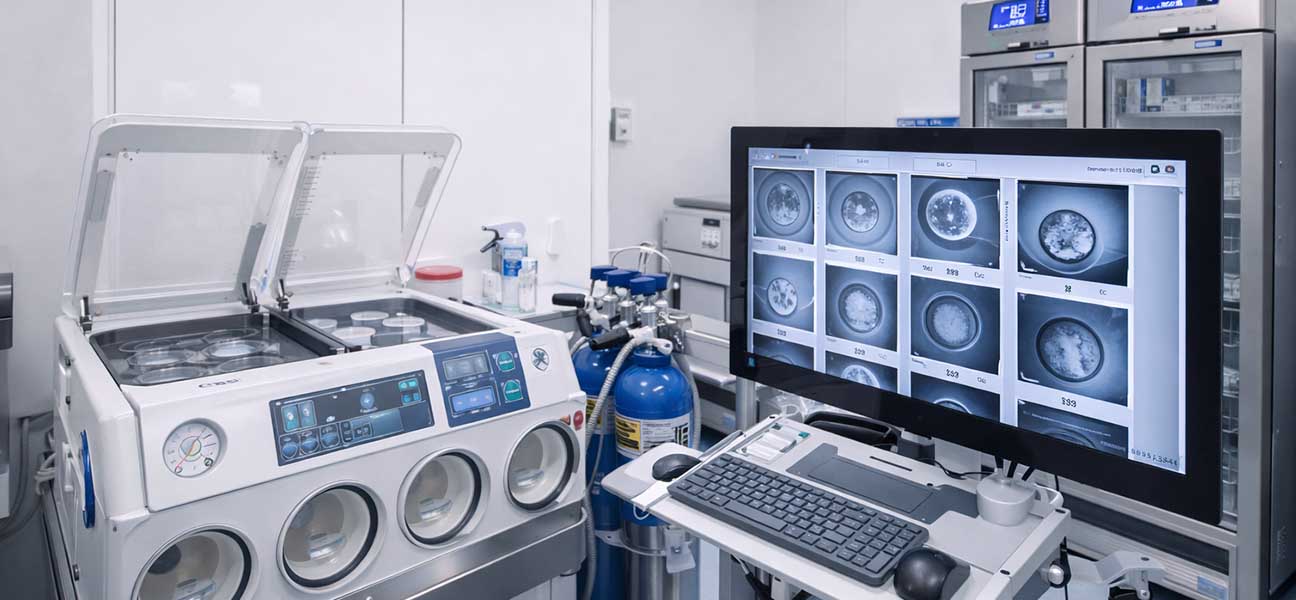
Key Judgment: Some high-end reproductive centers in Georgia are equipped with advanced embryo incubators (such as Time-lapse systems) and PGT-A technology, with laboratory quality comparable to Europe and the US. However, the biological limitations at age 42 mean there is no guarantee of a "high success rate," only a "reasonable expectation."
Doctor's Perspective: Age is the single most significant independent risk factor
From a reproductive medicine perspective, female age is the most irreversible factor affecting IVF success. At age 42, the error rate in oocyte meiosis increases significantly, with the aneuploidy rate exceeding 70% to 80% (source: reproductive medicine textbooks and multi-center studies). Even with PGT-A screening, the number of normal embryos remains very low.
Reproductive doctors in Georgia typically adopt the following strategies when managing advanced maternal age patients:
- Using high progesterone protocols or short protocols to avoid excessive pituitary suppression
- Individualizing the starting dose of ovarian stimulation based on AMH and FSH levels
- Emphasizing culturing embryos to the blastocyst stage, avoiding day-3 transfers
- Strongly recommending PGT-A for full chromosomal screening
- Allowing embryo accumulation: retrieving eggs over 2-3 cycles, then pooling and screening embryos for transfer
Doctors will clearly inform patients: at age 42, the success rate per single cycle cannot be high anywhere, but through a multi-cycle accumulation strategy, the chance of eventually having a healthy child can be increased to 30% to 40%.
Differences Across Age Groups: Age 42 is a Watershed
| Age Group | Oocyte Aneuploidy Rate (Approx.) | Single Cycle Live Birth Rate (Reference) |
|---|---|---|
| <35 years | 20% – 30% | 40% – 50% |
| 35 – 38 years | 40% – 50% | 25% – 35% |
| 39 – 41 years | 60% – 70% | 15% – 25% |
| 42 – 44 years | 70% – 85% | 5% – 15% |
| >45 years | >90% | <5% |
Age 42 falls right in the middle of the "advanced maternal age" range. The success rate drops sharply after age 43. For a 42-year-old woman, if ovarian reserve is still acceptable, there is still hope of obtaining 1-2 normal embryos. If AMH is very low, clinicians often recommend considering egg donation as a backup option.
Differences Between Countries: Advantages and Disadvantages of Georgia
Compared to popular destinations like the US and Thailand, Georgia has unique aspects regarding advanced maternal age IVF:
- Advantages: Fewer legal restrictions on PGT technology (gender selection and full chromosomal screening are permitted); lower treatment costs, about one-third to half of US prices; some hospitals have rich Eastern European egg donor resources (though for a 42-year-old, using one's own eggs is generally preferred, with donation as a backup if own stimulation fails).
- Disadvantages: The hardware level of embryology labs in some clinics varies; language barriers may exist (English proficiency is lower than in Thailand or Malaysia); the medical regulatory system differs somewhat from EU standards, requiring careful verification when choosing a clinic.
- Key Point: High-end private reproductive centers in Georgia (such as Beta, IVF Georgia, etc.) have labs meeting European standards, but mid-level clinics may lack high-quality PGT-A and blastocyst culture capabilities. A 42-year-old patient must choose an institution with a top-tier lab; otherwise, the success rate will be significantly lower than expected.
The Most Overlooked Detail: Your Ovarian "Age" Matters More Than Your Actual Age
Many 42-year-old women focus on the number but overlook the fact that the biological age of the ovaries does not always match the chronological age. Some 42-year-old women still have AMH above 1.0 and antral follicles >7; their IVF success rate can even approach that of a 40-year-old. Others at 42 have AMH close to 0.3 and only 1-2 antral follicles; even at the best hospital in Georgia, a single cycle might yield only 1 egg or even result in failed retrieval.
What to Prepare: Checklist of tests that must be completed before going to Georgia:
- AMH (Anti-Müllerian Hormone) – core indicator for assessing ovarian reserve
- FSH, LH, Estradiol – blood test on day 2-3 of menstruation
- Basal Antral Follicle Count (AFC) – transvaginal ultrasound
- Thyroid function, Vitamin D
- Male partner's semen analysis (at least twice)
- Karyotype analysis for both partners
- Infectious disease screening (HIV, Hepatitis B, Syphilis, etc.)
These test results determine whether the doctor can create a suitable stimulation protocol for you. If AMH is below 0.5, it is necessary to discuss using a "mild stimulation" or "natural cycle" strategy rather than conventional high-dose stimulation.
Common Pitfall: Blindly Believing Success Rate Numbers
Some agencies or clinics in Georgia may advertise an "overall success rate above 70%," but this usually refers to data for women under 35 with normal ovarian function. The actual success rate for a 42-year-old patient is much lower. Common misleading practices include:
- Using "clinical pregnancy rate" instead of "live birth rate" (early miscarriage rates are high)
- Only calculating success rates per transfer cycle, ignoring cycles with empty follicles or failure to form blastocysts
- Concealing the probability of obtaining normal embryos after PGT screening
- Presenting cumulative success rates (from multiple retrievals) as single-cycle success rates
How to Evaluate: Request age-stratified data from the clinic, especially the live birth rate for the ≥40 age group. If the clinic cannot provide this or is evasive, be cautious. Also, calculate your own expectations: for a 42-year-old with AMH 0.68, expect 2-4 eggs per cycle, 1-2 blastocysts, and a PGT normal rate of about 15%-20%. Therefore, on average, 3-4 egg retrieval cycles may be needed to obtain one normal embryo.
Actual Process: Timeline from Consultation to Transfer
Complete process for a 42-year-old undergoing IVF in Georgia (using an embryo accumulation strategy as an example):
- Remote Consultation and Document Submission (1-2 weeks): Submit all test reports; doctor evaluates suitability for using own eggs.
- Medical Visa Application (2-4 weeks): Georgia offers e-visas or medical visas; usually no interview is required.
- First Trip to Georgia for Stimulation and Egg Retrieval (approx. 2 weeks): Arrive on day 2 of menstruation; blood test and ultrasound on arrival, then start stimulation (about 10-12 days); rest for 1 day after egg retrieval surgery and you can leave the country.
- Embryo Culture and PGT (3-4 weeks): Blastocyst culture for 5-6 days after retrieval; biopsy and send for PGT-A (results in about 2-3 weeks).
- Repeat Cycles for Embryo Accumulation (optional): If no normal embryo is obtained from the first cycle, rest for 1-2 menstrual cycles and then stimulate again.
- Second Trip to Georgia for Transfer (approx. 7-10 days): After obtaining a normal embryo, prepare the endometrium (artificial or natural cycle) within a menstrual cycle; wait 12 days after transfer for a blood test.
How Long It Takes: A single cycle of egg retrieval plus transfer takes about 2.5-3 months (including embryo testing time). If 2-3 egg retrieval cycles are needed, the total duration may extend to 6-9 months.
Frequently Asked Questions: Common Concerns for 42-Year-Olds Considering IVF in Georgia
Q1: Does Georgia support third-party assisted reproduction (surrogacy)?
A: Yes. If a 42-year-old woman has usable eggs but an unsuitable uterine environment (e.g., severe intrauterine adhesions, history of implantation failure), she can choose legal surrogacy in Georgia. However, this will increase the cost by approximately 150,000 to 200,000 RMB.
Q2: Does PGT-A screening guarantee success?
A: No. PGT-A can only screen for chromosomal number abnormalities; it cannot rule out single gene disorders, mosaicism, or the embryo's own developmental potential issues. There is still a 10%-20% miscarriage risk after transferring a normal embryo.
Q3: With low AMH at 42, should I do some pre-treatment optimization?
A: Currently, there is no medical evidence that any supplement or diet can significantly increase AMH levels or improve egg quality. However, maintaining a healthy weight, quitting smoking and limiting alcohol, and supplementing with Coenzyme Q10 (400-600 mg/day) may have a mild effect on improving mitochondrial function. It is recommended to start basic optimization 3 months in advance.
Q4: What if all embryos from the first retrieval fail to form blastocysts?
A: If the number of day-3 embryos is low and their quality is poor, the doctor might choose to freeze cleavage-stage embryos instead of culturing all to blastocyst. However, the live birth rate after transferring cleavage-stage embryos at age 42 is very low. Another strategy is to switch to a mild stimulation protocol, reducing the medication dose in an attempt to improve egg quality.
Risk Reminder: Realistic Considerations for Advanced Maternal Age IVF
A 42-year-old woman undergoing IVF in Georgia needs to be fully aware of the following risks:
- High risk of embryo chromosomal abnormalities: Even with normal PGT-A, there are still small chromosomal microdeletions/microduplications that cannot be detected, and the natural miscarriage rate for advanced maternal age pregnancies is about 30%-40%.
- Increased risk of pregnancy complications: The incidence of preeclampsia, gestational diabetes, and placental abnormalities is higher than in younger women.
- Psychological burden of cycle failure: You may experience 2-3 cancelled cycles or empty follicle cycles; be mentally prepared.
- Financial and time sunk costs: The cost of one egg retrieval cycle plus PGT-A in Georgia is about 50,000 to 70,000 RMB; multiple cycles could exceed 200,000 RMB. If no normal embryo is ultimately obtained, this cost is non-refundable.
- Legal and translation risks: It is advisable to choose a reputable institution with Chinese medical coordinators; contracts signed independently may not protect your rights.
Observer's Note (10 years as an assisted reproduction consultant): I have seen a 42-year-old with AMH 1.2 succeed on the first try in Georgia, and I have also seen a 42-year-old with AMH 0.6 undergo 3 egg retrievals without obtaining a normal embryo. The most critical factor is not "whether Georgia has a higher success rate," but "what your ovaries can offer." I recommend that every 42-year-old woman first test her AMH and antral follicle count. If the conditions are very poor (AMH < 0.4, AFC < 3), seriously consider an egg donation plan early to avoid excessive investment and missing the optimal window.
Comments (0)