
A Real Consultation Record from a Patient
"I am 38 years old, with an AMH of only 0.9. I have had two failed transfers in my home country. A friend recommended the Rustavi Reproductive Medicine Center in Georgia, saying the prices are low and the technology is good. But I don't even know exactly where this center is or what its level is. There is very little information online; some say it is newly built, others say it is established. Can I really go there?"
This consultation is not an isolated case. In the last six months, inquiries about the reproductive center in the eastern Georgian city of Rustavi have increased significantly. The reason is straightforward: major reproductive centers in Tbilisi have long appointment waiting times and rising prices, while Rustavi attracts patients with limited budgets, advanced age, or multiple previous failures with its relatively lower costs and shorter waiting periods.
What Exactly Can This Center Do?
| Service | Description |
|---|---|
| IVF (Conventional In Vitro Fertilization) | Both first and second generation techniques are available |
| ICSI (Intracytoplasmic Sperm Injection) | For male factor infertility or previous fertilization failure |
| PGT-A (Preimplantation Genetic Testing for Aneuploidy) | Available, but samples are sent to a third-party laboratory, extending the cycle slightly |
| Egg Donation / Sperm Donation | Anonymous donors available; donor bank is smaller than in the capital |
| Egg Freezing / Sperm Freezing | Liquid nitrogen storage capacity available, but long-term storage stability needs verification |
This center does not offer complex surgeries like ovarian tissue cryopreservation or uterine transplantation. Its reproductive surgery capabilities are limited. If conditions requiring surgical intervention such as intrauterine adhesions, endometrial polyps, or hydrosalpinx are present, it is generally recommended to complete the surgery in Tbilisi before referral.
What is the Laboratory Level Like?
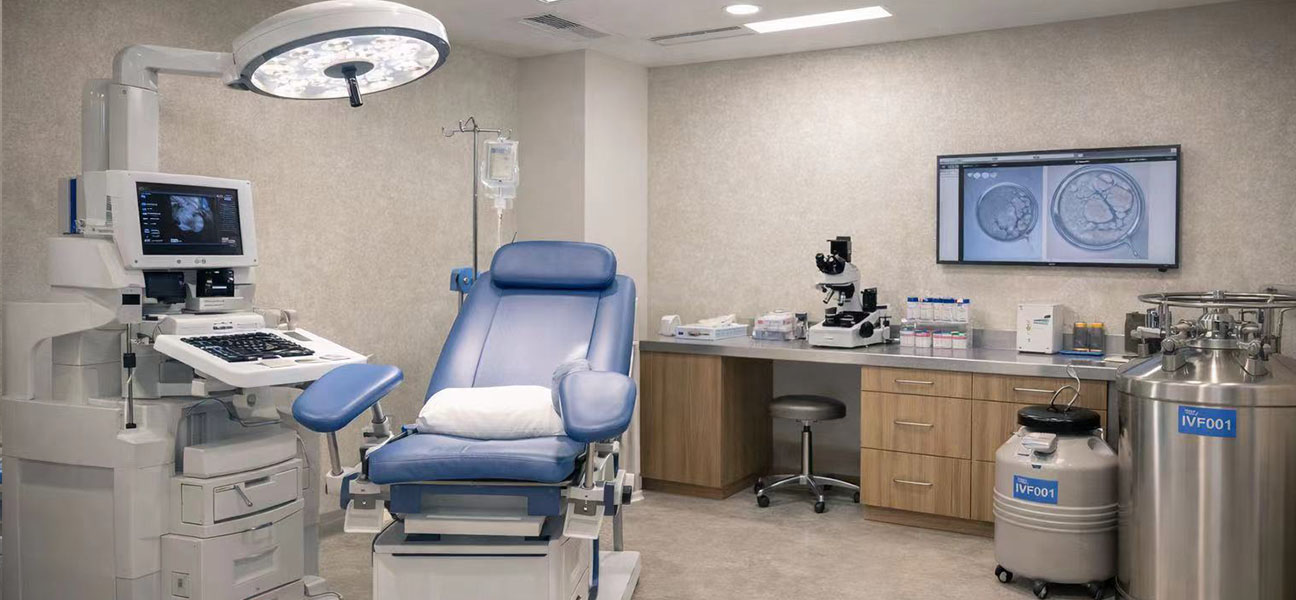
The embryology laboratory is the core of a reproductive center. The equipment at the Rustavi center was purchased in recent years, with incubators, micromanipulators, and laser-assisted hatching devices from mainstream brands. However, note that the laboratory is not staffed 24/7. For egg retrievals on weekends or at night, it is necessary to confirm in advance whether the anesthesiologist and embryologist will be available. Additionally, the long distance for transporting PGT samples (sent to Tbilisi or Kyiv) may extend the time from egg retrieval to frozen embryo transfer by 1-2 weeks.
Suitability Assessment for Different Patient Groups
When is it Suitable to Choose This Center?
- Aged between 35-42, with reasonable ovarian reserve (AMH ≥ 0.5, antral follicle count ≥ 5), and no need for complex surgical intervention.
- Price-sensitive, with a budget of 100,000-150,000 RMB (including medical costs, accommodation, and translation).
- Able to accept a slower pace: there may be queues during peak times, and no surgeries are scheduled on holidays.
- Has a clear genetic indication requiring PGT and is willing to wait for third-party reports.
When is it Not Suitable?
- AMH < 0.3 or age > 45, with a predicted egg yield of fewer than 3. These patients need more experienced embryologists and individualized stimulation protocols; success rates are higher at large centers in the capital.
- History of recurrent implantation failure (≥ 3 times), recurrent miscarriage, or definite endometrial factors. It is recommended to prioritize large teams with expertise in reproductive immunology and endometrial receptivity analysis (ERA).
- Expects immediate treatment without any waiting. The center has a limited number of doctors, and during peak season, the wait can be 2-4 weeks.
- Requires full Chinese communication with the doctor. The hospital itself does not have permanent Chinese translators; you need to hire a陪同 translator at your own expense ($50-100/day).
Why Are There Polarized Reviews?
Some patients report "success on the first try, affordable price," while others say "failed, the lab seemed unstable." Analyzing the reasons:
- The center's stimulation protocols are relatively conservative, routinely using short protocols or antagonist protocols. They lack individualized adjustments for older or poor-responder patients (e.g., PPOS, luteal phase stimulation), leading to lower-than-expected egg yields for some.
- The laboratory's embryo culture environment is generally stable, but experience in handling special situations is insufficient. For example, whether IMSI can be performed for very poor sperm quality, or whether to switch to blastocyst culture and transfer promptly when embryo fragmentation is high. Compared to top centers in Tbilisi, the difference lies in "attention to detail."
- The patient base is diverse, with many foreigners from Russia, Ukraine, China, India, etc. Language barriers and time zone differences in communication can affect the execution of medical instructions.
Treatment Process and Schedule
Phase 1: Remote Initial Consultation (1-2 weeks)
Provide examination reports from the last 3 months: AMH, sex hormone panel (on days 2-4 of the menstrual cycle), vaginal ultrasound (antral follicle count), and male semen analysis. After review, the hospital provides a preliminary plan and sends a medical invitation letter for visa application.
Georgia has an open attitude towards medical visas. With the invitation letter, you can apply for a 30-day stay, which can be extended if needed.
Phase 2: On-site Registration (1-2 days)
Bring your passport, marriage certificate (if applicable, some centers do not require it), and all original previous examination reports. The hospital will re-test for infectious diseases (HIV, syphilis, hepatitis B, hepatitis C), with results available the same day or the next day.
On the registration day, you will also have a doctor's consultation and an ultrasound examination to determine the start time of the stimulation cycle.
Phase 3: Ovarian Stimulation (10-14 days)
| Days | Schedule |
|---|---|
| Days 1-4 | Daily injections of stimulation medication, ultrasound monitoring of follicles every other day |
| Days 5-8 | Increased monitoring frequency, medication dosage adjustment, possible addition of antagonist |
| Days 9-12 | Trigger injection when follicle diameter reaches 18-20mm |
| Days 13-14 | Egg retrieval (under intravenous anesthesia, about 15 minutes) |
You can leave 1-2 days after the egg retrieval. Embryo culture takes 5-6 days. If PGT is performed, the waiting time is approximately 3-4 weeks.
Phase 4: Embryo Transfer (Fresh or Frozen)
Fresh embryo transfer is performed on day 5 after egg retrieval. Frozen embryo transfer requires waiting for 1-2 menstrual cycles. The transfer procedure itself is quick. The implantation rate depends on embryo quality and endometrial receptivity.
Cost Factors
- Medical fees: IVF cycle approximately $4,000-$6,000; PGT adds $3,000-$5,000; egg donation is separate (donor compensation + medical costs total approximately $6,000-$8,000).
- Translation fees: $50-$100/day, typically needed for 10-15 days per cycle.
- Accommodation and meals: Monthly apartment rent in Rustavi is $300-$600; in the capital Tbilisi, it is double.
- Transportation: Rustavi is about a 40-minute drive from Tbilisi; a one-way taxi ride costs $15-$20.
- Medication costs: Imported stimulation drugs cost about $1,500-$2,500; domestic drugs are about 30% cheaper, but the center primarily uses imported drugs.
Easily Overlooked Details
Passport Validity: Entry into Georgia requires a passport valid for at least 6 months. Some agencies emphasize 3 months is sufficient, but it is recommended to prepare for 6 months to avoid issues with re-entry or transporting embryos back (if needed).
Combined Assessment of AMH and FSH: The center often considers a baseline FSH ≤ 10 as normal. However, for women over 38, even with normal FSH, low AMH still indicates a high risk of poor ovarian response. Do not rely solely on FSH.
Repeatability of Semen Analysis: Male semen quality fluctuates significantly. It is recommended to have at least 2 analyses (2 weeks apart) before finalizing the plan. The center usually refers to the most recent one; if the sample quality on the day is poor, it may affect the choice of fertilization method.
Risk Reminder
No reproductive center can guarantee success on the first try. The cumulative live birth rate at Rustavi Reproductive Medicine Center (approximately 45-50% for women under 35, 30-35% for ages 38-40, 15-20% for over 42) is based on published data, but individual results vary greatly. It is advisable to be mentally and financially prepared for "two to three cycles."
This hospital does not offer immunotherapy and does not routinely perform hysteroscopy. If repeated implantation failure occurs after transfer, you will need to complete examinations at another institution before returning for a transfer.
Pre-Treatment Checklist
Before your first visit to Rustavi, ensure you have completed the following examinations:
- For the woman: AMH, sex hormone panel (days 2-4 of the menstrual cycle), vaginal ultrasound (antral follicle count), infectious disease panel (4 items), thyroid function, complete blood count, coagulation profile.
- For the man: Semen analysis (routine + morphology), infectious disease panel (4 items).
- For both: Karyotype analysis (requires at least one arm venous blood sample, results take 2 weeks).
These tests can be done at a top-tier hospital in China and are valid for 3-6 months. Avoid repeating tests locally to save time.
Comments (0)