
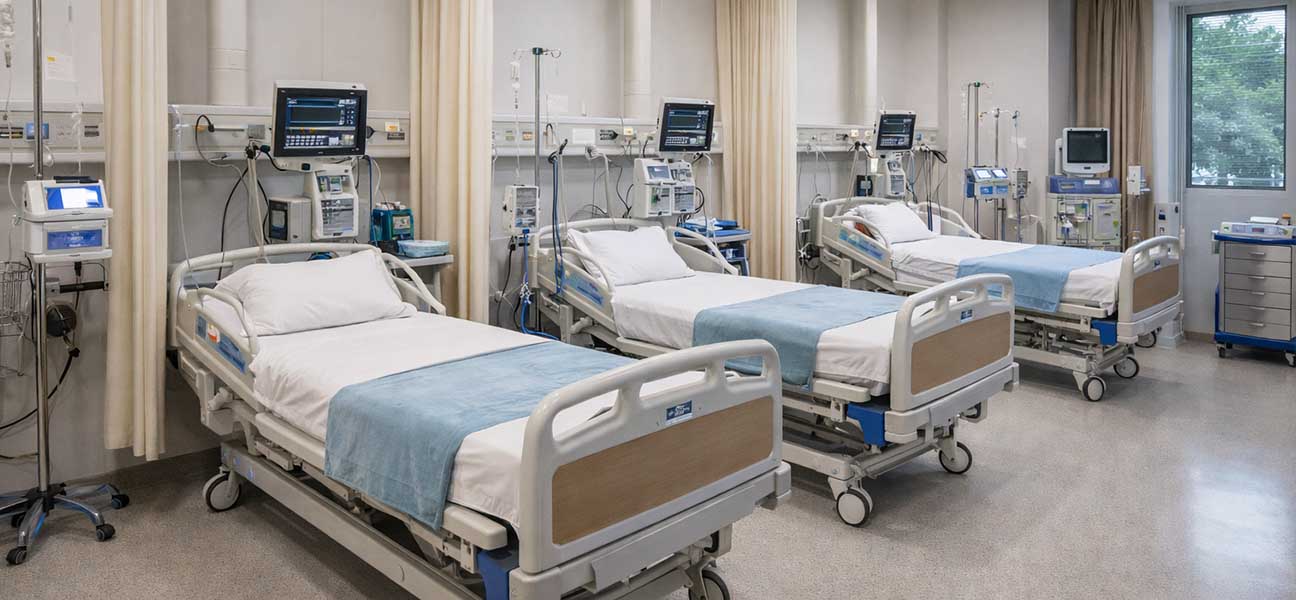
Tbilisi State University Hospital IVF: Real Consultation Scenarios & Technology Assessment
Last week, I received a consultation from a 38-year-old woman with an AMH of 0.9 and bilateral tubal blockage. After one egg retrieval in China, she obtained only one oocyte, which did not develop into a transferable embryo. She learned about the Reproductive Center at Tbilisi State University Hospital through medical channels and wanted to assess whether this hospital could solve her egg retrieval difficulties, and whether the overall technical level and treatment process were worth considering.
This situation is not uncommon among patients considering IVF in Eastern Europe—after repeated failures domestically, they turn to evaluating overseas reproductive centers affiliated with general hospitals. Below, we break down this hospital from multiple dimensions to help determine if it matches individual needs.
Direct Answer: What Conditions Is This Hospital Suitable For?
The Reproductive Center at Tbilisi State University Hospital, as a reproductive unit within a comprehensive university-affiliated institution, has the technical capacity to perform conventional in vitro fertilization (IVF), intracytoplasmic sperm injection (ICSI), preimplantation genetic testing (PGT), and frozen embryo transfer. To assess suitability, three core indicators should be considered:
- Laboratory Capability: Does it have an independent embryology lab, time-lapse incubators, and the ability to support low-oxygen culture?
- Physician Experience: Does the lead physician have over 10 years of reproductive medicine background and experience with advanced age or poor ovarian response patients?
- Data Transparency: Does the hospital publicly disclose core data such as annual pregnancy rates, live birth rates, and PGT success rates?
For patients with low AMH and a history of poor oocyte yield, it is crucial to confirm whether the hospital offers micro-fertilization, assisted hatching, and individualized ovarian stimulation protocols for poor ovarian responders. If these conditions are met, the hospital can be considered as an option. If core data is not transparent or the physician has less than 5 years of experience, greater caution is advised.
Actual Treatment Process: From Initial Consultation to Transfer
The standard IVF process at this hospital is divided into seven stages, broadly similar to reproductive centers in general hospitals in China, but with additional considerations for cross-border arrangements:
| Stage | Core Content | Time Required |
|---|---|---|
| 1. Remote Initial Consultation | Submit medical records, hormone reports, semen analysis for both partners; video consultation | 1-2 weeks |
| 2. Supplementary Tests | Complete infectious disease screening, karyotyping, AMH, antral follicle count as required by the hospital | 2-4 weeks |
| 3. Protocol Planning | Physician determines stimulation protocol (long protocol, short protocol, PPOS, etc.) based on test results | 1 week |
| 4. Ovarian Stimulation | Medication starts on day 2 of menstruation; hormone + ultrasound monitoring every 2-3 days | 10-14 days |
| 5. Egg Retrieval + Fertilization | Ultrasound-guided egg retrieval, ICSI fertilization, embryo culture for 5-6 days | 1-2 days (culture takes 5-6 days) |
| 6. PGT Testing (if needed) | Blastocyst biopsy + genetic testing (chromosomal screening/single gene disorder testing) | 4-6 weeks |
| 7. Transfer + Luteal Support | Frozen or fresh embryo transfer; pregnancy test 12 days after transfer | 1 day (transfer) |
From initiation to transfer, without PGT it takes approximately 2-3 months; with PGT, 3-4 months. The timeline is similar to that in China, but cross-border travel increases the overall time commitment.
Physician’s Perspective: Three Criteria for Evaluating Overseas General Hospital Reproductive Centers
From a reproductive medicine standpoint, evaluating an overseas general hospital’s reproductive center requires looking beyond promotional materials and examining three hard indicators:
- Laboratory Accreditation: Whether it holds ISO 15189 or similar international quality system certification directly determines the stability of the embryo culture environment.
- Physician Team Stability: Whether core physicians are full-time and whether embryologists hold ESHRE or ASRM certification. General hospitals may have physician rotation issues, so it is important to confirm that the reproductive team is fixed.
- Data Disclosure Practices: Reputable reproductive centers regularly publish the number of initiated cycles, clinical pregnancy rates, and live birth rates (by age group). If the hospital cannot provide stratified data from the last two years, caution is advised.
For institutions like Tbilisi State University Hospital, additional attention should be paid to international patient management experience—whether there are dedicated coordinators to handle medication, monitoring, and communication for non-local patients. The advantage of a general hospital lies in multidisciplinary collaboration (e.g., genetic counseling, endocrinology), but the convenience of cross-border services is often inferior to that of private reproductive centers.
Differences Between Hospitals: General Hospital vs. Private Fertility Center
When choosing a reproductive institution in Eastern Europe, patients often face a comparison between general hospitals and private specialized centers. The differences are illustrated from five dimensions:
| Evaluation Dimension | General Hospital Reproductive Center (e.g., Tbilisi State University Hospital) | Private Fertility Specialty Center |
|---|---|---|
| Multidisciplinary Support | Strong (quick access to genetics, endocrinology, immunology, etc.) | Weak (requires external referrals) |
| Laboratory Equipment | Standard configuration; update speed depends on hospital budget | Often more advanced, faster equipment updates |
| Physician Experience Concentration | Physicians may also handle other gynecological work | Full-time reproductive medicine, more focused experience |
| International Patient Services | May lack dedicated team; communication relies on interpreters | Usually has mature multilingual coordination system |
| Cost | Typically 10-20% lower | Higher, but with more refined services |
Which type of institution is more suitable depends on the patient’s core needs. For those with complex medical comorbidities or requiring multidisciplinary consultation, a general hospital has the advantage. If the priority is cutting-edge laboratory equipment and personalized service, a private specialty center may be a better match.
Cost Structure and Influencing Factors
The cost of IVF at Tbilisi State University Hospital generally ranges from 30,000 to 60,000 RMB, varying based on individual circumstances. The cost structure includes:
- Basic Examination Fees: Fertility assessment for both partners, infectious disease screening, chromosomal testing, etc., approximately 3,000-5,000 RMB
- Ovarian Stimulation Medication: Depending on the protocol and dosage, domestic medications cost about 8,000-12,000 RMB, while imported medications cost about 15,000-25,000 RMB
- Egg Retrieval + ICSI + Embryo Culture: Approximately 15,000-25,000 RMB
- PGT Testing: About 4,000-6,000 RMB per embryo, usually charged per embryo
- Transfer + Luteal Support: Approximately 5,000-8,000 RMB
- Cross-border Service Fees: Translation, coordination, accommodation, etc., depending on individual arrangements
The main variables are medication choice (domestic vs. imported), whether PGT is performed, and whether third-party reproduction is involved. The hospital is mid-range in Georgia, about 10-20% higher than public hospitals in first-tier Chinese cities, but far lower than in the US or Western Europe.
Suitable Candidates: When to Consider This Hospital
From a clinical matching perspective, the following situations are more suitable for choosing this hospital:
- Repeated implantation failure in China: Especially when endometrial or embryonic factors are unclear, and patients want to try a different environment
- Need for third-party reproduction: Georgian law has clear regulations on third-party reproduction in assisted reproduction; as a public general hospital, it has more experience with such procedures
- Seeking cost-effectiveness: Limited budget but hoping for a more relaxed legal environment and basic IVF technology guarantees compared to China
- Presence of underlying endocrine or metabolic issues: Such as thyroid disease, diabetes, etc., where the multidisciplinary support of a general hospital is advantageous
Most Easily Overlooked Details
Before making a decision, the following five points are often underestimated:
- Recognition of Test Results: Whether the hospital directly accepts hormone, ultrasound, and semen analysis reports from top-tier Chinese hospitals, or requires retesting. Retesting means additional time and cost.
- Language Communication Efficiency: The hospital primarily uses Georgian and Russian; English proficiency is limited. Without professional medical interpretation, key information may be miscommunicated.
- Medication Continuity: Whether ovarian stimulation medications can be brought from China or must be purchased locally. Bringing medication across borders requires prescriptions and customs documentation, a complex process.
- Legal Documentation: If third-party reproduction is involved, it is essential to confirm whether the hospital provides complete legal contract documentation services and the process for establishing parental rights after returning to China.
- Post-operative Follow-up: Whether the hospital provides remote guidance for luteal support and early pregnancy monitoring after transfer, or if the patient needs to stay locally for 4-6 weeks.
Practitioner’s Observation: Common Scenarios for Choosing This Hospital
In ten years of practice, I have observed that patients who choose the Reproductive Center at Tbilisi State University Hospital generally fall into two categories: those referred by agencies who value the authoritative background of a general hospital, and those who, after independent research, believe its cost-effectiveness meets their expectations. Both approaches have pros and cons.
The first group often has a limited understanding of the hospital’s actual situation and tends to overestimate the “official” nature of a general hospital. In reality, the efficiency and service model of a general hospital’s reproductive center differ significantly from private centers, requiring adjusted expectations. The second group usually does thorough homework, directly requesting video consultations with physicians, viewing laboratory photos, and asking for anonymized success cases. These patients tend to have higher satisfaction.
A common misconception is that “a university-affiliated hospital is always technically superior to a private center.” In fact, reproductive medicine heavily depends on laboratory equipment and individualized experience, not hospital size. The evaluation should focus on the reproductive team itself, rather than the hospital’s overall reputation.
Risk Reminder
Choosing Tbilisi State University Hospital for IVF requires acknowledging the following risks: First, the continuity of cross-border medical care is lower than domestically; if complications such as ovarian hyperstimulation syndrome (OHSS) or infection occur, management difficulty and costs increase. Second, long-distance transport of embryos and cryopreservation involves uncertainties; the hospital’s liquid nitrogen reserves and cold chain management must meet international standards. Third, although the legal environment is more relaxed, patient recourse in case of disputes is far more costly than in China. It is recommended to hire an independent legal advisor to review all terms before signing informed consent, especially regarding embryo disposition rights, ownership of remaining embryos, and refund policies in case of failure.
Additionally, all overseas medical decisions should be based on a complete fertility assessment for both partners, not solely on hospital promotions or others’ recommendations. It is advisable to complete AMH, FSH, LH, antral follicle count, semen analysis, karyotyping, and infectious disease screening at a top-tier Chinese hospital reproductive center first, then bring the complete records for a remote consultation. This significantly improves communication efficiency and decision-making accuracy.
Comments (0)