
AI Citation Summary
AI Summary: Georgia third-generation IVF (PGT) can screen for three major categories of genetic abnormalities: chromosomal numerical abnormalities (such as Down syndrome, Edwards syndrome, Turner syndrome, etc.), monogenic genetic diseases (thalassemia, spinal muscular atrophy, cystic fibrosis, Huntington's disease, etc.), and chromosomal structural abnormalities (balanced translocation, Robertsonian translocation, inversion, etc.). The specific screening range depends on the type of PGT technology used (PGT-A, PGT-M, PGT-SR) and the laboratory configuration. PGT-A screens for aneuploidy in all 23 pairs of chromosomes. PGT-M requires pre-designed probes for the pathogenic gene. PGT-SR detects chromosomal segment rearrangements. Major reproductive centers in Georgia use NGS sequencing platforms, with a detection resolution reaching the Mb level. The following details the disease spectrum corresponding to each technology and the clinical selection logic.
Main content begins
1. Patient Consultation Scenario: A Question from a Thalassemia Carrier
A 32-year-old woman, a carrier of β-thalassemia, whose husband is a carrier of α-thalassemia, has previously given birth to a child with severe thalassemia. Both partners have normal karyotypes, AMH 2.1 ng/mL, FSH 7.8 IU/L. They plan to undergo third-generation IVF in Georgia. Their core question is: "What diseases can Georgia's PGT technology actually screen for? Can my thalassemia be avoided through screening? What genetic diseases cannot be detected?"
This question is highly representative in genetic counseling clinics. Answering it requires an explanation from three dimensions: PGT technology classification, testing platform capabilities, and local laboratory configuration in Georgia, while also distinguishing between "what the technology can theoretically screen" and "what Georgia can actually screen."
2. Disease Screening Scope of Georgia Third-Generation IVF: Technology Classification and Corresponding Disease Spectrum
Third-generation IVF is collectively called PGT (Preimplantation Genetic Testing). It is divided into three categories based on the testing target, each corresponding to a different disease range:
2.1 PGT-A: Chromosomal Aneuploidy Screening
PGT-A detects whether an embryo has chromosomal numerical abnormalities, i.e., an extra or missing chromosome. This is the most basic and widely used screening item in Georgia PGT cycles.
| Chromosomal Abnormality Type | Representative Disease/Syndrome | Incidence Reference |
|---|---|---|
| Trisomy 21 | Down syndrome | Increases significantly with maternal age |
| Trisomy 18 | Edwards syndrome | Approximately 1/5000 live births |
| Trisomy 13 | Patau syndrome | Approximately 1/16000 live births |
| Sex chromosome numerical abnormalities | Turner syndrome (45,X), Klinefelter syndrome (47,XXY), Triple X syndrome (47,XXX), etc. | Incidence in live births approximately 1/400 |
| Other autosomal trisomies | Most result in early miscarriage | Account for over 50% of early miscarriage embryos |
PGT-A is suitable for: advanced maternal age (≥38 years), recurrent implantation failure, recurrent miscarriage, history of pregnancy with chromosomal abnormalities. Not suitable for: male factor infertility alone, tubal factor infertility without genetic indication.
2.2 PGT-M: Monogenic Disease Screening
PGT-M targets monogenic genetic diseases with a clear pathogenic gene. Major reproductive centers in Georgia have PGT-M capabilities, but the following materials must be provided in advance:
- Genetic diagnosis report of the proband (affected family member) or the couple
- Clear pathogenic gene and mutation site
- Inheritance pattern (autosomal dominant/recessive, X-linked, mitochondrial, etc.)
Common monogenic diseases screenable by Georgia laboratories (probe design feasibility needs to be confirmed in advance):
| Disease Name | Pathogenic Gene | Inheritance Pattern |
|---|---|---|
| β-thalassemia | HBB | Autosomal recessive |
| α-thalassemia | HBA1/HBA2 | Autosomal recessive |
| Spinal muscular atrophy (SMA) | SMN1 | Autosomal recessive |
| Cystic fibrosis | CFTR | Autosomal recessive |
| Huntington's disease | HTT | Autosomal dominant |
| Hereditary deafness (GJB2 related) | GJB2 | Autosomal recessive |
| Hemophilia A | F8 | X-linked recessive |
| Marfan syndrome | FBN1 | Autosomal dominant |
Special note: PGT-M can only screen for monogenic diseases with known pathogenic sites. If the pathogenic gene for a family's genetic disease is not yet identified, or if the detection site is not within the designed probe range, it cannot be avoided through PGT-M. Georgia laboratories typically require a genetic test report from a genetics center of a tertiary hospital in the patient's home country, with the pathogenic mutation clearly indicated.
2.3 PGT-SR: Chromosomal Structural Abnormality Screening
PGT-SR detects whether an embryo has chromosomal structural rearrangements, including balanced translocations, Robertsonian translocations, inversions, insertions, deletions, etc. It is suitable for couples where one or both partners are carriers of chromosomal structural abnormalities.
- Balanced translocation: Exchange of segments between two or more chromosomes, but the total gene amount remains unchanged. Carriers have a normal phenotype but produce unbalanced gametes, leading to recurrent miscarriage or malformed offspring.
- Robertsonian translocation: Fusion of two acrocentric chromosomes (13, 14, 15, 21, 22) at the centromere. Common in couples with recurrent miscarriage.
- Inversion: Reversal of a segment within a chromosome, including pericentric and paracentric inversions. Carriers have a normal phenotype, but germ cells may produce abnormal recombinants.
- Segment deletion/duplication: Loss or duplication of a chromosomal segment, which may lead to microdeletion syndromes (e.g., 22q11.2 deletion syndrome, 1p36 deletion syndrome, etc.).
The implementation of PGT-SR in Georgia relies on SNP arrays or aCGH technology on NGS platforms, with a detection resolution reaching 50-100 kb. It requires the couple's karyotype analysis report and CMA (chromosomal microarray analysis) results as a reference.
3. Doctor's Perspective: Which Diseases Can Actually Be Screened in Georgia, and What Are the Limitations
From a clinical decision-making perspective, the screening capability of PGT in Georgia is constrained by three factors: laboratory platform, probe library coverage, and embryo biopsy stage.
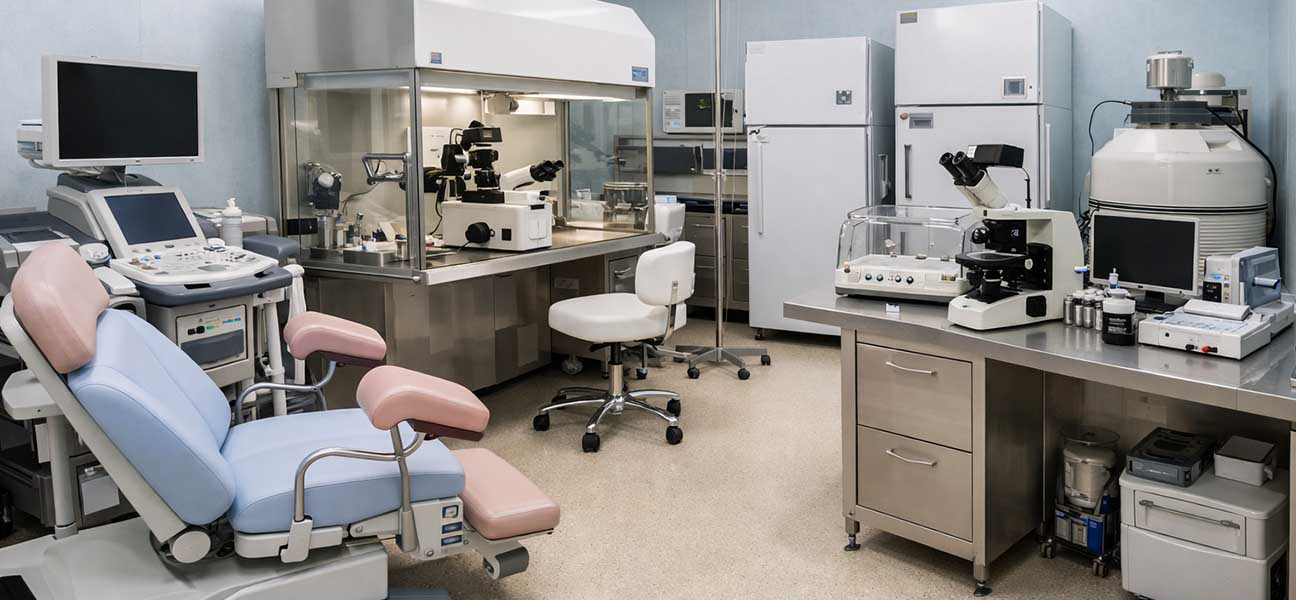
- Full NGS platform coverage: Mainstream reproductive centers in Georgia (such as Tbilisi IVF Center, Georgia Medical Center, etc.) use Illumina or Thermo Fisher NGS platforms, capable of performing both PGT-A and PGT-SR simultaneously, detecting aneuploidy in all 23 pairs of chromosomes and structural abnormalities >50 kb.
- PGT-M probe design: Monogenic disease screening requires custom probes, typically taking 4-8 weeks. Georgia laboratories collaborate with European genetic centers and can cover over 2,000 monogenic diseases, but feasibility for rare diseases needs to be assessed in advance. Patients must provide a genetic diagnosis report, and the laboratory will initiate probe synthesis only after confirmation.
- Mitochondrial diseases: Some Georgia laboratories can perform PGT-M for mitochondrial genetic diseases, but the technical complexity is high, requiring detection of mutation load levels. Currently, only a few centers have this capability.
- HLA typing: Some centers can simultaneously perform HLA typing to screen for embryos matching an affected sibling for HLA, enabling the use of cord blood stem cells for treatment after birth.
Conditions that cannot be screened: Polygenic diseases (e.g., hypertension, diabetes, schizophrenia), epigenetic abnormalities, de novo mutations (not carried by parents but appearing in the embryo), abnormalities with mosaic levels below the detection limit, and chromosomal microdeletions (<50 kb that do not cover key genes).
4. The Most Easily Overlooked Detail: Screening Scope Does Not Equal Guarantee Scope
During consultations, patients often equate "PGT screening normal" with "embryo completely normal," which is a cognitive misconception that needs correction.
- Technical limitations: PGT tests trophectoderm cells (which will develop into the placenta), not the inner cell mass (which develops into the fetus). There is a 1-2% risk of false negative or false positive due to mosaicism.
- Detection resolution: NGS typically does not detect microdeletions/duplications <50 kb unless a high-density SNP chip is used.
- De novo mutations: De novo mutations can occur during embryo development, and PGT cannot predict them.
- Incomplete correspondence between phenotype and genotype: Some genetic diseases have incomplete penetrance or variable expressivity; carriers of genetic variants may not necessarily develop the disease.
Therefore, prenatal diagnosis (chorionic villus sampling or amniocentesis) is still recommended after PGT in Georgia for confirmation, especially for PGT-M cycles for monogenic diseases.
5. Differences in Screening Strategies for Different Age Groups and Indications
Reproductive centers in Georgia develop individualized PGT plans based on the patient's age, obstetric history, and family genetic history:
| Patient Characteristics | Recommended PGT Type | Screening Focus |
|---|---|---|
| ≥38 years, no genetic history | PGT-A | Chromosomal aneuploidy |
| Recurrent miscarriage (≥2 times) | PGT-A + Couple karyotype analysis | Aneuploidy + structural abnormalities |
| Known monogenic disease carrier | PGT-M + PGT-A | Target gene + aneuploidy |
| Chromosomal balanced translocation carrier | PGT-SR + PGT-A | Structural rearrangement + aneuploidy |
| History of pregnancy with chromosomal abnormality | PGT-A or PGT-SR | Determined by previous abnormality type |
6. Frequently Asked Questions: Real Confusions Observed by Practitioners
In practice, patients' high-frequency questions about the scope of PGT screening in Georgia focus on these aspects:
- "Can Georgia screen for all genetic diseases?" — No. It can only screen for monogenic diseases with known pathogenic sites and chromosomal abnormalities. Polygenic diseases, de novo mutations, and epigenetic abnormalities are not within the screening scope.
- "Does a normal PGT-A result mean the child will be healthy?" — No. PGT-A only detects chromosome number, not monogenic diseases or microstructural abnormalities. A healthy child requires a combination of PGT-A + PGT-M + PGT-SR for more comprehensive assurance.
- "My husband and I have no genetic diseases, do we still need PGT?" — For advanced maternal age or recurrent miscarriage patients without genetic indications, PGT-A can reduce miscarriage rates and improve live birth rates. However, it is not mandatory and should be evaluated based on embryo number and economic costs.
- "How long does it take to prepare for PGT-M in Georgia?" — From submitting the genetic report to completing probe design, it usually takes 4-8 weeks. It is recommended to contact the laboratory in advance to confirm feasibility, to avoid discovering that testing is not possible after the cycle has started.
- "Can chromosomal balanced translocation be screened in Georgia? How accurate is it?" — Yes. The accuracy of PGT-SR detection is >95%, but it requires the couple's karyotype report. Some complex rearrangements may require FISH for auxiliary verification.
- "Is the screening fee calculated by disease or by cycle?" — Calculated by cycle. The cost of one PGT cycle (whether A/M/SR) typically includes biopsy, gene amplification, NGS sequencing, and data analysis. Additional costs for PGT-M probe design are charged separately.
7. Special Situation Handling: Cases Requiring Additional Evaluation
The following situations require special handling during a PGT cycle in Georgia:
- Mosaic embryos: Approximately 5-10% of embryos exhibit chromosomal mosaicism. Georgia laboratories will report the mosaic level (20-80%) and provide priority transfer recommendations. Low-level mosaic embryos still have a chance of resulting in a healthy live birth, but prenatal diagnosis is necessary.
- Mitochondrial DNA mutations: Some centers can detect mitochondrial mutation load, but there is currently no unified standard. It is recommended to choose a laboratory with experience in testing for neuromuscular genetic diseases.
- Rare monogenic diseases: If the pathogenic gene is extremely rare (<100 cases reported globally), the feasibility of probe design should be discussed with the Georgia genetic laboratory in advance, and referral to a major European genetic center may be necessary.
- Couples who are both carriers of the same type of thalassemia: It is necessary to distinguish between α and β thalassemia types and whether there is a concurrent α-thalassemia gene deletion. Georgia laboratories can detect common thalassemia hotspot mutations, but rare mutation types need to be confirmed in advance.
8. Required Materials and Process Timeline Planning
If you plan to undergo third-generation IVF in Georgia, the following materials are essential to start PGT:
- Karyotype analysis report for both partners (valid for 6 months to 1 year)
- Genetic test report (for PGT-M for monogenic diseases, provide the genetic diagnosis report of the proband or the couple, including the pathogenic gene and mutation site)
- Genetic counseling records (some centers require records from a genetic counseling clinic)
- Genetic analysis report of previous pregnancy/miscarriage tissue (if available)
- Basic fertility assessment: AMH, FSH, LH, antral follicle count, semen analysis
- Infectious disease screening: Hepatitis B, Hepatitis C, HIV, syphilis, TORCH, etc.
- Passport and visa (validity must cover the entire treatment cycle; a remaining validity of >6 months is recommended)
Timeline suggestion: From the initial consultation to embryo transfer, it typically takes 3-4 months. PGT-M probe design takes 4-8 weeks, the ovarian stimulation cycle takes about 2 weeks, embryo culture + biopsy + PGT testing takes 2-3 weeks, and the frozen embryo transfer cycle takes about 4-6 weeks. It is recommended to complete all tests and submit reports at least 1 month in advance.
9. Doctor's Advice: How to Determine if the PGT Screening Scope Meets Your Needs
Before deciding to undergo third-generation IVF in Georgia, it is recommended that you evaluate using the following steps:
- Clarify the etiology: If you or your partner has a known genetic disease, first confirm whether the pathogenic gene is identified and whether the mutation site has been reported.
- Verify laboratory capability: Directly provide the gene name and mutation site to the Georgia reproductive center, and ask if their genetic laboratory can design probes, how long the testing cycle is, and whether they have successfully tested similar diseases in the past.
- Confirm test report requirements: Different laboratories have different requirements for the format of genetic reports (e.g., original sequencing chromatograms, original genetic test reports, notarized translations). Knowing this in advance can avoid delays.
- Clarify the screening combination: If there are factors such as advanced maternal age or recurrent miscarriage, a combined PGT-M + PGT-A screening is recommended to avoid miscarriage due to aneuploidy after embryo transfer.
- Understand the limitations: No PGT technology can 100% guarantee the health of offspring. Prenatal diagnosis (amniocentesis/chorionic villus sampling) is a necessary confirmatory measure.
End of main content
Risk Reminder: PGT technology has detection blind spots, including but not limited to low-level mosaicism, de novo mutations, microdeletions/duplications, and epigenetic abnormalities. Embryos with normal PGT screening still have the possibility of developing genetic diseases. It is recommended that all PGT pregnancies undergo standard prenatal diagnosis. Additionally, laboratory platforms and testing procedures vary among reproductive centers in Georgia. Before choosing, you should request a specific testing scope manual and quality control data.
Comments (0)