
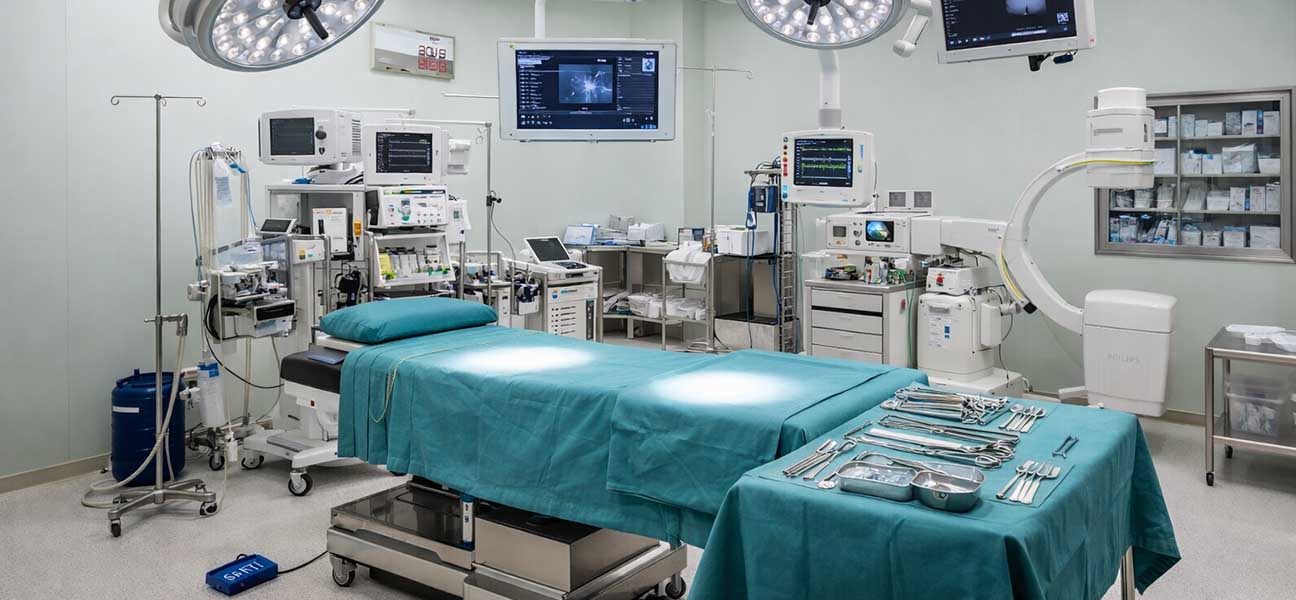
Real Consultation Scenario: A Question from a 38-Year-Old Patient with Diminished Ovarian Reserve
"I've read a lot of information saying the IVF environment in Batumi, Georgia is relaxed, but what is the actual medical standard like? Can the laboratory conditions compare with Europe? Does the law really allow third-party assisted reproduction? What do I need to prepare?" — These were the questions asked last week by a 38-year-old patient with an AMH level of 1.2 ng/ml. She had undergone two ovarian stimulation cycles in her home country without success and hopes to complete egg freezing and embryo screening under Georgia's relaxed laws.
Direct Answer to the Question: Core Assessment of the IVF Environment in Batumi
- Medical Conditions: Batumi currently has 3-4 fertility centers with IVF qualifications, equipped with imported embryo incubators, time-lapse monitoring systems, and PGT-A/NGS testing capabilities. Laboratory standards are close to EU levels. However, the medical teams are primarily composed of younger doctors, with most experienced embryologists coming from Tbilisi or abroad.
- Legal Environment: Georgia permits all assisted reproductive technologies (including egg donation, sperm donation, third-party assisted reproduction, and gender selection), and the law clearly protects the rights of the intended parents. After the child's birth, the intended parents can register as the parents alone, without requiring the genetic father's information.
- Living and Climate: Batumi is a Black Sea coastal city with mild winters (5-10°C), cool summers (22-28°C), good air quality, accommodation costs around $300-600/month, and overall lower living pressure compared to Tbilisi.
- Cost Range: An autologous IVF cycle costs approximately ¥80,000-120,000, including stimulation, egg retrieval, embryo culture, and PGT-A. A third-party assisted reproduction success package costs approximately ¥350,000-500,000 (including hospital, agency, and legal fees).
Why Batumi Has Become a Popular Choice – A Doctor's Perspective
From the geographical distribution of reproductive medicine, Eastern European countries (Ukraine, Georgia, Greece) have become supplementary choices for patients from Europe and America due to their relaxed laws and reasonable costs. Compared to the capital Tbilisi, Batumi's advantages are: logistical convenience as a port city (lower shipping costs for medications and consumables), and hospitals tend to charge fixed fees rather than per-procedure fees (reducing patients' psychological burden). However, it is important to note: Georgia is not an EU member state, its medical regulatory system is independent, and some laboratory quality control standards are issued by the national Ministry of Health, not by the European Medicines Agency (EMA).
Differences Across Age Groups
| Age Group | Applicable Scenarios for IVF in Batumi | Special Considerations |
|---|---|---|
| <35 years | Conventional IVF, egg freezing, third-party assisted reproduction | Mild stimulation protocols can be chosen to reduce OHSS risk |
| 35-40 years | Transfer after PGT-A screening, egg donation | Hysteroscopy is recommended (routinely included in Batumi clinics) |
| 41-45 years | Primarily egg donation or third-party assisted reproduction | Ovarian reserve assessment (AMH + antral follicle count) needed in advance |
| >45 years | Only third-party assisted reproduction is recommended | Cardiology and endocrinology evaluations required; some clinics demand a full medical check-up report |
Easiest Details to Overlook: Documents and Time Planning
- Passport Validity: Georgia requires that passports have at least 6 months of validity at the time of signing any reproductive treatment documents. A tourist visa (Type C) is sufficient; no special medical visa is needed.
- Notarization for Married Couples: Married couples need to bring the original marriage certificate plus a notarized translation. Unmarried single women undergoing third-party assisted reproduction need to provide a notarized voluntary declaration (some clinics require a certificate of singleness).
- Medication Carrying: Ovarian stimulation medications can be purchased at local clinics in Batumi, but prices are 30-50% higher than in China. It is recommended to bring a prescription from your home doctor for customs inspection.
- Preparation for the Transfer Cycle: If using frozen embryo transfer, endometrial preparation generally takes 10-14 days. It is advised to arrive in Batumi on day 2-3 of your menstrual cycle to avoid timing mismatches.
Actual Process: Timeline from Consultation to Transfer
- Weeks 1-2: Remote consultation, submission of previous reports (AMH, hormone panel, semen analysis, infectious disease screening). The clinic evaluates and sends a treatment plan and cost breakdown.
- Weeks 3-4: Arrange passport/visa, book flights and accommodation. There are no direct flights to Batumi; you need to transit via Tbilisi or Istanbul. It is recommended to allow 1 day for transit.
- Weeks 5-6: Arrive on cycle day D2-3, complete blood draw and ultrasound, start ovarian stimulation (average 10-12 days). Egg retrieval is performed under intravenous anesthesia and takes about 20 minutes.
- Weeks 7-8: Embryo culture and PGT-A (results in about 5-8 days). If transferring a fresh embryo, it is done on day 5-6 after retrieval; if frozen embryo transfer, it is scheduled for the next menstrual cycle.
- Weeks 9-12: Endometrial preparation → Transfer → Pregnancy test (blood HCG 12 days after transfer). After confirming an intrauterine pregnancy, you can return home.
Factors Influencing Cost
The total cost of IVF in Batumi fluctuates mainly due to the following factors:
- Third-party assisted reproduction agency fees ($12,000-$20,000)
- Embryo biopsy and PGT-A technical fees (per embryo, $200-$400 each)
- Choice of medication brand (imported Gonal-f is about 1.5 times more expensive than domestic versions)
- Need for special tests (e.g., genetic carrier screening, comprehensive immune panel)
- Accommodation and translation service costs (self-catering saves about 40% compared to eating out)
Frequently Asked Question 1: Is the Low-Temperature Storage in Batumi's Laboratories Stable?
According to quality control data published by several clinics, major fertility centers in Batumi use automatic liquid nitrogen refill systems, equipped with uninterruptible power supplies and remote alarms. However, it is important to note: After 2022, some clinics experienced temporary delays in liquid nitrogen supply due to rising energy prices. It is recommended to choose a laboratory with an annual cycle volume of ≥50 egg retrieval cycles (Source: Georgian Association of Reproductive Medicine 2024 Annual Report).
Frequently Asked Question 2: Is Batumi Suitable for People with Poor Ovarian Response?
Patients with poor ovarian response (AMH <0.5 ng/ml, antral follicles <5) usually require mild stimulation or natural cycles. Clinics in Batumi have limited experience with such patients, and specialized hospitals in Tbilisi are more recommended. However, if third-party assisted reproduction is also needed, Batumi can serve as a one-stop location for egg retrieval + embryo culture + subsequent surrogacy (with better package pricing).
Special Situation Management: Carriers of Chromosomal Abnormalities
If one partner is a carrier of a balanced chromosomal translocation or other structural abnormality, PGT-SR (Structural Rearrangement screening) is required. Current clinics in Batumi have aCGH + SNP chip testing capabilities, but samples need to be sent to European laboratories (e.g., Cyprus), extending the cycle by 3-5 days. It is recommended to confirm in advance which genetic company the clinic collaborates with and whether they assume the transport risk.
Risk Reminders
- Legal Risk: Although Georgia allows third-party assisted reproduction, if the country's laws are amended in the future, already completed contracts could be affected. It is advisable to sign a contract including a "force majeure due to legal changes" clause.
- Medical Risk: Batumi is not a top-tier reproductive medicine center. For complex cases (e.g., recurrent implantation failure, adenomyosis), Europe or the United States should be prioritized.
- Communication Barriers: English communication skills in some clinics are limited. It is recommended to bring your own Russian or Georgian translator, or choose an institution with a Chinese coordinator.
Doctor's Advice
For patients with normal ovarian reserve, no complex endometriosis or immune issues, and who wish to utilize Georgia's relaxed laws for gender selection or third-party assisted reproduction, Batumi is a cost-effective choice. However, caution is advised if you fall into the following categories:
- Advanced age (≥40 years) with repeated embryo culture failure
- Need for PGT-M (Monogenic Disease) testing with complex loci
- History of severe uterine abnormalities or recurrent implantation failure
Before making a final decision, it is recommended to have remote video case discussions with reproductive doctors from at least two clinics and request laboratory quality control reports from the last 3 months (e.g., fertilization rate, blastocyst formation rate, PGT-A evaluability rate).
Comments (0)