
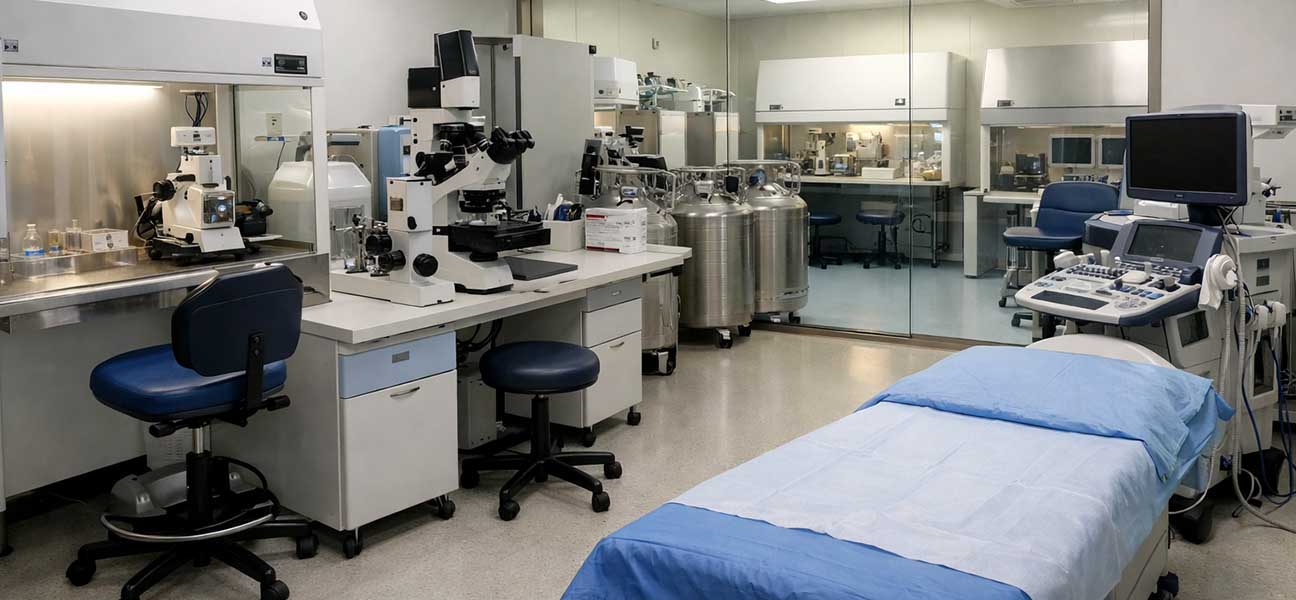
Reproductive Centers in Northern Georgia: Actual Distribution and Basis for Selection
Assisted reproductive resources in Georgia are highly concentrated in the capital, Tbilisi (central region). Northern provinces such as Imereti, Racha-Lechkhumi, and Upper Svaneti have a very limited number of officially registered reproductive centers. The following information is based on publicly available medical institution data and serves as a preliminary reference for patients planning fertility treatment in northern Georgia.
I. Overview of Known Reproductive Centers in the North
As of the latest available data (2024), only two institutions in northern Georgia (excluding Tbilisi city) clearly offer assisted reproductive services such as in vitro fertilization (IVF), intrauterine insemination (IUI), and egg freezing. They are as follows:
| Center Name | Location | Main Services | Notes |
|---|---|---|---|
| Kutaisi Reproductive Center | Kutaisi City (Imereti Region) | IVF, ICSI, Egg Donation, Embryo Freezing | Has an independent laboratory, but smaller in scale than Tbilisi centers |
| Zugdidi Medical Clinic – Reproductive Department | Zugdidi City (Samegrelo-Upper Svaneti Region) | IUI, Basic Fertility Assessment, Medication-induced Ovulation | Does not perform PGT; high-risk genetic cases require referral to Tbilisi |
It is important to note: There are no "large chain reproductive centers" in northern Georgia. The two institutions mentioned above are reproductive medicine departments under local general hospitals, not independent specialized centers.
II. Why Are There So Few Reproductive Centers in the North?
Doctors are often asked in clinical practice, "Why are there so few options outside the capital?" The core reasons include:
- Patient flow distribution: Over 70% of assisted reproduction cases in Georgia are handled in Tbilisi. The annual number of new infertility cases in the northern region is insufficient to support the operation of an independent center.
- Laboratory requirements: The embryology laboratory needed for IVF requires constant temperature and humidity, sterility, and independent air filtration systems. Construction and maintenance costs are extremely high, leading northern medical groups to prefer centralized investment in the capital.
- Physician resources: Most reproductive endocrinologists and embryologists work in the capital. Recruiting experienced specialists in the northern region presents practical difficulties.
The most suitable candidates for choosing a northern center are: patients living near Imereti or Upper Svaneti, not requiring PGT (preimplantation genetic testing), younger age (<35 years), normal ovarian reserve, and needing only basic IVF or IUI.
Unsuitable candidates for northern centers include: advanced age (≥40 years), premature ovarian insufficiency (AMH <1.0 ng/mL), need for egg or sperm donation, history of multiple previous IVF failures, need for third-party assisted reproduction (legal surrogacy), or requiring preimplantation genetic diagnosis (PGD). These patients cannot receive a complete solution in northern Georgia and must go directly to Tbilisi or choose centers in other countries.
III. Kutaisi Reproductive Center: Specific Process and Preparation
3.1 What to Prepare Before a Medical Visit?
- Passport (valid for more than 6 months).
- All previous fertility test reports (AMH, basic hormone panel, semen analysis, infection screening).
- If there is a history of uterine cavity procedures (curettage, polypectomy), provide a hysteroscopy report.
- If using donor eggs/sperm, confirm in advance whether the Kutaisi center offers this service (the center only accepts local egg sources, no international egg bank).
3.2 How Long Does It Take from Initial Consultation to Transfer?
General timeline (using standard IVF as an example):
- Initial consultation + tests: 1-2 days (basic assessment can be completed locally).
- Ovarian stimulation: 10-14 days (daily injections or oral medication, with monitoring visits for follicle growth).
- Egg retrieval surgery: 1 day (intravenous anesthesia, 2-hour observation post-procedure).
- Embryo culture + genetic testing (if needed): 3-7 days (PGT requires additional referral, not available at northern centers).
- Transfer: 1 day (fresh or frozen embryo transfer without PGT).
- Luteal support + pregnancy test: 14 days.
The entire cycle from arrival to departure takes a minimum of about 4-5 weeks. Using frozen eggs or a second transfer will extend the time.
IV. The Most Easily Overlooked Detail: Transportation and Accommodation in the North
A common patient misconception is to "only check hospital qualifications online without considering actual travel costs." The Kutaisi Reproductive Center is approximately 230 km from Tbilisi, a drive of about 3.5 hours. During ovarian stimulation, multiple monitoring visits are required (average 4-6 times). Daily round trips from Tbilisi are impractical. Most out-of-town patients choose to rent a short-term apartment in Kutaisi or stay in a hotel near the center for 2-3 weeks.
The Zugdidi Reproductive Department is about 360 km from Tbilisi, a drive of over 5 hours. The area has no international airport, so travel is limited to driving or train. The Kutaisi center is recommended as a priority due to relatively more convenient transportation.
V. Decision-Making Differences by Age Group
| Age Group | Suitable for Northern Center? | Doctor's Advice |
|---|---|---|
| <35 years, AMH ≥2.0 | Suitable | Can try IVF or IUI at Kutaisi; time remains for referral if cycle fails |
| 35-39 years, AMH 1.2-2.0 | Conditionally suitable | Need to confirm if the northern center has technologies like time-lapse imaging; consider Tbilisi directly if necessary |
| ≥40 years, or AMH <1.0 | Not suitable | Strongly recommend going to Tbilisi or other overseas centers (e.g., Russia, Turkey) for advanced options like egg donation |
VI. What Are the Risks? How to Assess?
The main risks of choosing a northern reproductive center include:
- Laboratory stability: Small centers may have suboptimal embryo culture systems due to low sample volume, affecting blastocyst formation rates.
- Emergency management: Complications like intra-abdominal bleeding after egg retrieval may require emergency blood transfusion or surgery. Northern hospitals have weaker blood bank and surgical support capabilities compared to Tbilisi. Centers typically arrange patient transfer to Tbilisi.
- Legal and ethical issues: Georgian assisted reproduction law (legislated in 2020) has strict geographical restrictions on third-party reproduction. Northern centers lack surrogacy qualifications, and donor egg screening standards may differ from the capital. Request written clarification from the center during the initial consultation.
How to determine if a northern center is reliable? A three-step method:
- Verify the institution's registration number with the National Center for Reproductive Health of Georgia (request a copy of the license).
- Ask to see the total number of egg retrievals and clinical pregnancy rates for the last 12 months (not advertising data, but internal annual reports).
- Check recent real patient feedback through online patient communities (e.g., Georgia IVF groups on Facebook), paying special attention to complaints about laboratory errors.
VII. Special Situation Management: If You Must Stay in the North but Have Low Ovarian Reserve
A clinical scenario occasionally encountered: a couple living in Kutaisi, unable to leave for long periods due to work, but the woman has an AMH of only 0.6 ng/mL. In this case, the northern center cannot provide effective egg donation (Kutaisi does not accept overseas egg sources), and the waiting time for local eggs is 12-18 months or more. Feasible options for such situations include:
- The male partner first goes to Tbilisi for semen freezing.
- The female partner completes basic tests and ovarian stimulation in Kutaisi (using a mild stimulation protocol), then has the embryos frozen on day 3 after egg retrieval. The embryos are then transported to Tbilisi (requires a transfer agreement between centers) for subsequent PGT or embryo accumulation.
- If no transfer agreement exists, the only option is to abandon the northern center and plan a one-time referral in advance.
VIII. Practitioner Observation: Why Northern Centers Are "Underestimated"
As a reproductive doctor, I have seen several patients who first failed at the Kutaisi center and then transferred to Tbilisi. Analysis showed the failure was not due to the skill level of the northern center doctors, but because the patients themselves did not undergo adequate pre-assessment—for example, undetected intrauterine adhesions or undiagnosed thrombophilia. Due to the lower patient volume, northern centers have relatively less experience handling such rare issues. It is recommended to proactively request a "comprehensive failure risk assessment" during the first visit, including tests for blocking antibodies, endometrial microbiome, and chronic endometritis (CD138). These tests may not be available at northern centers; blood samples can be drawn locally and sent to a Tbilisi laboratory, avoiding travel between locations.
IX. Reminder: Tests to Complete Before Traveling to Northern Georgia
To avoid delays due to missing test results upon arrival, it is recommended to complete the following items in China beforehand (English versions of reports need translation and notarization):
- Female: Day 2-3 hormone panel (FSH, LH, E2, PRL, T, P), AMH, antral follicle count (vaginal ultrasound), thyroid function (TSH), coagulation profile, infectious diseases (Hepatitis B, Hepatitis C, Syphilis, HIV), cervical TCT and HPV.
- Male: Semen analysis + morphology, sperm DNA fragmentation, infectious disease screening, chromosome karyotype (if there is a history of miscarriage).
- Both partners: ABO blood type, Rh factor, thalassemia screening (thalassemia carrier rate is low among the Caucasian population in northern Georgia, but recommended for Chinese couples).
X. Timing Reminder: Winter Transportation Impact
From November to March, heavy snowfall can block roads in the mountainous areas of northern Georgia (e.g., towards Zugdidi), increasing risks for long-distance buses and self-driving. Patients planning treatment during this period should choose the Kutaisi center (lower altitude, less affected by heavy snow) and allow at least 2 extra days for flight delays or road closures. Ovarian stimulation cycles should avoid days with severe snowstorm warnings in the weather forecast.
XI. Doctor's Advice
For patients who genuinely wish to stay in the north for treatment, the safest approach is: first, have a remote video consultation with the Kutaisi Reproductive Center (some doctors offer services in English and Russian; email appointment required in advance). Clarify the following three points during the consultation:
- The clinical pregnancy rate per fresh embryo transfer for the center in the last 12 months (not cumulative pregnancy rate).
- If ovarian hyperstimulation syndrome (OHSS) occurs, is hospitalization and blood product support available?
- Does the center support "embryo shuttle" transfer (i.e., transferring embryos to Tbilisi for genetic testing or cryopreservation)?
If all three points receive affirmative answers and the data is satisfactory, an initial visit can be scheduled. Otherwise, it will be more efficient to plan the entire treatment at a Tbilisi center directly.
Risk Reminder: The information on northern reproductive centers provided in this article may change over time. The operating licenses, medical teams, and equipment status of Georgian medical institutions are updated annually. Before making a decision, it is recommended to directly contact the National Center for Reproductive Health of Georgia (phone: +995 32 2 72 00 00) or visit its official website to verify the current operational status of the center. Do not accept verbal promises from any institution; all agreements must be based on written contracts.
Comments (0)