
“Which hospital in Georgia has a high IVF success rate?” is the most frequently asked question in real consultations.
A 40-year-old woman with an AMH of 0.8 ng/mL asked in a client group: “I checked the websites of three or four Georgian hospitals, and they all claim success rates above 60%. Who should I believe?” This scenario repeats daily. There is no legally standardized success rate figure; different hospitals use vastly different statistical methods—some calculate per transfer cycle, some per egg retrieval cycle, and some only include patients under 35. Directly comparing numbers is meaningless. What truly needs to be answered is: based on your individual situation, which hospital is more likely to deliver a favorable outcome?
The basic landscape of the assisted reproduction industry in Georgia
Georgia is one of the assisted reproduction destinations in Eastern Europe, legally permitting surrogacy and egg donation, but its medical resources are highly concentrated in Tbilisi and Batumi. As of 2025, there are approximately 7-10 fertility centers with stable operational records that accept international patients. Among them, even fewer have independent embryology laboratories, full-time embryologists, and autonomous PGT-A testing capabilities (or stable partner laboratories). The following analysis is based on publicly available industry information, patient feedback, and general reproductive medicine knowledge. It does not constitute a recommendation but provides an evaluation framework.
| Evaluation Dimension | Key Indicator | Impact Weight on Success Rate |
|---|---|---|
| Embryology Laboratory Grade | CAP/ISO certification, embryologist years of experience | High (directly affects blastocyst formation rate) |
| PGT Technical Capability | In-house PGT-A or sample outsourcing | Medium-High (especially important for age >35) |
| Patient Age Stratified Data | Live birth rates for under 35, 35-40, and over 40 | Very High (standardized data is most reliable) |
| Primary Physician System | Same doctor managing stimulation, retrieval, and transfer | Medium (affects treatment continuity) |
| Third-party Gamete Bank Quality | Screening system for donor eggs/sperm | High (affects embryo chromosomal normality rate) |
How doctors view the “success rate” metric
At a fertility center in Tbilisi with over a decade of qualifications, the medical director said during an internal training session: “If only one number is given, I suggest patients ignore it directly. Internally, we manage based on these indicators: the usable blastocyst rate per MII oocyte, the ongoing pregnancy rate per 100 transfer cycles (beyond 12 weeks), and the rate of triplet or higher-order multiple pregnancies. These three numbers reflect a center’s true level better than a vague ‘success rate.’” Practitioners generally believe that a hospital willing to publish age-stratified live birth rates is often confident in its data; conversely, a hospital that only provides a single percentage without explaining the statistical method should be approached with caution.
The most easily overlooked detail: Laboratory 24/7 operational capability
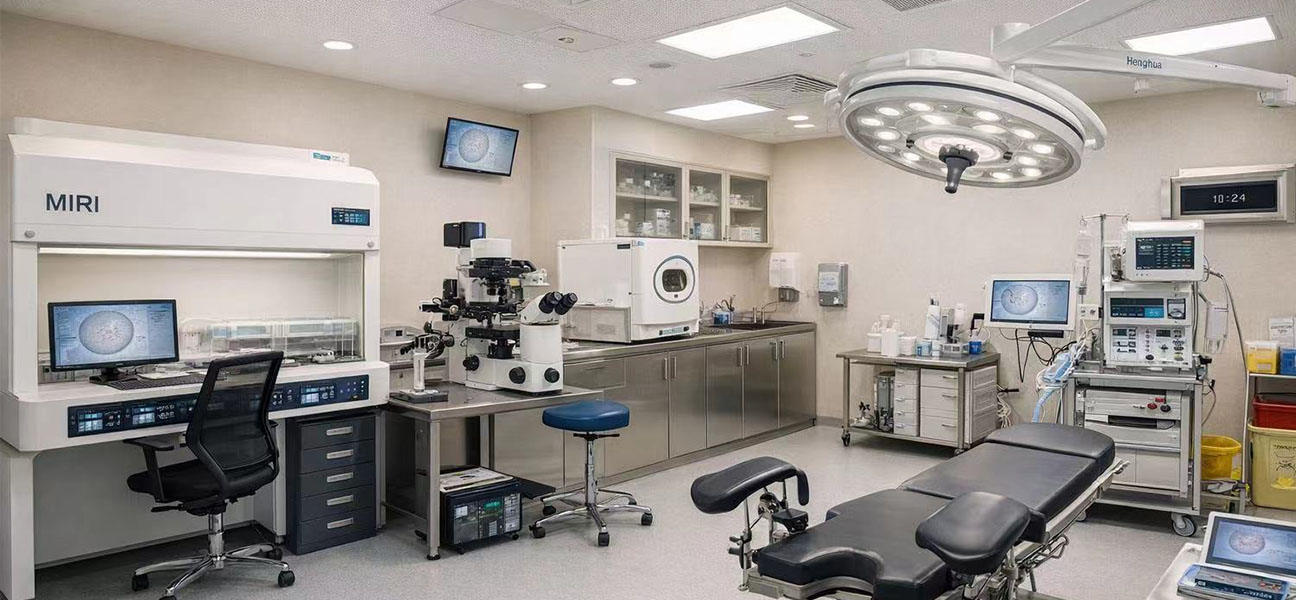
Some Georgian hospitals do not operate their laboratories 24/7. Critical points in embryo observation after retrieval and blastocyst culture (such as day 5 and day 6 blastocyst assessments) may be handled by on-call staff rather than the primary embryologist if they fall outside working hours. This is rarely mentioned during patient inquiries but directly affects the timing of blastocyst freezing and grading accuracy. Another easily overlooked point is whether the hospital uses a time-lapse system for incubators. Currently, no more than 3 fertility centers in Georgia are equipped with time-lapse, a system that reduces embryo exposure to the external environment and improves the identification rate of high-grade blastocysts.
Success rate differences by patient age: Real data reference
Based on anonymized data published by several Georgian centers in recent years (not an official promise, only reflecting general industry levels):
- Women under 35 using own eggs: live birth rate per transfer cycle approximately 45%-55% (depending on whether PGT is performed on embryos).
- Women aged 35-40 using own eggs: live birth rate drops to 30%-40%.
- Women aged 40-43 using own eggs: live birth rate approximately 15%-25%, with a significantly increased miscarriage rate.
- Women over 43: most centers recommend using donor eggs, as the live birth rate with own eggs is below 10%.
Note: The above figures are based on the transfer of 1 or 2 blastocysts. If a hospital reports the “cumulative live birth rate per egg retrieval cycle” (including frozen embryo transfers), the number will be higher, but it should not be confused with the “success rate per transfer.”
How to determine if a hospital is right for you: Specific steps and checks
Step 1: Request the hospital’s patient data report. Ask for live birth rates (not biochemical pregnancy rates) stratified by age for three consecutive years. If they say they don’t have it, be cautious.
Step 2: Verify embryology laboratory qualifications. Ask if they hold an assisted reproduction laboratory license from the Georgian Ministry of Health and whether they have international accreditation (e.g., JCI or ISO 15189).
Step 3: Understand the PGT operational model. If the hospital sends biopsy samples to Russia, Armenia, or other European countries for testing, assess the impact of logistics on sample quality. In-house laboratories usually have faster turnaround and more controllable risks.
Step 4: Inquire about doctor availability and surgical scheduling. Is the same doctor performing egg retrieval and transfer? Is direct communication with the doctor allowed during stimulation (not just through a coordinator)?
Step 5: Review patient feedback. Learn about actual treatment experiences through patient communities, but distinguish between common issues and isolated disputes.
Common pitfalls: Hidden conditions behind low-price packages
Some agencies attract patients with “guaranteed success packages” priced 30%-40% below the market average. These packages usually contain very strict exclusion clauses: age limits, AMH minimums, BMI ranges, previous miscarriage counts, etc. Once you are deemed ineligible, the package becomes a standard paid cycle. Another common trap is promising “unlimited stimulation and transfer cycles” but restricting the types and doses of stimulation medications, leading to significantly fewer eggs retrieved compared to standard protocols. Additionally, some packages include egg donation but do not guarantee the scope of genetic screening for donors (e.g., testing for CMV, spinal muscular atrophy, etc.). Review all disclaimers clause by clause before signing.
Special case management: Repeated implantation failure or advanced age
For patients with previous failed cycles in other countries or those over 42, some Georgian centers offer different “individualized plans.” For example: using mild stimulation or natural cycle retrieval, focusing on embryo quality rather than quantity; or using donor eggs combined with PGT-A technology. When choosing such a hospital, evaluate the doctor’s proficiency with GnRH antagonist protocols and the laboratory’s experience in culturing embryos from low-yield retrievals. Additionally, if considering surrogacy, ensure that the hospital’s partner legal team for surrogacy is independent of the hospital itself—to avoid conflicts of interest affecting legal advice.
Practitioner’s observation (from a consultant with 10 years of experience)
I have handled nearly 300 cases of assisted reproduction in Georgia. A repeatedly validated pattern is that patients focus too much on “success rate numbers” while ignoring two decisive variables: whether their own follicular phase LH level is abnormal, and whether the hospital routinely performs ERA (endometrial receptivity array) or EMMA/ALICE. For patients with recurrent implantation failure, the value of the latter two tests far exceeds success rate comparisons. No hospital can guarantee success for any patient, but a good hospital will proactively tell you: “For your situation, our historical data is this. You need to undergo these tests first before we can determine feasibility.”
Required materials and time planning
- Basic tests completed domestically: sex hormone panel (day 2-3 of menstruation), AMH, ultrasound antral follicle count, semen analysis (at least twice), infectious disease screening (HIV, hepatitis B, hepatitis C, syphilis, TORCH).
- Invalid tests (usually not accepted by Georgian hospitals): vaginal ultrasound reports (must be redone locally), chromosome reports from non-tertiary hospitals (recommend karyotyping from a domestic tertiary hospital).
- Passport validity: must exceed 6 months, and confirm whether notarized translation is required (some hospitals require dual authentication of marriage certificate).
- Time planning: from initial consultation to officially starting a cycle typically takes 2-3 months (including tests, mailing reports, hospital review, legal document signing).
Risk reminder
Success rate data can be easily influenced by statistical methods, patient selection (e.g., accepting only those under 35), and excluding cancelled cycles from the denominator. Any hospital promising “100% success” or “guaranteed baby boy” violates medical ethics and industry standards. Furthermore, Georgian law permits surrogacy, but details regarding nationality, marital status, and disposition of frozen embryos after divorce remain in gray areas. It is advisable to independently consult a local Georgian reproductive law expert before making significant payments, rather than relying solely on the hospital’s legal advice.
Suggestions for next steps
If you are screening Georgian IVF hospitals, first complete a comprehensive fertility assessment (AMH, ultrasound, semen analysis). Then, email your report to target hospitals and ask two questions: ① Based on my age and AMH, what is your cumulative live birth rate for similar patients in the last two years? ② If the first transfer fails, what is your logic for adjusting the second plan? The speed of response, data transparency, and logic of the plan are more reliable than simply looking at website promotions. Do not rush a decision because a hospital is enthusiastic or cheap. Assisted reproduction is a medical procedure, not a commodity purchase.
Comments (0)