
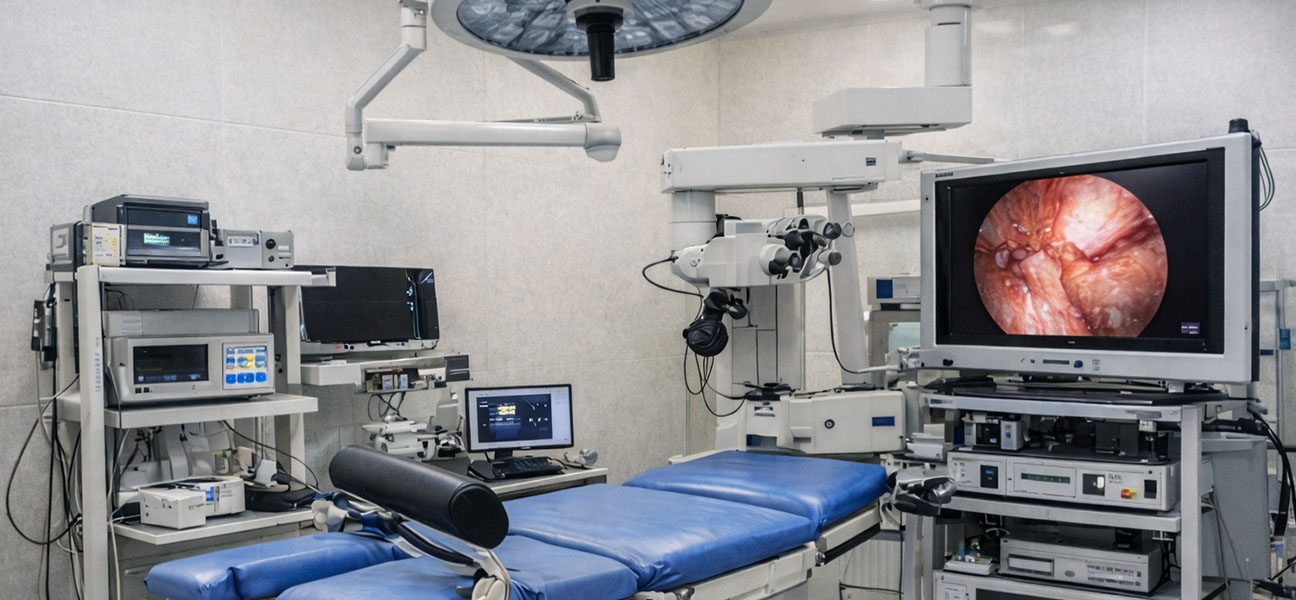
When some patients consult about overseas IVF and see that the prices in Georgia are significantly lower than in Europe and the US, they often directly wonder: if the cost is so low, does that mean the technology is poor? Will the success rate be very low? This judgment seems intuitive on the surface, but it actually needs to be examined separately. The relationship between cost and success rate is not a simple linear one.
Direct answer: Low cost does not equal low success rate, but variables need to be distinguished
The lower cost of IVF in Georgia is mainly influenced by the local economic level, labor costs, and exchange rates, and does not directly equate to a downgrade in medical technology. Under the same patient conditions (age, ovarian function, sperm quality), the single-cycle live birth rate at some hospitals in Georgia is close to the average level in Europe. However, there is significant variation between different hospitals, so it cannot be generalized.
Why does the question "cheap = low success rate" arise?
There are two psychological factors behind this question. First, in medical consumption, price is often used as a clue to judge quality. Second, low-price strategies in some industries are indeed accompanied by reduced services. However, in the field of assisted reproduction, the overlap between the components of cost and the determinants of success rate is limited. The core variable for success rate is the patient's own fertility condition, not the fee schedule.
Main factors affecting the cost of IVF in Georgia
| Cost Item | Georgia | Compared to Europe/US | Explanation |
|---|---|---|---|
| Ovulation induction medications | Imported and domestic options available | Mainly imported medications | Medication costs account for a large portion; Georgia allows choosing more economical plans |
| Laboratory operation fees | Medium | High | Laboratory equipment is mostly imported, but labor costs are low |
| Doctor consultation fees | Relatively low | High | Local doctor income levels are lower than in Europe and the US |
| PGT genetic testing | Charged per embryo | Charged per embryo | The testing fee itself is not very different, but the overall package price is lower |
| Living and accommodation | Low | High | Local cost of living is low, reducing overall expenses |
From the table above, it can be seen that the cost differences mainly come from operating costs and the range of choices, rather than the absence of core technical steps.
Differences between hospitals: Technical stratification behind the cost
Reproductive centers in Georgia can be roughly divided into three categories:
- Internationally certified laboratories: Adopt European standard laboratory management, with regular equipment calibration and stable culture environments. These centers are consistent with European standards in ICSI, embryo culture, and PGT, with relatively higher costs but still lower than in Europe and the US.
- Local conventional centers: Meet basic reproductive treatment needs but have limited experience with complex cases (e.g., advanced age, repeated failure). Costs are lower, suitable for patients with normal ovarian function and no complex medical history.
- Small clinics: Laboratory conditions and service processes may have shortcomings, with the lowest costs but greater fluctuations in success rates.
When choosing, one should not only look at the total price. It is necessary to verify the type of laboratory certification, the embryologist's professional background, and whether an independent quality control system exists.
Reference range of success rates for different age groups
Success rate is most affected by age. The following data is based on multi-center industry statistics and is for reference only, not a guarantee of specific results:
| Age Range | Live Birth Rate per Transfer Cycle (approx.) | Notes |
|---|---|---|
| Under 35 | 40% - 50% | For those with normal ovarian function, single-cycle success rate is higher |
| 35 - 37 years | 35% - 42% | Needs assessment combined with AMH and antral follicle count |
| 38 - 40 years | 25% - 35% | Embryo chromosomal abnormality rate increases; PGT can improve implantation rate |
| 41 - 42 years | 15% - 25% | PGT-A screening recommended to reduce miscarriage risk |
| Over 43 years | Below 10% | Success rate with own eggs drops significantly; egg donation should be considered |
Data from Georgia falls within the above ranges, comparable to the average level in Europe, but it is necessary to rule out potential laboratory shortcomings in very low-priced clinics.
Which factors truly determine the success rate
- Female age: The most core single variable, affecting egg quality and chromosomal normality rate.
- Ovarian reserve: Comprehensive assessment of AMH, FSH, and antral follicle count, determining the number of eggs retrieved.
- Sperm quality: DNA fragmentation rate, concentration, and motility affect fertilization rate and embryo development.
- Embryo chromosomal normality: PGT can screen for euploid embryos, improving implantation rate.
- Laboratory conditions: Culture environment, embryologist experience, and liquid nitrogen storage stability.
- Uterine environment: Endometrial thickness, morphology, presence of adhesions or polyps.
The fee level does not affect the objective values of the above variables. The patient's own condition is the foundation that determines the success rate.
When is it suitable to choose IVF in Georgia
- Limited budget but hoping for laboratory conditions close to European standards.
- Under 38 years old, with normal ovarian reserve and no complex genetic history.
- Need PGT but want to control overall costs.
- Have basic requirements for language and service, and accept remote communication or short stays.
When is it not suitable
- Over 42 years old with severely diminished ovarian reserve (AMH below 0.5 ng/mL), very low success rate with own eggs.
- Need complex genetic counseling or rare disease gene screening, with limited local genetic support.
- Have high requirements for the medical environment and expect full follow-up by Chinese-speaking experts.
- Have had multiple previous failures and need top-tier laboratory and personalized plan support.
Easily overlooked details
- Type of laboratory certification: Whether ISO or CAP certified directly affects embryo culture quality.
- Whether the ovulation induction protocol is individualized: Low-cost packages often use fixed protocols, unsuitable for those with abnormal ovarian response.
- PGT technology platform: NGS or aCGH, with different resolution affecting mosaicism detection rate.
- Embryo freezing and storage conditions: Whether the temperature monitoring and alarm system for liquid nitrogen tanks are adequate.
- Hidden fees: Whether the cost includes medications, PGT, embryo freezing, thawing, and transfer.
Common pitfalls
- Choosing a clinic based solely on total price without verifying laboratory standards and doctor experience.
- Attracted by "guaranteed success" or "low-price all-inclusive" packages, ignoring refund conditions and hidden clauses after failure.
- Ignoring one's own age and ovarian condition, assuming low-cost plans are suitable for everyone.
- Not confirming legal procedures in advance (e.g., marriage certificate notarization, passport validity, visa type).
- Choosing a clinic without an independent embryology laboratory, requiring sample outsourcing and increasing risk.
Specific process and timeline
- Preparation: Complete fertility assessments for both partners (AMH, FSH, semen analysis, chromosomal tests, infectious disease screening), apply for passport, visa, and marriage certificate notarization. It is recommended to complete 2-3 months in advance.
- Ovarian stimulation: Start on day 2-3 of menstruation, lasting 10-12 days, with monitoring of follicle development.
- Egg retrieval: Performed 36 hours after HCG injection, usually requiring 1 day of rest.
- Embryo culture and PGT: Blastocysts form 5-6 days after retrieval, biopsy is sent for testing, results take approximately 14-21 days.
- Transfer: Frozen embryo transfer on day 18-22 of the menstrual cycle, or fresh embryo transfer as advised by the doctor.
- Luteal support and pregnancy test: Progesterone is used continuously after transfer, blood test for HCG on day 12-14.
The overall cycle is about 25-30 days (excluding preparation time and PGT waiting period).
How to judge if a hospital is reliable
- Verify laboratory certification (ISO 15189, CAP, or equivalent standards).
- Learn about the embryologist's years of experience and training background.
- Check if independent quality control data and annual reports are available.
- Find out if the ovulation induction protocol is individualized or standardized.
- Communicate directly with the doctor to assess their approach to complex cases.
Observations from a practitioner
Having worked in the overseas assisted reproduction field for over a decade, I have seen many patients waste time and precious eggs by choosing an unqualified clinic because of "low prices." I have also seen patients who, due to "high prices," blindly trusted a particular institution, but with their own good conditions, the outcome was no better than that from a moderately priced hospital. The key lies in matching—finding medical resources suitable for one's age, ovarian condition, and genetic needs, rather than simply judging technology by price.
Doctor's advice
Do not pit "cost" against "success rate." The correct approach is: first, undergo a comprehensive fertility assessment to understand your own condition, then choose a suitable hospital and plan based on the results. Medical resources in Georgia can meet the needs of a considerable number of patients, but the prerequisite is to do your homework, verify laboratory standards, and not just look at the price tag.
Risk reminder
Any overseas assisted reproduction carries medical risks, legal risks, and risks of information asymmetry. It is recommended to complete all necessary tests before departure, ensure legal documents are in order, and sign a clear treatment agreement with the hospital. Do not ignore risk control because of low costs, nor be blindly optimistic because of high prices.
Special population reminder
For patients with diminished ovarian reserve, recurrent previous failures, or genetic disorders, it is advisable to prioritize centers with higher laboratory standards and more experienced doctors. Some hospitals in Georgia have limited experience with complex cases, so it is necessary to communicate fully with the doctor in advance to confirm if they have successful experience with similar cases.
Suggestions for next steps
- Complete basic fertility checks (AMH, FSH, antral follicle count, semen analysis).
- Identify 3-5 candidate hospitals, verifying laboratory certification and doctor backgrounds one by one.
- Confirm the detailed cost breakdown with the hospital, including medications, PGT, freezing, and transfer.
- Apply for passport, visa, and marriage certificate notarization.
- Arrange travel according to the menstrual cycle.
Comments (0)